
Table of Contents
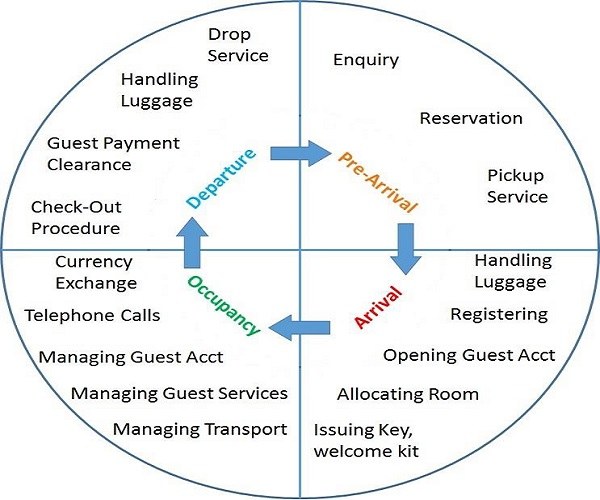
Hospitality management is an art that revolves around the guest experience. A critical component of this is understanding the Hotel Guest Cycle, which is divided into four stages: Pre-arrival, Arrival, Occupancy, and Departure. Each stage comprises specific activities that collectively enhance the guest experience. Let’s delve into each stage and the pivotal activities that define them.
Pre-Arrival: Anticipation and Preparation
The Pre-arrival stage begins the moment a guest books their stay. It’s a phase of anticipation where the guest’s expectations are set, and the hotel begins tailoring their experience. Efficiently managing reservations and inquiries during this stage sets the tone for the guest’s upcoming visit.
Key Activities in Pre-Arrival
- Enquiry: The initial interaction that often determines whether a guest will book a stay.
- Reservation: A critical touchpoint where guests commit to staying and share their preferences.
- Pickup Service: A thoughtful service that can ease the guest’s journey to the hotel.
Arrival: First Impressions Count
Arrival is the first physical touchpoint with the guest. This stage is about making a lasting first impression. The activities involved aim to welcome guests warmly, manage their immediate needs, and set the scene for a comfortable stay.
Essential Activities Upon Arrival
- Handling Luggage: Taking care of guests’ belongings to start their stay smoothly.
- Registering: Officially marking the beginning of the guest’s experience at the hotel.
- Opening Guest Account: Creating an account that serves as the guest’s financial ledger during their stay.
- Allocating Room: Placing guests in a room that meets or exceeds their expectations.
- Issuing Key, Welcome Kit: Providing the essentials for accessing and enjoying their accommodation.
Occupancy: The Stay Itself
During the Occupancy stage, the guest makes use of the hotel’s amenities and services. This stage is critical for guest satisfaction as it involves the core of the hospitality experience. Managing guest services and ensuring comfort are paramount to encourage repeat stays.
Managing the Guest’s Stay
- Managing Guest Services: Overseeing the plethora of services provided to ensure guest satisfaction.
- Managing Transport: Facilitating local travel arrangements for guests.
- Telephone Calls: Handling guest communication needs efficiently.
- Currency Exchange: Assisting guests with financial transactions for their convenience.
- Check-Out Procedure: Preparing for a smooth transition as the guest’s stay concludes.
Departure: The Fond Farewell
Departure is the final stage of the guest cycle but is as important as the welcome. It’s the last opportunity to leave a positive impression. The departure process should be handled with care, ensuring all guest needs are met and their departure is as pleasant as their arrival.
Concluding Activities in Departure
- Guest Payment Clearance: Ensuring a hassle-free settlement of the guest’s account.
- Handling Luggage: Assisting with luggage to ease the guest’s departure.
- Drop Service: Providing a parting service with transportation to the guest’s next destination.
Conclusion
From anticipating the guest’s arrival to bidding them farewell, each stage of the Hotel Guest Cycle plays a crucial role in the overall experience. By understanding and executing each stage effectively, hotel staff can ensure guests leave with lasting positive memories, paving the way for their return.