Topic wise notes as per new NCHM-JNU syllabus (for B.Sc HHA & M.Sc HA) are are now available at our new website hospitality.institute
Select Page

Types of Pastry

by

Types of Pastry

Shortcrust Pastry

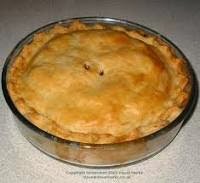
Shortcrust pastry –  is a type of pastry often used for the base of a tart, quiche or pie. It does not puff up during baking because it usually contains no leavening agent. It is possible to make shortcrust pastry with self-raising flour, however. Shortcrust pastry can be used to make both sweet and savory pies such as apple pie, quiche, lemon meringue or chicken pie
Types of Pastry 1

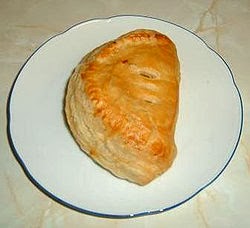
Puff pastry or laminated

In baking, a puff pastry is a light, flaky, leavened pastry containing several layers of fat which is in solid-state at 20 °C (68 °F). In raw form, puff pastry is a dough which is spread with solid fat and repeatedly folded and rolled out (never mashed, as this will destroy layering) and used to produce the aforementioned pastries. It is sometimes called a “water dough” or détrempe.

Types of Pastry 2

Choux pastry

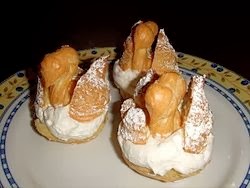
Choux pastry or pâte à choux is a light pastry dough used to make profiteroles, croquembouches,éclairs, French crullers, beignets, St. Honoré cake, Indonesian Kue sus, and gougères. It contains only butter, water, flour, and eggs. Like Yorkshire Pudding or David Eyre’s pancake, instead of an araising agent, it employs high moisture content to create steam during cooking to puff the pastry.
Choux pastry is usually baked but for beignets, it is fried.
Types of Pastry 3

Definitions

  • Pastry: A type of food in famous dishes like pie and strudel.
  • Pastry bag or Piping bag: An often cone-shaped bag that is used to make an even stream of dough, frosting, or flavored substance to form a structure, decorate a baked good, or fill a pastry with custard, cream, jelly, or another filling.
  • Pastry board: A square or oblong board, preferably marble but usually wood, on which pastry is rolled out.
  • Pastry brake: Opposed and counter-rotating rollers with a variable gap through which pastry can be worked and reduced in thickness for commercial production. A small version is used domestically for pasta production.
  • Pastry case: An uncooked or blind-baked pastry container used to hold savory or sweet mixtures.
  • Pastry cream: Confectioner’s custard. An egg- and flour-thickened custard made with sweetened milk flavored with vanilla. Used as a filling for flans, cakes, pastries, tarts, etc. The flour prevents the egg from curdling.
  • Pastry cutters: Various metal or plastic outlines of shapes, e.g. circles, fluted circles, diamonds, gingerbread men, etc., sharpened on one edge and used to cut out corresponding shapes from biscuit, scone, pastry, or cake mixtures.
  • Pastry blender: A kitchen implement used to properly combine the fat and flour. Usually constructed of wire or plastic, with multiple wires or small blades connected to a handle.
  • Viennoiserie: French term for “Viennese pastry,” which, although technically must be yeast-raised, has now become used as a common term for many laminated and puff- and choux-based pastries, including croissantsbrioche, and pain au chocolat.

Flour

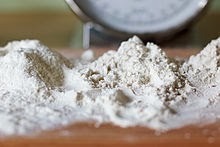
Flour is a powder which is made by grinding cereal grains, or other seeds or roots (like Cassava). It is the main ingredient of bread

Types of Pastry 4

How useful was this post?

5 star mean very useful & 1 star means not useful at all.

Average rating 4.3 / 5. Vote count: 23

No votes so far! Be the first to rate this post.

We are sorry that this post was not useful for you! 😔

Let us improve this post!

Tell us how we can improve this post?

Syllabus BHM151 (T)

01 Soups

  1. Basic recipes other than consommé with menu examples
    1. Broths
    2. Bouillon
    3. Puree
    4. Cream
    5. Veloute
    6. Chowder
    7. Bisque etc
  2. Garnishes and accompaniments
  3. International soups

02 Sauces & Gravies

  1. Difference between sauce and gravy
  2. Derivatives of mother sauces
  3. Contemporary & Proprietary

03 Meat Cookery

  1. Introduction to meat cookery
  2. Cuts of beef/veal
  3. Cuts of lamb/mutton
  4. Cuts of pork
  5. Variety meats (offals)
  6. Poultry (With menu examples of each)

04 Fish Cookery

  1. Introduction to fish cookery
  2. Classification of fish with examples
  3. Cuts of fish with menu examples
  4. Selection of fish and shell fish
  5. Cooking of fish (effects of heat)

05 Rice, Cereals & Pulses

  1. Introduction
  2. Classification and identification
  3. Cooking of rice, cereals and pulses
  4. Varieties of rice and other cereals

06 i) Pastry

  1. Short crust
  2. Laminated
  3. ChouxHot water/Rough puff
    1. Recipes and methods of preparation
    2. Differences
    3. Uses of each pastry
    4. Care to be taken while preparing pastry
    5. Role of each ingredient
    6. Temperature of baking pastry

ii) Flour

  1. Structure of wheat
  2. Types of Wheat
  3. Types of Flour
  4. Processing of Wheat – Flour
  5. Uses of Flour in Food Production
  6. Cooking of Flour (Starch)

iii) Simple Breads

  1. Principles of bread making
  2. Simple yeast breads
  3. Role of each ingredient in bread making
  4. Baking temperature and its importance

07 Pastry Creams

  1. Basic pastry creams
  2. Uses in confectionery
  3. Preparation and care in production

08 Basic Commodities

i) Milk

  1. Introduction
  2. Processing of Milk
  3. Pasteurisation – Homogenisation
  4. Types of Milk – Skimmed and Condensed
  5. Nutritive Value

ii) Cream

  1. Introduction
  2. Processing of Cream
  3. Types of Cream

iii) Cheese

  1. Introduction
  2. Processing of Cheese
  3. Types of Cheese
  4. Classification of Cheese
  5. Curing of Cheese
  6. Uses of Cheese

iv) Butter

  1. Introduction
  2. Processing of Butter
  3. Types of Butter

09 Basic Indian Cookery

i) Condiments & Spices

  1. Introduction to Indian food
  2. Spices used in Indian cookery
  3. Role of spices in Indian cookery
  4. Indian equivalent of spices (names)

ii) Masalas

  1. Blending of spices
  2. Different masalas used in Indian cookery
    1. Wet masalas
    2. Dry masalas
  3. Composition of different masalas
  4. Varieties of masalas available in regional areas
  5. Special masala blends

10 Kitchen Organization and Layout

  1. General layout of the kitchen in various organisations
  2. Layout of receiving areas
  3. Layout of service and wash up