Table of Contents
Fish – Recipes & Cooking
Fish are vertebrates and have skin and scales, which cover the body and they move with the help of fines. Fish is very much of a food of the nineties, the epitome of modern cooking and eating styles – low in fat, high in protein, rich in minerals and vitamins, quick and easy to prepare and cook, versatile enough to be adapted to suit any occasion.
Classification :
Fishes are broadly classified into 2 categories :
Fin Fish
On the basis of shape
Round fish: These are the fish that have eyes on both sides of their body. They are found swimming near the surface of the water. E.g. cod, hake, haddock, whiting, eel, mackerel,salmon, trout.
Flat fish: These are the fish, which have eyes on the same side of their body. They are found at great depths at the bottom of the sea.E.g. Halibut, lemon sole, plaice, sole, turbot.
On the basis of thier fat content
White fish: These are the fish that are low in fat content e.g. cod, hake, haddock, whiting, halibut, lemon sole, turbot.
Oily fish: These are the fish that are high in their fat content. E.g. eel, mackerel, salmon trout.
On the basis of their habitat
River fish: River fish are More nourishing than seawater fish e.g. eel, lamprey, etc and are also more flavorful.
Sea fish: Less nourishing than fresh water fish.
ShellFish

Crustacea: Crab, crawfish, crayfish, lobster, prawns and shrimps.
Mollousca: Cockles, mussels, oysters, scallops
Cephalopods: They include octopus and squids.
Octopus: octopus is firmly textured and has a marine flavour. It is generally sold fresh and free of its ink and beak. They are used in number of dishes including chowders and salads.
Squids:
It is one of the most widely available forms of seafood. They are suited to most of the cooking methods but the most popular are fried rings served in spicy sauces or stuffed.
How to select fin fish?
The following points must be looked at the time of selecting fish-
- Eyes should be bright.
- Grills should be red.
- The tail should be the stick.
- The flesh should be firm and not floppy.
- The whole body should be covered by full scales.
How to select shellfish :
They should be bought in a season as far as possible. They should medium-sized and of good weight. It is best to buy them alive, particularly oyster, crabs, and lobsters.
If they have died the following precautions should be taken-
- The claws of crabs should be springy and not hanging down.
- The eyes should be bright.
- The tail of lobsters should spring back when stretched out.
- Shrimp and prawns must be crisp
- Oyster shells should be tightly closed.
Storing Fish
- Fresh fish should be stored for as short a time as possible after purchase. Fish that has been freshly caught is the best for cooking.
- The ideal temperature for storage of fresh fish is 0ºC. Ideal temperature for a fish walk-in refrigerator is (-2) ºC– 0ºC.
- Whole fish will keep fresh for a longer time if it is gutted (removing the intestines) as enzymes present in the stomach accelerate decay.
- Fish should be stored tightly wrapped in a cling film and covered with ice.
- Cut fish should never come in contact directly with ice as it discolors the flesh and draws out the juices.
Preparing fish for cooking:-
Scaling and cleaning:
- To scale the bland side of the knife, holding the fish by the tail, scraps finely from the tail towards the head, wash well and removed any lose of scale.
- Remove the fins and tail.
- In case of flatfish cut away the grills and make a small opening in the belly.
The cooking of fish:
Boiling– Fish generally boiled in a courtbollion”. The method is suitable for the whole fish; thick cuts of fish could also be boiled. Whole fish clean would be put in courtboilion liquid and boil. The fish is put into a pen, fill with courtboilion then boiled. If the fish is cooked, then a stewer will easily place in the flesh of fish. Approximate time of boiling of fish is 10-15 min. /500gm. of fish.
Steaming:- Place the fish in a steamer and sprinkle with salt and pepper, then the water in the steamer must be fast broiling with the fire and the fish is cooked.
Grilling:- It is a suitable method for various cuts and types of fish are cooked on top of the grill bar use of butter or oil. The grill should be greased so that the flesh does not sticky and then garnish with lemon, fine fresh parsley chop,
accompaniment with suitable sauce and time of grilling of fish is 5-7 minutes.
Frying:- Small fish can be fried whole or out into steaks or fillet or pieces of fish in huge amount of oil. The cooking time of frying is about 5 minutes.
Baking:- Round white fish is suitable for baking. The fish should be cleaned and belly is staff with forcemeat (bread crumbs, chop onion, nutmeg, lemon juice, egg yolk, and high seasoning and flavoring), butter is applied to the fish and then it is baked in a baking tray. Baking time is 10min. /500gm. of fish.
Court-bouillon:
To preserve and enhance the delicate flavor of fish, the liquid in which they are poached, those are prepared with care. The poaching liquid is called court- bouillon. Traditional uses include poaching fish and seafood, but it is also used for poaching vegetables, eggs, sweetbreads, cockscombs, and delicate meats.
Ingredients for court-bouillon:
| SL. NO. | Ingredients | Quantity |
| 01 | Water | 1 lit. |
| 02 | Salt | 15gm. |
| 03 | Carrot | 60gm. |
| 04 | Slice lemon | 60gm. |
| 05 | Vinegar | 75mil. |
| 06 | Parsley stalk | 3 sprig |
| 07 | Peppercorns | 6 No. |
| 08 | Bay leaf | 1-2 No. |
Simmering all the ingredients for 30-40 minutes and then strain and used as liquor.
Strain and used as liquor.
Different types of court-bouillon are-
- White court-bouillon (sliced onion, bay leaf, parsley, peppercorn, lemon juice, salt, milk, and water).
- Ordinary court-bouillon (vinegar, water, peppercorn, slice onion, carrots, salt, parsley, thyme, and bay leaf).
- White wine court-bouillon (white wine, water, minced onion, banquet gurney, salt, peppercorn, few drops of vinegar, carrots).
- Red wine court-bouillon (Red wine, vinegar, water, minced onion, bouquet gurney, parsley, salt, peppercorn, carrots.
Popular fish dishes:
- Prom fret- Pagodas
- Prom frets with M.D.H.
- Prom frets with Portuguese sauce.
- Tandoori prom fret.
- Amritsar- machchi (Indian).
Cuts of fish:
- Fillet or filla:- A cut fish free from the bone without skin. A round fish have two number of fillet and the flatfish have four number of fillet.
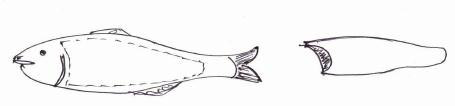
- Darne: – A piece or slice of cut across and through the bone of large whole round fish. Example – Salmon, cord.

- Trancon:– A slice of flat fishs cut on the bone. It is a section of a large flat fish such as Turbot or Brill after being split down the backbone, approximately 45 mm thick.
- Goujon:- This term is applied to fillet of fishs cut into strips format. Approximate size of gorgons is 3” X ¼”.
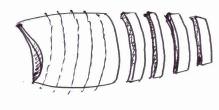
- Goujonette: – As well as gorgons but smaller. Approximate size of gougonnettes is 2” X ¼”.
- Paupiette:- A rolled and stuffed fillet, usually of flat fishs. The stuffing would generally be a fine fish farce.
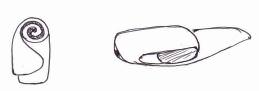
- Supreme: A portioned piece – cut on the slant from the fillet of a large round or flat fishs.