
Table of Contents
Q.1. Establish the importance of maintenance department for the hotel in providing better services to the guests.
Maintenance department plays a crucial role in the overall functioning of a hotel. It is responsible for ensuring that the hotel’s physical facilities are well-maintained, safe, and appealing to the guests. The importance of the maintenance department in providing better services to the guests can be described as follows:
- Guest Satisfaction: One of the primary objectives of a maintenance department is to ensure that the guests are satisfied with the facilities and services provided by the hotel. By maintaining the facilities, the department can ensure that they meet the guests’ expectations and provide a pleasant stay.
- Safety and Security: The maintenance department is responsible for ensuring that the hotel’s facilities are safe and secure. This includes checking the electrical, plumbing, and HVAC systems, as well as maintaining fire safety equipment, such as smoke detectors and sprinkler systems. By ensuring the safety of the guests, the department can provide them with peace of mind and a sense of security.
- Preventive Maintenance: Preventive maintenance is critical to the longevity of a hotel’s facilities. The maintenance department is responsible for identifying potential problems before they become major issues. By performing regular inspections and maintenance, the department can prevent breakdowns and downtime that could impact the guests’ stay.
- Cost Savings: The maintenance department can help the hotel save money by preventing costly breakdowns and repairs. By performing regular maintenance, the department can identify and fix issues before they become major problems, reducing the need for costly repairs and replacements.
- Operational Efficiency: The maintenance department plays a crucial role in ensuring the smooth operation of the hotel. By keeping the facilities in good working condition, the department can help other departments operate more efficiently. This can result in better services for the guests, such as faster response times and higher quality services.
In conclusion, the importance of the maintenance department in providing better services to the guests cannot be overstated. By ensuring that the hotel’s physical facilities are well-maintained, safe, and appealing, the department can contribute to guest satisfaction, safety, cost savings, and operational efficiency.
Q.2. Explain the importance of any five modern day equipment used by hotel for security of guests and property.
In today’s world, the security of guests and property is of utmost importance in the hospitality industry. To ensure the safety and security of their guests and property, hotels use a variety of modern security equipment. The importance of some of the most common modern security equipment used in hotels is discussed below:
- CCTV Cameras: CCTV cameras are used to monitor the premises and detect any suspicious activity. They help deter criminals and assist in identifying and prosecuting offenders in the event of a crime.
- Access Control Systems: Access control systems, such as electronic key cards and biometric scanners, are used to limit access to certain areas of the hotel. They help prevent unauthorized access, theft, and other security breaches.
- Fire Alarm Systems: Fire alarm systems are used to detect fires and alert guests and staff to evacuate the building. They are essential for protecting guests and staff in the event of a fire and preventing the spread of fire.
- Intruder Alarms: Intruder alarms are used to detect and alert staff to the presence of unauthorized individuals on the premises. They help prevent theft, vandalism, and other crimes.
- Metal Detectors: Metal detectors are used to screen guests and visitors for weapons or other dangerous items. They help prevent violence and ensure the safety of guests and staff.
By using modern security equipment, hotels can create a secure and safe environment for their guests and staff, deter criminals and prevent crime, and protect their property from theft, damage, and other security breaches. Investing in these security systems is essential for maintaining the reputation of the hotel and ensuring the safety and security of all who enter the premises.
Q.3. Describe various methods of distribution of water in a hotel.
Water distribution is a critical component of any hotel’s infrastructure. The proper distribution of water is essential for ensuring the smooth and efficient operation of various hotel functions, including cooking, cleaning, and guest services. There are various methods of distributing water in a hotel, which are discussed below:
- Direct Distribution: In direct distribution, water is distributed directly from the main supply to the various outlets in the hotel, such as taps and showers. This is a simple and cost-effective method, but it can lead to issues with water pressure and temperature regulation.
- Indirect Distribution: In indirect distribution, water is distributed through a secondary network of pipes, which helps regulate water pressure and temperature. This method is more expensive than direct distribution but provides better control over the distribution of water.
- Ring Distribution: In ring distribution, water is distributed through a network of pipes that form a loop. This method helps ensure a consistent supply of water and allows for easy maintenance and repair of the system.
- Zone Distribution: In zone distribution, water is distributed to different areas or zones of the hotel, which helps regulate the flow of water to different parts of the hotel. This method is useful for hotels with multiple floors or wings.
- Manifold Distribution: In manifold distribution, water is distributed through a central manifold or control unit, which helps regulate the flow of water to different parts of the hotel. This method is useful for hotels with multiple floors and a large number of rooms.
The choice of water distribution method depends on various factors, including the size and layout of the hotel, the number of rooms and floors, and the budget. The proper distribution of water is critical for ensuring the smooth operation of the hotel and providing guests with a comfortable and enjoyable stay.
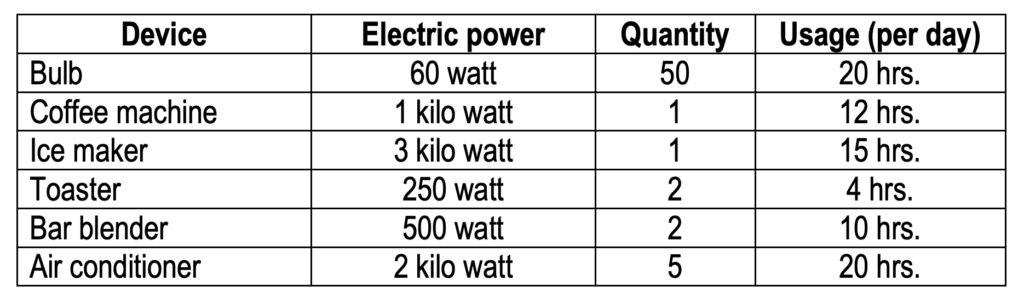
OR Calculate the electricity bill of a coffee shop of a five star hotel for September 2017. Cost of electric energy is Rs.5/- per unit:
Q.4. Write short notes on:
(a) Cost plus fixed percentage contract
Cost plus fixed percentage contract is a type of contract in which the contractor is reimbursed for the actual cost of the work plus a fixed percentage of the cost as a profit. In this type of contract, the contractor is paid for all direct and indirect costs incurred in the performance of the work, including labor, materials, equipment, and overhead costs, plus a percentage of the total cost as profit. The percentage of profit is fixed at the time of contract negotiation and remains the same throughout the project.
The advantage of this type of contract for the contractor is that it provides a guaranteed profit margin, regardless of the actual cost of the work. However, for the client, this type of contract may result in higher costs, as there is no incentive for the contractor to minimize costs.
This type of contract is commonly used in construction projects where the actual costs are difficult to estimate accurately or are subject to change due to unforeseen circumstances.
(b) Reasons for replacement of equipment
Equipment in the hospitality industry, like any other industry, needs to be maintained and eventually replaced. There are several reasons why equipment may need to be replaced, including:
- Age: Equipment that has been in use for a long time may become outdated or less efficient, leading to increased operating costs or reduced productivity.
- Damage or wear and tear: Equipment that has been damaged or worn out may become less effective or may even pose a safety risk to employees or customers.
- Technological advances: Newer equipment may be more technologically advanced, leading to improved efficiency, reliability, or safety.
- Changing needs: As the needs of the business change, the equipment may need to be replaced to better meet those needs.
- Cost savings: Replacing old or inefficient equipment with newer, more energy-efficient equipment can result in significant cost savings in the long run.
- Regulatory compliance: Changes in regulations or standards may require equipment to be replaced to meet new requirements.
OR Discuss various electrical lighting devices used in hotels, mentioning their advantages and other features.
Lighting plays an important role in the hospitality industry, as it can affect the overall ambiance and mood of a hotel. There are several types of electrical lighting devices that are commonly used in hotels, each with its own advantages and features. Some of the most common electrical lighting devices used in hotels are:
- Incandescent bulbs: Incandescent bulbs are the most traditional type of lighting, and they emit a warm and soft light. They are inexpensive, but not energy-efficient, and have a shorter lifespan compared to other types of bulbs.
- Fluorescent tubes: Fluorescent tubes are more energy-efficient than incandescent bulbs, and they have a longer lifespan. They emit a bright and white light that is suitable for large areas. However, they may flicker or hum and contain small amounts of mercury, which can be harmful to the environment.
- LED lights: LED lights are the most energy-efficient lighting option, consuming up to 80% less energy than traditional incandescent bulbs. They have a long lifespan, produce little heat, and are available in a range of colors. They are also dimmable and offer good control over the lighting.
- Halogen lights: Halogen lights are similar to incandescent bulbs, but they are more energy-efficient and have a longer lifespan. They emit a bright and white light and are suitable for task lighting.
- Track lighting: Track lighting is a flexible lighting system that is used to highlight specific areas or objects. It consists of a track with adjustable fixtures that can be positioned to provide focused light where needed.
- Chandeliers: Chandeliers are a decorative lighting option that can add a touch of elegance to a hotel’s lobby or restaurant. They come in a range of styles and sizes, from modern to traditional.
- Sconces: Sconces are wall-mounted fixtures that provide ambient or accent lighting. They come in a range of styles and can be used to create a specific mood or ambiance.
The choice of lighting device depends on the specific needs and requirements of a hotel, as well as the budget. LED lights are becoming increasingly popular in the hospitality industry due to their energy efficiency and long lifespan, while chandeliers and sconces are commonly used for decorative purposes.
Q.5. Define noise pollution. What are the effects of noise pollution? How noise pollution can be controlled in a hotel?
Noise pollution refers to the presence of unwanted, excessive or unpleasant sound that can be harmful to human health and well-being. In a hotel, noise pollution can be caused by various factors, including traffic noise, mechanical equipment noise, music, loud guests, and other sources of noise.
The effects of noise pollution in a hotel can be numerous, including:
- Sleep disturbance: Noise pollution can disrupt sleep, leading to fatigue and reduced productivity.
- Hearing damage: Exposure to high levels of noise can cause hearing damage over time.
- Health problems: Prolonged exposure to noise pollution can lead to stress, anxiety, high blood pressure, and other health problems.
- Negative guest experience: Noise pollution can negatively impact a guest’s experience, leading to dissatisfaction and poor reviews.
To control noise pollution in a hotel, it is important to take the following measures:
- Sound insulation: Sound insulation can be installed in hotel rooms to reduce noise from outside sources. This can include double-paned windows, sound-absorbing curtains, and acoustic wall panels.
- Soundproofing: Soundproofing can be used to reduce noise from inside the hotel, such as between rooms or floors. This can include the use of sound-absorbing materials and seals around doors and windows.
- Noise regulations: Hotels should comply with local noise regulations and implement policies to ensure that guests are not disturbing others.
- Staff training: Hotel staff should be trained to deal with noise complaints and take appropriate action to address them.
- Use of technology: Hotels can use technology, such as white noise machines or sound masking systems, to reduce the impact of noise pollution on guests.
By taking these measures, hotels can minimize the impact of noise pollution on their guests and provide a peaceful and enjoyable stay.
Q.6. With the help of a neat sketch, explain the Base Exchange Method for the removal of permanent hardness of water.
The Base Exchange Method is a process used to remove permanent hardness of water caused by the presence of calcium and magnesium ions. The process involves passing the hard water through a bed of ion-exchange resin, which contains sodium ions. The resin exchanges the sodium ions for the calcium and magnesium ions in the water, effectively removing them from the water.
[Sketch to be added later]
The process involves the following steps:
- Hard water is passed through a bed of ion-exchange resin, which contains sodium ions. The calcium and magnesium ions in the water replace the sodium ions on the resin beads.
- As the water passes through the resin bed, the calcium and magnesium ions are exchanged for the sodium ions, and the water becomes soft.
- The ion-exchange resin gradually becomes exhausted as it becomes saturated with calcium and magnesium ions. At this point, the resin must be regenerated.
- Regeneration is achieved by passing a solution of sodium chloride (brine) through the resin bed. The sodium ions in the brine replace the calcium and magnesium ions on the resin, and the resin is restored to its original state.
- The excess brine and the calcium and magnesium ions are flushed out of the system, and the ion-exchange resin bed is ready for use again.
The Base Exchange Method is an effective and efficient way to remove permanent hardness of water, and is commonly used in hotels, restaurants, and other hospitality establishments to improve the quality of water used for cooking, cleaning, and other purposes.
OR Explain Vapour Compression Refrigeration Cycle.
The Vapor Compression Refrigeration Cycle is a process used to remove heat from a space or substance, typically to lower the temperature or to preserve food or other perishable items. The process works by compressing and expanding a refrigerant gas, which allows heat to be removed from the system.
The Vapour Compression Refrigeration Cycle can be explained with the help of the following steps:
- Compression: The process starts with the compressor, which compresses the refrigerant gas, raising its temperature and pressure. The high-pressure gas is then pumped into the condenser.
- Condensation: In the condenser, the high-pressure gas is cooled by passing it through a series of coils. As the gas cools, it condenses into a high-pressure liquid, which is then passed through a metering device.
- Expansion: The metering device reduces the pressure of the liquid refrigerant, causing it to expand and become a low-pressure gas. The expansion process also causes the temperature of the gas to drop significantly.
- Evaporation: The low-pressure gas is then passed through a series of coils in the evaporator, where it absorbs heat from the surrounding environment. As the gas absorbs heat, it becomes a low-pressure vapor and is then drawn back into the compressor, starting the cycle over again.
The Vapour Compression Refrigeration Cycle is commonly used in refrigerators, air conditioners, and other cooling systems. It is an efficient and effective way to remove heat from a space or substance, making it an important part of many industries, including the hospitality industry.
Q.7. What do you understand by the term ‘Audio Visual Equipment? List the various audio visual equipment provided to the guest by a hotel. Prepare a maintenance program for any audio visual equipment.
Audio Visual (AV) equipment refers to the tools and devices used to enhance the audio and visual experience of guests in a hotel. The use of AV equipment is essential for providing a memorable and engaging guest experience, whether for business or leisure purposes.
The various audio visual equipment provided to guests by a hotel may include:
- Televisions: Televisions are essential equipment in hotel rooms, providing guests with access to news, entertainment, and other programming.
- Projectors: Projectors are used to display large-scale visuals and can be used in conference rooms or event spaces.
- Sound systems: Sound systems are used to enhance the audio experience in a room, providing clear sound for music or speeches.
- Microphones: Microphones are used for events, allowing speakers to project their voices more effectively.
- Speakers: Speakers are used for playing music or other audio content in a room or event space.
- DVD and Blu-ray players: DVD and Blu-ray players allow guests to watch movies or other video content in their hotel rooms.
- Video conferencing equipment: Video conferencing equipment is used for remote meetings, enabling guests to connect with colleagues or business partners around the world.
To ensure that AV equipment is functioning properly and is available to guests at all times, it is important to implement a maintenance program. A maintenance program for AV equipment may include the following steps:
- Regular inspections: Regular inspections should be conducted to ensure that all equipment is in good working order.
- Scheduled maintenance: Equipment should be maintained on a regular schedule, including cleaning, lubrication, and replacement of worn or damaged parts.
- Emergency repairs: In the event of a malfunction or breakdown, equipment should be repaired or replaced as quickly as possible to minimize the impact on guest experience.
- Staff training: Hotel staff should be trained to operate and maintain AV equipment, ensuring that it is used correctly and not damaged due to improper use.
By implementing a maintenance program, hotels can ensure that their AV equipment is functioning properly and is available to guests when needed, providing a seamless and enjoyable guest experience.
OR Differentiate between Elevator and Escalator. Write a few common reasons for accidents related to elevators. What safety features are included in hotel elevators for the safety of the guest?
Elevator vs. Escalator
Elevators and escalators are both types of vertical transportation systems commonly found in hotels, but they operate differently. Elevators move people or goods vertically between floors of a building, while escalators move people horizontally between different levels of a building. Elevators typically have doors that open and close and are enclosed in a shaft, while escalators are open and continuous and are housed in a truss.
Elevator Accidents
Elevator accidents can occur due to a variety of reasons, including:
- Mechanical failure: Malfunctioning parts or improper maintenance can cause elevator failure, resulting in accidents.
- Electrical issues: Electrical problems can cause elevator malfunctions or accidents, such as getting trapped between floors.
- Improper use: Improper use of elevators, such as overloading, jumping, or forcing open doors, can result in accidents.
- Human error: Human error, such as mistakes made by the operator, can also cause elevator accidents.
Safety Features in Hotel Elevators
To ensure the safety of guests, hotel elevators are equipped with several safety features, including:
- Emergency stop buttons: Emergency stop buttons are located inside the elevator, enabling passengers to stop the elevator in the event of an emergency.
- Door sensors: Door sensors are designed to prevent the doors from closing when there is an obstruction, preventing injury or entrapment.
- Overload protection: Overload protection is designed to prevent elevators from carrying more weight than they can safely support, reducing the risk of accidents.
- Alarm and intercom systems: Alarm and intercom systems are installed in elevators, enabling passengers to contact help in the event of an emergency.
- Fire safety: Elevators in hotels are often equipped with fire safety features, such as smoke detectors, fire-rated doors, and automatic recall systems.
By implementing these safety features, hotels can ensure that their elevators are safe for guests and employees to use, reducing the risk of accidents and improving the overall guest experience.
Q.8. What precautions should be observed by a banquet chef while using high pressure gas burners?
High-pressure gas burners are commonly used in commercial kitchens, including in banquet facilities. They are designed to provide a high level of heat for cooking large quantities of food quickly and efficiently. However, their use also poses certain risks, including fire and gas leaks. It is important for chefs to take precautions when using high-pressure gas burners to ensure the safety of themselves, their staff, and their guests.
The precautions that should be observed by a banquet chef when using high-pressure gas burners are as follows:
- Check for leaks: Before using a high-pressure gas burner, it is important to check for gas leaks. A gas leak can cause a fire or explosion, so it is important to use a gas detector to check for leaks.
- Keep the area well-ventilated: It is important to ensure that the area where the gas burner is being used is well-ventilated. A lack of ventilation can cause the accumulation of harmful gases, leading to health problems for those in the area.
- Use only approved equipment: Chefs should only use high-pressure gas burners that are approved for commercial use and have been inspected and tested for safety.
- Use the burner on a stable surface: The high heat generated by the burner can cause it to move or shift, so it is important to use it on a stable and level surface.
- Follow instructions: It is important to follow the manufacturer’s instructions when using a high-pressure gas burner, including how to start and shut down the burner, and how to control the temperature.
- Never leave the burner unattended: The chef should never leave the high-pressure gas burner unattended while it is in use. It is important to stay nearby in case of any issues or emergencies.
By following these precautions, chefs can use high-pressure gas burners safely in banquet facilities, reducing the risk of accidents and ensuring the safety of everyone involved.
Q.9. Define the following in one or two lines (any ten):
(a) PVC (b) Insulator (c) Class ‘B’ Fire (d) Conduction (e) Rubbish (f) Relative humidity (g) HVAC (h) Thermostat (i) Ignition temperature (j) Soft water (k) Routine maintenance
(a) PVC: Polyvinyl chloride, a synthetic plastic polymer used in various applications, including pipes, electrical cable insulation, and flooring.
(b) Insulator: A material that does not allow the flow of electric current, often used in electrical wiring to prevent electrical shock or damage.
(c) Class ‘B’ Fire: A type of fire that involves flammable liquids or gases, such as gasoline or propane, that require a specific type of fire extinguisher to be put out.
(d) Conduction: The transfer of heat or electricity through a material or medium, typically through direct contact.
(e) Rubbish: Waste material that is no longer useful or required and needs to be disposed of.
(f) Relative humidity: The amount of water vapor present in the air compared to the maximum amount the air can hold at a given temperature, expressed as a percentage.
(g) HVAC: Heating, ventilation, and air conditioning system used to maintain comfortable indoor air quality and temperature in buildings.
(h) Thermostat: A device that automatically regulates temperature, often used in HVAC systems to control heating and cooling.
(i) Ignition temperature: The minimum temperature required to start a combustion reaction in a given material.
(j) Soft water: Water that contains low levels of dissolved minerals, particularly calcium and magnesium ions, often achieved through a water softening process.
(k) Routine maintenance: Regular upkeep and inspection of equipment, facilities, or systems to ensure proper functioning and prevent major breakdowns.
Q.10. Match the following:
(a) Sound (i) Watt
(b) Fuel (ii) Celsius
(c) Energy (iii) Ppm
(d) Temperature (iv) Lux
(e) Air conditioning (v) Btu
(f) Hardness of water (vi) Decibel
(g) Power (vii) Kwh
(h) Electricity (viii) Watt/sec
(i) Illumination (ix) Kcal
(j) Heat (x) Kcal/kg
Answer
| Term | Unit of Measurement |
|---|---|
| Sound | Decibel |
| Fuel | Btu |
| Energy | Kcal |
| Temperature | Celsius |
| Air conditioning | Watt |
| Hardness of water | Ppm |
| Power | Watt/sec |
| Electricity | Kwh |
| Illumination | Lux |
| Heat | Kcal/kg |