Table of Contents
Hierarchy is essential in an organisation because it provides structure, clarity, and direction. It defines degrees of authority and reporting relationships and develops a clear chain of command. The value of hierarchy stems from its ability to improve decision making, encourage accountability, facilitate coordination and communication, cultivate specialisation and expertise, and assist growth and development. Hierarchy ensures that decisions are made efficiently and in accordance with the company’s goals by identifying decision-making authority. It also encourages responsibility by clearly defining roles and duties, allowing for better tracking of performance and outcomes. Hierarchy helps coordination and communication by creating routes for information to flow through, promoting successful collaboration and alignment across multiple levels and departments. Furthermore, it enables specialisation, allowing individuals to build competence in specialised areas.
Hierarchy in small, medium, large and chain hotels
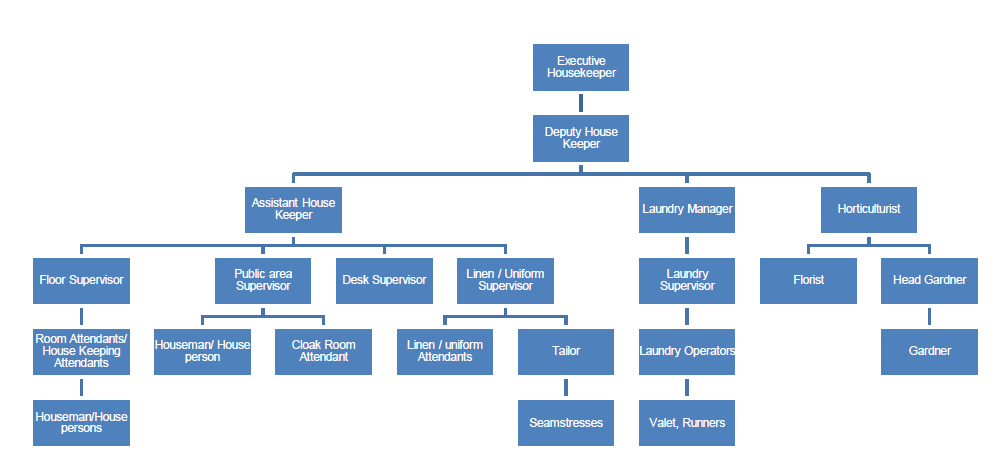
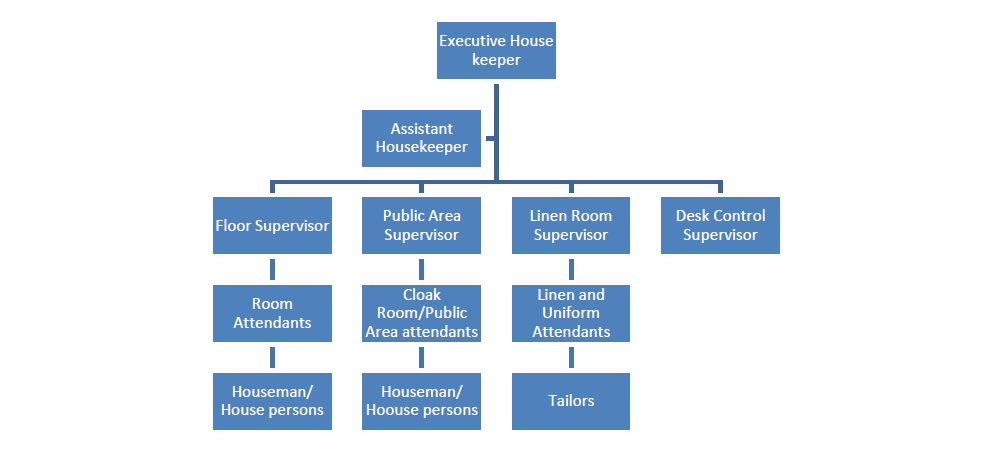
Hierarchy is important in a hotel because it provides structure, organisation, and effective management. A well-defined hierarchy establishes roles, responsibilities, and reporting lines, allowing for smooth operations and effective decision-making inside the hotel. Each hotel’s hierarchy is determined by criteria such as the size of the facility, the number of employees, and the complexity of operations. To enable effective communication, coordination, and responsibility, the right hierarchy must be determined.The formation of a hierarchy allows for a clear chain of command, with managers and supervisors managing various departments and functions. This division of responsibilities aids in streamlining operations, properly allocating resources, and ensuring that tasks are completed efficiently. It helps to have a defined hierarchy.
Small hotel
To improve the visitor experience, a small hotel can provide a variety of amenities and services. It usually has a lobby room or front desk where visitors can check in, check out and ask for assistance from hotel staff. Small hotels feature a limited number of guest rooms in various sizes and configurations, with facilities such as comfortable beds, private bathrooms, minimal furniture, and televisions, telephones, and Wi-Fi connectivity. Housekeeping services ensure that guest rooms are cleaned and maintained on a regular basis. Smaller hotels may not have complex dining options, but they frequently include a breakfast area or a small restaurant where guests can enjoy meals or snacks. Guests can rest and socialise in common areas such as the foyer, lounge, or seating areas.
 Medium Hotel
In comparison to a small hotel, a medium-sized hotel provides a broader selection of amenities and services, catering to the needs and preferences of a bigger number of guests. Medium-sized hotels offer a choice of guest rooms with varying configurations and amenities such as seating areas, work stations, minibars, and in-room safes, in addition to a lobby area or front desk for check-in and help. Dining options are more diverse, with many hotels offering a restaurant that serves meals throughout the day, as well as cafes, bars, and room service. Meeting and event areas in medium-sized hotels are frequently outfitted with audiovisual technology and food services. Fitness centres, spas, saunas, and swimming pools are frequently accessible to guests for their well-being and relaxation. They may also include business centres to meet the needs of their customers.
Large Hotel
A large hotel provides a wide range of amenities and services to accommodate a large number of guests while catering to their diverse needs and tastes. Large hotels offer a broad choice of guest rooms, which might include magnificent suites, interconnecting rooms, and themed accommodations, in addition to a vast and well-equipped reception area or front desk. These rooms frequently have premium furniture, high-end facilities, and breathtaking views. There are numerous restaurants serving a range of cuisines, as well as cafes, bars, and speciality dining experiences. Large hotels often have large meeting and event areas that can accommodate conventions, conferences, and large festivities. These venues have cutting-edge technology, a dedicated event crew, and banquet services. Fitness centres with cutting-edge equipment, as well as beautiful spas.