
Table of Contents
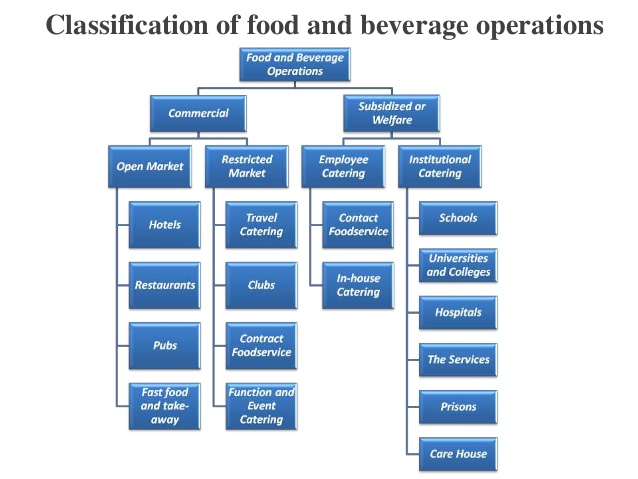
The Food and Beverage (F&B) sector is a significant part of the hospitality industry, encompassing a wide range of services and business models. To better understand this diversity, the F&B operations are classified into two main categories: Commercial and Subsidized or Welfare operations. Here’s a closer look at each classification:
Commercial Operations
Commercial operations are profit-driven and include several types of establishments that cater to various market segments:
Open Market
- Hotels: Offering dining services to guests and visitors, often with a variety of cuisines and meal plans.
- Restaurants: Establishments ranging from casual to fine dining, focusing on meal service excellence.
- Pubs: Casual settings that serve alcoholic beverages with food often being a secondary service.
- Fast Food and Take-away: Focused on quick service and convenience, often with limited seating.
Restricted Market
- Travel Catering: Services provided in airplanes, trains, ships, and the like, catering to travelers.
- Clubs: Exclusive establishments that serve a specific membership base with F&B services.
- Contract Foodservice: Companies that operate F&B services on behalf of other businesses, such as office cafeterias.
- Function and Event Catering: Specialized services for events like weddings, corporate gatherings, and public events.
Subsidized or Welfare Operations
Subsidized or welfare operations are not primarily profit-oriented and often aim to serve a particular community or group:
Employee Catering
- Contact Foodservice: F&B services contracted out to serve employees within an organization.
- In-house Catering: F&B services operated by the organization itself for its employees.
Institutional Catering
- Schools: Providing nutritious meals to students, often at subsidized rates.
- Universities and Colleges: Catering to a diverse student body with a variety of dining options.
- Hospitals: Offering tailored food services to patients, staff, and visitors, with a focus on health and nutrition.
- The Services: F&B services within military and other service institutions, catering to personnel.
- Prisons: Ensuring the provision of meals to inmates, focusing on standard dietary requirements.
- Care House: Providing meals to residents in a care or residential home setting, often with special dietary considerations.
Understanding these classifications is crucial for hospitality students as it helps in identifying the scope of services, target markets, and operational considerations. Each category requires unique management strategies, customer service approaches, and marketing tactics.
In conclusion, the F&B sector is diverse and multifaceted. As a hospitality professional, recognizing the nuances of each operation type allows for better service delivery, improved customer satisfaction, and operational success.