
Table of Contents
Meringue is a type of dessert, often associated with French, Swiss, and Italian cuisine, traditionally made from whipped egg whites and sugar, and occasionally an acidic ingredient such as lemon, vinegar or cream of tartar. A binding agent such as salt, cornstarch or gelatin may also be added to the eggs. The key to the formation of a good meringue is the formation of stiff peaks by denaturing the protein ovalbumin (a protein in the egg whites) via mechanical shear. Meringues are often flavoured with vanilla, a small amount of almond, or coconut, although if extracts of these are used and are based on an oil infusion, an excess of fat from the oil may inhibit the egg whites from forming a foam.
They are light, airy and sweet confections. Homemade meringues are often chewy and soft with a crisp exterior, while many commercial meringues are crisp throughout. A uniform crisp texture may be achieved at home by baking at a low temperature (180–200 °F (82–93 °C)) for an extended period of up to two hours.
Making of Meringues
Learn how to make this elegant dessert from egg whites and sugar.
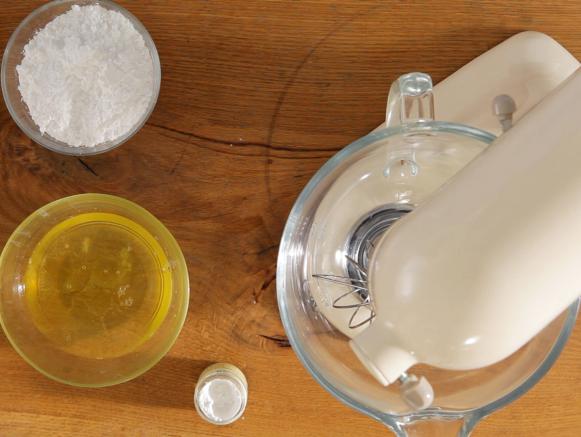
Step 1: Prep for French Meringue
French meringue is an unheated meringue that should be cooked on top of a pie, such as in Lemon Meringue, or as the base of meringue cookies and shells. Make sure your egg whites and equipment are clean. Even the smallest drop of yolk or oil will keep the eggs from reaching their full volume.
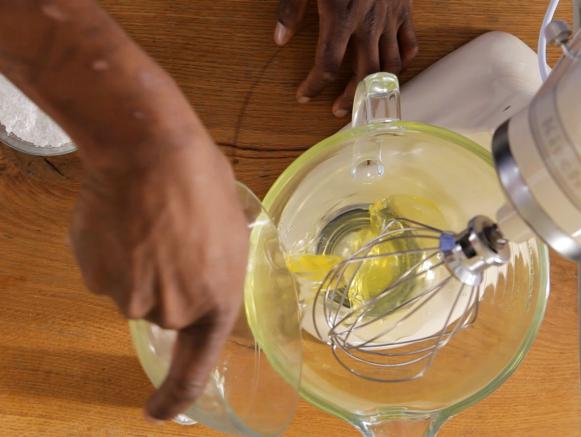
Step 2: Egg Whites Are Best at Room Temperature
Start with room-temperature egg whites — they whip higher.
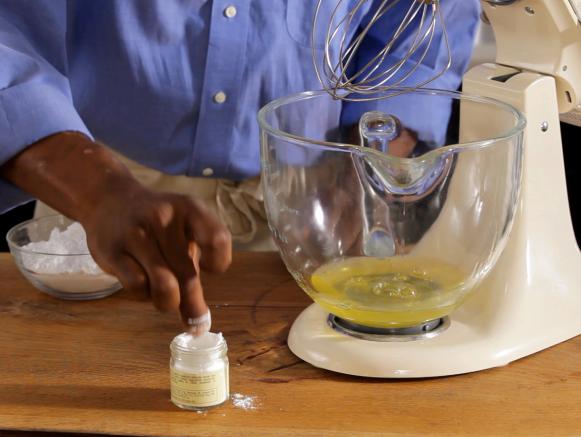
Step 3: Add Cream of Tartar
Add a pinch of cream of tartar — it’s acidic and that adds stability and volume to the egg whites. Tip: If you don’t have cream of tartar, use a little lemon juice.
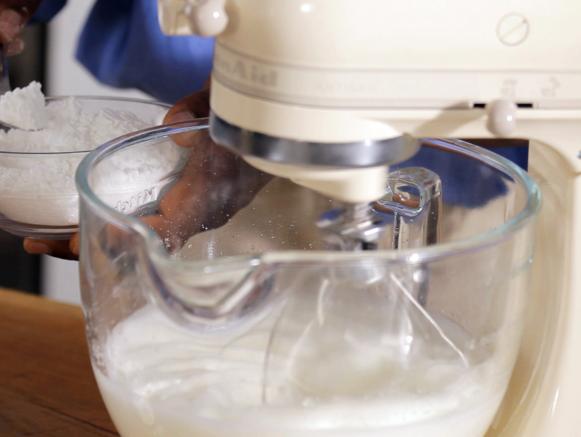
Step 4: Start to Whip the Eggs
Whip them until they’re foamy and starting to get thicker. Then, slowly add confectioners’ sugar — it melts easily and won’t weigh down your meringue. Tip: If you don’t have a stand mixer, you can still use a hand mixer.
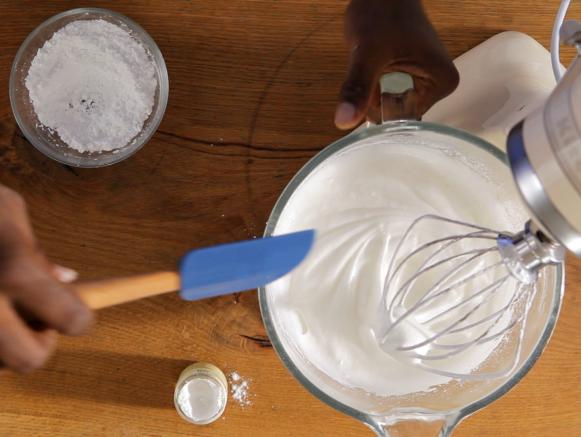
Step 5: Watch for Stiff Peaks
Continue whipping on high speed until it’s thick and foamy, like shaving cream. Whip until stiff peaks form. If it’s glossy and triple in volume, you did it. No need to take it further or the texture will change.
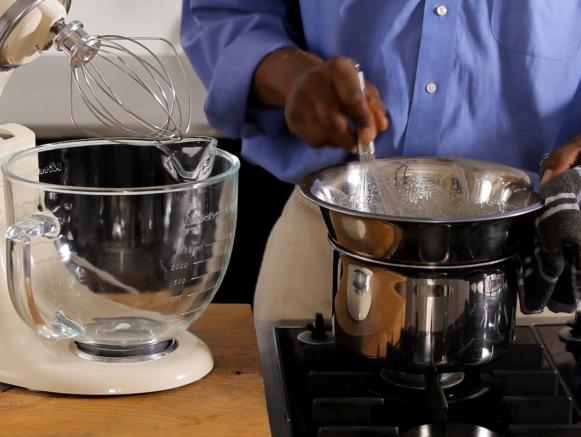
Step 6: Swiss Meringue
A Swiss meringue is a cooked meringue and it’s also more stable, meaning it won’t collapse. This meringue is used in buttercream or can also be poached for the classic French dessert Floating Island.
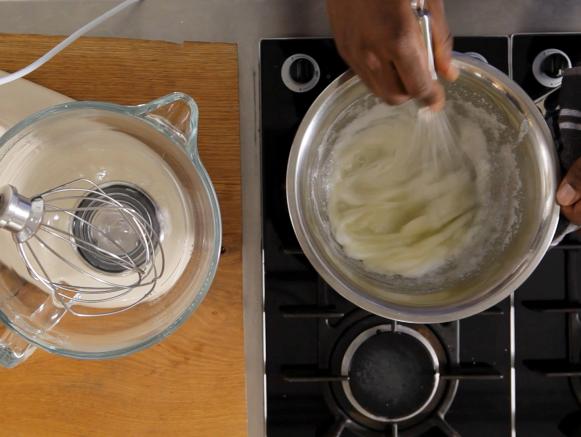
Step 7: Use a Double Boiler
Combine egg whites and granulated sugar over a double boiler. Tip: Older egg whites whip the highest. Keep whisking or you’ll have scrambled eggs instead.
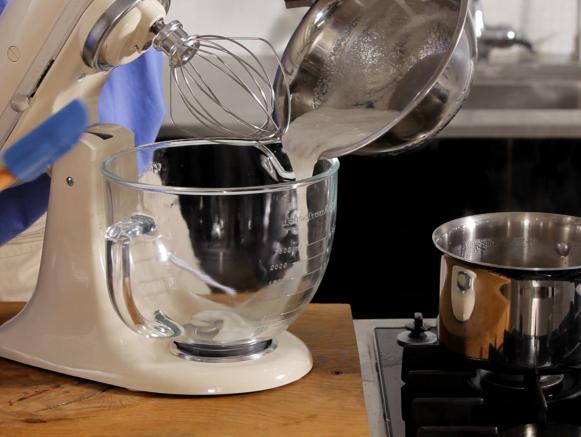
Step 8: Whisk the Sugar
Whisk until the sugar melts and you hit 130 degrees F on a thermometer. Once it’s hot, it goes into the mixer. Tip: If the bowl is hot, use a potholder. You want it to be foamy and thick when you’re done mixing. You’ll also notice that, as the mixture thickens, the bowl will get cooler.
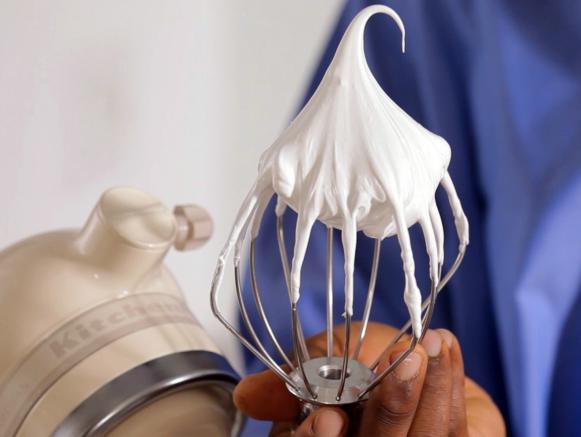
Step 9: Whip the Mixture
Whip until you get stiff peaks that should stand up on the end of the whisk. Your desserts will receive a standing ovation.