
Table of Contents
Introduction
Yield management is the technique which is used to increase the room revenue. In the hotel industry, yield management is also sometimes called revenue management.
Hotel’s daily performance like most of other industries is evaluated on the basis of either occupancy percentage or average daily revenue. The tariff may be reduced or discount percentage may be increased to increase the occupancy but it may not increase the revenue in the same proportion. Some hotels prefer to keep the tariff low in order to increase the occupancy percentage and on the contrary some hotels prefer to increase the tariff in spite of low occupancy percentage. The most appropriate room tariff will be which gets the maximum possible revenue and maximum possible occupancy percentage and this is called yield management.
Application of Yield Management to Rooms Division:-
1. Capacity Management
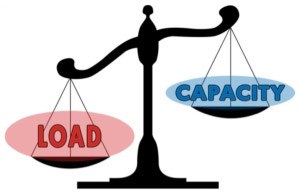 Capacity Management involves a number of methods of controlling and limiting room supply.
For example, hotels will typically accept a statistically supported number of reservations in excess of actual room availability in an attempt to offset the effects of early check-outs, cancellations, and no-shows. Capacity management (also called selective overbooking) balances the risk of overselling against the potential loss of revenue arising from spoilage r(rooms going unoccupied after reservations were closed out).
Other forms of capacity management include determining how many walk-ins to accept on the day of arrival based on expected cancellations and no-shows. Capacity management usually varies with room type. That is, it might be economically advantageous to overbook more in lower-priced rooms because upgrading to higher-priced rooms is an acceptable solution to an oversell problem. The amount of such overbooking depends, of course, on the demand for the higher-priced rooms. In sophisticated computerized yield management systems, capacity management may also be influenced by the availability of rooms at neighboring hotels or competing properties.
2. Discount allocation
 Discounting involves restricting the time period and product mix (rooms available at reduced prices (prices below rack rate). For each discounted room type, reservations are requested at various available rates, each set below rack rate. The theory is that the sale of a perishable item (the guestroom) at a reduced price is often better than no sale at all. The primary objective of discount allocation is to protect enough remaining rooms at a higher rate to satisfy the projected demand for rooms at that rate; while at the same time filling rooms that would otherwise have remained unsold. This process is repeated for each rate level from rack rate on down. Implementing such a scheme requires a reliable mechanism for demand forecasting.
A second objective of limiting discounts by room type is to encourage upselling. This technique requires a sound estimate of price elasticity and/or the probability of upgrading. (Elasticity refers to the relationship between price and demand.)
3. Duration control

Duration control places time constraints on accepting reservations in order to protect sufficient space for multi-day requests (representing higher levels of revenue).
This means that, under yield management, a reservation for a one night stay may be rejected, even though space is available.
For example, if Wednesday is close to selling out but other nights are not, a hotel may want to optimize the revenue potential of the last few rooms on Wednesday by requiring multi-day stays, even at a discounted rate, rather than accepting reservations for Wednesday only. similarly, of the hotel will be close to capacity Tuesday, Wednesday and Thursday, then accepting a one-night stay during any of those days may be detrimental to the hotel’s overall room revenue. Hotels facing such dilemmas often require all reservations for projected full-occupancy periods to be for more than one evening.