
Table of Contents
Q.1. What do you understand by the term Garde Manger? Give the breakdown of larder work. Describe the liaison between larder and hot kitchen.
Garde Manger
Garde Manger, also known as the cold kitchen or pantry, is a specialized section within a professional kitchen that focuses on the preparation of cold dishes, including salads, cold appetizers, charcuterie, and other cold food items. It plays a crucial role in maintaining the highest standards of hygiene and quality control, as well as ensuring proper storage and preservation of perishable ingredients.
Breakdown of Larder Work
Larder work typically involves various tasks and responsibilities, including:
- Preparation of cold dishes: This includes assembling, seasoning, and garnishing salads, cold appetizers, sandwiches, and other cold menu items.
- Butchery and portioning: Larder chefs are responsible for trimming, portioning, and marinating meats, poultry, and fish for both the cold and hot kitchen sections.
- Charcuterie: Larder chefs prepare various types of cured, smoked, and preserved meats, including sausages, pâtés, terrines, and galantines.
- Cheese and dairy: Larder chefs are responsible for storing, cutting, and arranging cheese and dairy products for service.
- Preservation: The larder section is responsible for pickling, fermenting, and preserving various ingredients to extend their shelf life and enhance their flavors.
- Garnishes and dressings: Larder chefs prepare a variety of dressings, sauces, and garnishes to complement cold dishes.
- Ingredient storage and inventory: Proper storage and inventory management of perishable ingredients are vital tasks in the larder section to ensure food safety and minimize waste.
Liaison between Larder and Hot Kitchen
The larder section plays an essential role in supporting the hot kitchen by:
- Preparation of ingredients: Larder chefs are responsible for preparing and portioning meats, fish, and poultry, as well as vegetables for the hot kitchen.
- Stock and sauce production: The larder section may assist in preparing basic stocks and sauces for the hot kitchen, such as fish stock or veal stock, which can be used to create various dishes.
- Food safety and hygiene: The larder section ensures that all ingredients, especially perishable items, are stored and handled correctly to maintain the highest food safety standards.
- Efficiency and communication: The larder and hot kitchen sections must work closely together to ensure that dishes are prepared efficiently and consistently, which requires clear communication and coordination between the two areas.
- Menu planning: Larder chefs collaborate with hot kitchen chefs to create balanced and appealing menus, considering the availability of seasonal ingredients and the compatibility of flavors and textures.
OR (a) Explain the duties and responsibilities of larder chef.
A larder chef, also known as a garde manger chef or pantry chef, is responsible for managing the larder or cold kitchen section of a professional kitchen. Their primary duties and responsibilities include:
- Menu planning: The larder chef is involved in the creation and planning of cold dishes, such as salads, appetizers, sandwiches, and charcuterie items, in collaboration with other chefs.
- Preparation of cold dishes: Larder chefs are responsible for preparing, assembling, and garnishing a variety of cold menu items, ensuring that they are visually appealing and meet the required standards of taste and quality.
- Ingredient storage and inventory: The larder chef must manage the storage and inventory of perishable ingredients, ensuring proper temperature control and minimizing waste by using a first-in, first-out (FIFO) system.
- Food safety and hygiene: Maintaining the highest standards of food safety and hygiene is a critical responsibility of the larder chef, who must ensure that all ingredients are stored, handled, and prepared according to established guidelines.
- Butchery and portioning: Larder chefs are skilled in trimming, portioning, and marinating meats, poultry, and fish for both the cold and hot kitchen sections.
- Charcuterie: The larder chef prepares various types of cured, smoked, and preserved meats, including sausages, pâtés, terrines, and galantines.
- Preservation: Larder chefs are responsible for pickling, fermenting, and preserving various ingredients to extend their shelf life and enhance their flavors.
- Garnishes and dressings: The larder chef creates a variety of dressings, sauces, and garnishes to complement and enhance cold dishes.
- Training and supervision: The larder chef trains and supervises junior staff in the larder section, ensuring that they understand and adhere to the required standards of preparation, presentation, and food safety.
- Collaboration: The larder chef works closely with other kitchen sections, particularly the hot kitchen, to ensure smooth and efficient service, clear communication, and proper coordination of dishes.
(b) Mention the control devices used in larder section.
Control devices are essential in the larder section to ensure food safety, proper storage, and efficient workflow. Some of the common control devices used in larder sections include:
- Temperature monitoring devices: Thermometers and temperature sensors are crucial for maintaining the proper storage temperature of perishable items in refrigerators, freezers, and cold rooms.
- Scales and portioning tools: Accurate weighing scales and portioning tools are essential for ensuring consistent portion sizes and minimizing food waste.
- Date labels and storage containers: Proper labeling and storage containers help maintain the first-in, first-out (FIFO) system, ensure food safety, and reduce spoilage and waste.
- HACCP (Hazard Analysis and Critical Control Points): HACCP is a systematic approach to food safety that identifies and controls potential hazards throughout the food production process. Larder chefs follow HACCP guidelines to manage food safety risks effectively.
- Production records: Keeping detailed records of ingredient usage, preparation, and waste can help larder chefs identify areas for improvement, track inventory, and minimize waste.
- Sanitation and cleaning equipment: Larder chefs must ensure that all work surfaces, utensils, and equipment are regularly cleaned and sanitized to maintain a safe and hygienic work environment.
- Personal protective equipment (PPE): Larder chefs and staff must use appropriate PPE, such as gloves, aprons, and hairnets, to prevent cross-contamination and maintain food safety.
- Pest control: Effective pest control measures, such as traps and regular inspections, are essential for maintaining a clean and safe larder environment.
- Standard operating procedures (SOPs): Larder chefs should develop and implement SOPs for food handling, storage, and preparation to ensure consistency, quality, and food safety.
- Training and supervision: Regular training and supervision of larder staff help maintain the highest standards of food safety, hygiene, and quality in the larder section.
Q.2. (a) List five essential equipment used in a larder kitchen.
- Refrigerators and Freezers: These appliances are crucial for storing perishable ingredients at the appropriate temperatures to maintain freshness, prevent spoilage, and ensure food safety.
- Preparation tables: Stainless steel preparation tables provide a hygienic and durable surface for preparing and assembling cold dishes, as well as for cutting and portioning ingredients.
- Slicing machines: Slicing machines are used for precisely cutting meats, cheeses, and other items into thin, uniform slices, essential for charcuterie and sandwich preparation.
- Food processors and blenders: These appliances help larder chefs efficiently chop, blend, puree, and mix ingredients for various dressings, spreads, and cold sauces.
- Knives and cutting tools: High-quality knives and cutting tools, such as chef’s knives, paring knives, and mandolines, are essential for precise cutting, trimming, and portioning of ingredients in the larder section.
(b) With the help of a neat diagram, list parts of tenderloin.
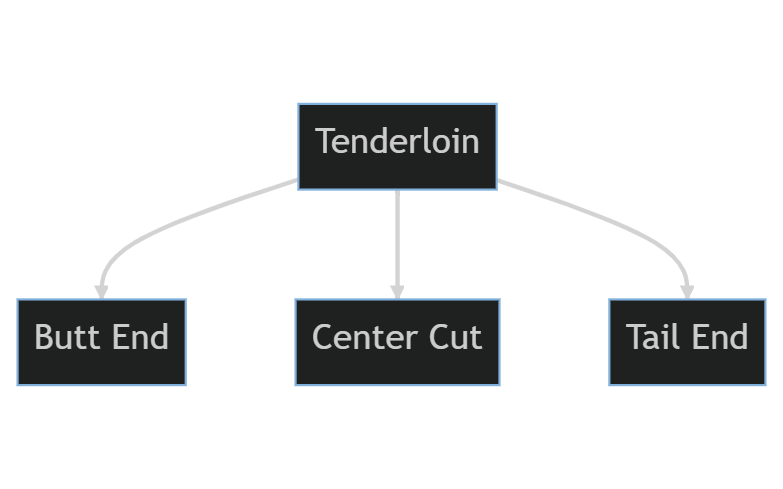
The tenderloin is a long, lean, and tender muscle that runs along the spine of a cow. It can be divided into three main parts:
- Butt End: The thickest part of the tenderloin, located towards the rear of the animal. It is often used for dishes like Chateaubriand or thick-cut filet mignon steaks.
- Center Cut: The middle section of the tenderloin, which is the most uniform in thickness and size. It is prized for its tenderness and is often used for filet mignon and beef Wellington.
- Tail End: The narrow, tapered end of the tenderloin, which is thinner than the other parts. It can be used for dishes like stir-fries, stroganoff, or other recipes that require thin, tender slices of beef.
OR Define the term charcuterie. Briefly explain the different types of sausages with suitable example.
Charcuterie refers to the art of preparing and assembling cured meats, sausages, and other meat products, traditionally made from pork. It also includes various accompaniments, such as pickles, cheeses, bread, and spreads. Charcuterie boards are often served as appetizers or part of a buffet.
Different Types of Sausages with Examples
- Fresh Sausages: These sausages are made from raw ground meat, often pork, that has been seasoned and then stuffed into casings. They require cooking before consumption. Examples include Italian sausage, bratwurst, and breakfast sausage.
- Cooked Sausages: Cooked sausages are made from ground meat that has been seasoned, stuffed into casings, and then cooked through. They can be eaten as-is or heated before serving. Examples include hot dogs, frankfurters, and bologna.
- Smoked Sausages: These sausages are made by smoking the meat after it has been seasoned and stuffed into casings. Smoking not only adds flavor but also helps preserve the sausage. Examples include kielbasa, andouille, and chorizo.
- Cured Sausages: Cured sausages are made by fermenting and drying the meat, which helps to preserve it and develop unique flavors. They can be eaten without cooking. Examples include salami, pepperoni, and soppressata.
- Blood Sausages: Blood sausages are made by mixing blood (typically from pigs or cows) with meat, fat, and other ingredients, such as grains or vegetables, and then stuffing it into casings. They are cooked and often eaten as part of traditional dishes in various cuisines. Examples include black pudding, morcilla, and boudin noir.
Q.3. Differentiate between:
(a) Ham and Gammon
Ham: Ham refers to the meat from the hind leg of a pig that has been cured, smoked, or cooked. It is typically served cold or at room temperature and is a popular choice for sandwiches, salads, and charcuterie boards.
Gammon: Gammon is the raw hind leg of a pig that has been cured through a brining process but not yet cooked or smoked. It needs to be cooked before consumption and is often served as a roast or boiled joint.
(b) Galantine and Roulade
Galantine: A galantine is a dish prepared from deboned meat, usually poultry or fish, that is stuffed, rolled, and then poached or braised. It is typically served cold, sliced into thin portions, and is often coated with a layer of aspic or chaud-froid sauce.
Roulade: A roulade is a dish made by rolling a thin layer of meat, fish, or pastry around a filling, which can be made from vegetables, cheese, or other ingredients. Roulades can be cooked through various methods, such as baking, frying, or poaching, and can be served hot or cold.
(c) Pâté and Terrine
Pâté: Pâté is a mixture of ground meat (often liver), fat, vegetables, and seasonings, which is cooked and typically served as a spread on bread or crackers. Pâtés can have a smooth, creamy texture or a more rustic, chunky texture, depending on the preparation method.
Terrine: A terrine is a dish made by layering ground meat, vegetables, herbs, and seasonings in a loaf-shaped mold, then cooking it in a water bath. Once cooked and chilled, it is sliced and served cold. Terrines have a more structured, layered appearance than pâtés and often include visible pieces of meat or vegetables.
(d) Brining and Curing
Brining: Brining is a process where meat is soaked in a saltwater solution, which helps to tenderize the meat, add flavor, and increase its moisture content. Brining is often used to prepare meats like poultry, pork, or fish before cooking to improve their texture and taste.
Curing: Curing is a method of preserving meat through the application of salt, sugar, and/or nitrates, which helps to draw out moisture and inhibit the growth of bacteria. Curing can also include the addition of spices and the use of smoking to add flavor to the meat. Examples of cured meats include bacon, prosciutto, and salami.
Q.4. (a) Define the term canapé.
A canapé is a small, decorative appetizer typically consisting of a base, such as a small piece of bread, cracker, or puff pastry, topped with a flavorful spread, meat, fish, or cheese, and garnished with various ingredients. Canapés are often served at cocktail parties, receptions, or other gatherings as bite-sized hors d’oeuvres that can be easily eaten in one or two bites. They are designed to be visually appealing and offer a combination of textures and flavors.
(b) Differentiate between canapé and sandwich.
Canapé: A canapé is a small, elegant appetizer that typically consists of a base (such as a piece of bread, cracker, or puff pastry), a flavorful spread, and a topping (which can be meat, fish, cheese, or vegetables). Canapés are often garnished with herbs or other ingredients to enhance their visual appeal and taste. They are designed to be consumed in one or two bites and are usually served at cocktail parties, receptions, or other events where finger food is desired.
Sandwich: A sandwich is a more substantial food item made by placing various fillings (such as meat, cheese, vegetables, or spreads) between two slices of bread or within a roll or bun. Sandwiches can be served hot or cold, and they can be eaten as a main course, a quick meal, or a snack. The fillings in a sandwich are typically more generous than those of a canapé, and the sandwich is intended to be more filling and satisfying than a canapé, which is primarily an appetizer.
(c) Explain the different parts of canapé with example.
A canapé typically consists of three main parts: the base, the spread, and the topping, each contributing to the overall taste, texture, and appearance of the appetizer.
1. Base
The base is the foundation of the canapé, providing a platform for the spread and toppings. It is often made from bread, crackers, or puff pastry, but can also include more creative options like cucumber slices, endive leaves, or blini. The base should be sturdy enough to hold the spread and toppings without becoming soggy or falling apart.
Example: A thinly sliced baguette, toasted to add crispness and prevent sogginess.
2. Spread
The spread is a flavorful layer that is applied to the base, serving to enhance the taste of the canapé and to anchor the toppings in place. Spreads can be made from a variety of ingredients such as cream cheese, butter, pâté, or hummus. The spread should complement the flavor of the base and the topping while adding moisture and richness to the canapé.
Example: A smooth, tangy goat cheese spread that pairs well with the baguette base and provides a creamy contrast to the toppings.
3. Topping
The topping is the main feature of the canapé, providing visual appeal and the primary flavors of the appetizer. Toppings can include a wide range of ingredients such as meats, fish, cheeses, vegetables, or fruit. The toppings should be chosen for their taste, texture, and appearance, and should be arranged in a visually appealing manner.
Example: Smoked salmon slices, arranged on the goat cheese spread in a decorative fashion, topped with a small sprig of fresh dill for added color and flavor.
In summary, a canapé is a small, elegant appetizer composed of a base, a spread, and a topping, each contributing to the overall taste, texture, and appearance of the dish. The combination of these components creates a visually appealing and delicious bite-sized snack, perfect for serving at various events and gatherings.
Q.5. Explain step by step the process of making pâté de foie gras.
Step 1: Ingredient Preparation
To make Pâté de Foie Gras, you’ll need a duck or goose liver (foie gras), Armagnac or other brandy, Port or Madeira wine, salt, white pepper, and sugar. Before starting, ensure the foie gras is of good quality, ideally ethically sourced.
Step 2: Cleaning the Foie Gras
Begin by carefully separating the lobes of the foie gras, and then use a sharp knife to make small incisions to expose the veins. Using a pair of tweezers, gently remove the veins. Be careful not to break the lobes.
Step 3: Marinating the Foie Gras
In a bowl, mix salt, sugar, and white pepper. Sprinkle this mixture over the foie gras, ensuring it’s well covered. Drizzle the Armagnac and Port wine over the foie gras. Cover the bowl and refrigerate for at least 2 hours, or overnight for the flavors to infuse.
Step 4: Cooking the Foie Gras
Preheat your oven to 110 degrees Celsius (230 degrees Fahrenheit). Place the marinated foie gras in a terrine mold, pressing it down gently. Cover the mold with a lid or aluminum foil.
Place the terrine in a larger, deep baking tray. Fill the tray with hot water until it reaches halfway up the sides of the terrine. This is called a “bain-marie” and it allows the foie gras to cook evenly.
Bake in the preheated oven for approximately 50 minutes to 1 hour. The foie gras is done when the internal temperature reaches 58 degrees Celsius (136 degrees Fahrenheit).
Step 5: Pressing the Foie Gras
Remove the terrine from the oven and bain-marie. Place a weight on top of the foie gras (you can use a brick covered in aluminum foil or a similarly heavy object that fits the mold). This will press the foie gras, enhancing its texture and appearance.
Refrigerate for at least two days before serving. This allows the flavors to mature and the pâté to firm up.
Step 6: Serving the Pâté de Foie Gras
Serve the Pâté de Foie Gras chilled, in thin slices. It pairs well with toasted brioche and a sweet wine jelly or fruit chutney.
Please note: Foie gras is a controversial ingredient due to the ethical concerns surrounding its production. If you choose to prepare this recipe, please consider sourcing from a producer who prioritizes animal welfare.
OR (a) Differentiate between curing and marinades.
Curing and marinades are both methods used to enhance the flavor, texture, and shelf life of food, particularly meats. However, they differ in their techniques, ingredients, and purposes.
Curing
Technique: Curing is a preservation method that involves the application of salt, sugar, nitrates, or nitrites to food. The curing mixture may be applied as a dry rub or dissolved in a liquid to create a brine.
Ingredients: The primary ingredients in curing are salt and sugar, which draw out moisture and inhibit bacterial growth. Nitrates or nitrites are also used for preservation and to give a characteristic pink color to cured meats.
Purpose: Curing serves to preserve and extend the shelf life of food, especially meats. It also enhances the flavor and texture of the food, giving it a distinct taste and often a firmer texture.
Examples: Cured meats such as ham, bacon, salami, and prosciutto are common products of the curing process.
Marinades
Technique: Marinades involve soaking food, typically meats, in a seasoned liquid mixture for a certain period of time, usually ranging from a few hours to overnight.
Ingredients: Marinades consist of a mixture of acids (such as vinegar, citrus juice, or wine), oils, and various seasonings, herbs, and spices. The acidic component helps to tenderize the meat while the seasonings infuse it with flavor.
Purpose: The primary purpose of marinades is to enhance the flavor and tenderness of the food. They do not serve as a preservation method like curing, and marinated foods must still be stored appropriately and consumed within a safe timeframe.
Examples: Marinated meats, such as chicken, beef, or fish, are commonly grilled, roasted, or pan-seared, and may be used in a variety of dishes.
In summary, curing is a preservation method that uses salt, sugar, and nitrates/nitrites, while marinades are used to enhance flavor and tenderness using acidic liquids and seasonings. Curing is primarily focused on preservation and shelf life extension, while marinades are more concerned with flavor and texture enhancement.
(b) Explain the different curing methods used for ham.
Curing is a preservation method used to enhance the flavor, texture, and shelf life of meats, such as ham. There are several curing methods commonly used for ham, including:
1. Dry Curing
Technique: Dry curing involves rubbing a mixture of salt, sugar, and other seasonings directly onto the surface of the ham. The curing mixture draws out moisture, inhibiting bacterial growth and preserving the meat.
Process: The ham is left to cure for an extended period, often several weeks or even months, depending on the size of the ham and the desired flavor intensity. The curing environment should be cool, dry, and well-ventilated to prevent spoilage.
Examples: Prosciutto, Serrano ham, and country hams are examples of dry-cured hams.
2. Wet Curing (Brining)
Technique: Wet curing, or brining, involves immersing the ham in a liquid solution containing salt, sugar, and other flavorings. The brine may also contain nitrates or nitrites to prevent bacterial growth and enhance the color of the cured ham.
Process: The ham is left to soak in the brine for a specific period, ranging from a few days to several weeks, depending on the desired flavor and texture. After curing, the ham is typically rinsed to remove excess salt and then cooked or smoked for added flavor.
Examples: Many commercially produced hams are wet cured, such as honey-baked hams or city hams.
3. Injection Curing
Technique: Injection curing is a modern method that involves injecting a curing solution directly into the meat using a needle or multi-needle injector. The solution typically contains salt, sugar, nitrates or nitrites, and other flavorings.
Process: This method allows for a more rapid and even distribution of the curing agents throughout the meat, resulting in a shorter curing time compared to traditional methods. After the curing solution is injected, the ham may be further processed by cooking, smoking, or aging.
Examples: Injection curing is often used in the commercial production of hams to expedite the curing process.
4. Combination Curing
Technique: Combination curing involves using a mix of the methods mentioned above, such as dry curing followed by wet curing or injection curing followed by brining.
Process: This approach allows for greater control over the flavor, texture, and shelf life of the ham. For example, a ham may be dry-cured to develop a rich, concentrated flavor, and then wet-cured to ensure even distribution of the curing agents and improve tenderness.
Examples: Some artisanal and specialty hams may undergo a combination of curing methods to achieve a unique flavor and texture profile.
Each of these curing methods has its advantages and results in different flavor profiles and textures. The choice of method often depends on the desired outcome, available resources, and cultural or regional preferences.
Q.6. Write short notes on:
(a) Appetizers
Appetizers are small dishes or portions of food served before the main course to stimulate the appetite and prepare the palate for the meal. They can be hot or cold, and their size and complexity vary depending on the occasion and culinary style. Appetizers may be presented as individual portions or shared among guests. Examples of appetizers include canapés, bruschetta, shrimp cocktail, and stuffed mushrooms.
(b) Galantine
A galantine is a classic French dish made from deboned poultry, usually chicken, duck, or turkey, stuffed with a forcemeat mixture. The forcemeat usually contains ground meat, fat, seasonings, and sometimes other ingredients like vegetables or dried fruits. The poultry is then rolled around the forcemeat, wrapped in its skin or cheesecloth, and poached in a flavorful stock until cooked. Once cooled, the galantine is sliced and served cold, often with an aspic or sauce.
(c) Ballotine
A ballotine is a French dish similar to a galantine, but typically made with smaller cuts of meat, such as a single deboned chicken leg or a piece of pork. The meat is filled with a stuffing made of minced meat, herbs, and spices, and then rolled, tied, or wrapped before being cooked. Ballotines can be poached, braised, or roasted, and are typically served sliced, either hot or cold, depending on the recipe.
(d) Mousseline
Mousseline is a term used to describe a variety of light, airy, and delicate preparations in French cuisine. It most commonly refers to a type of forcemeat made with finely ground or pureed meat, fish, or shellfish, combined with eggs, cream, and seasonings. Mousseline is used as a base for dishes such as quenelles, mousseline-stuffed fish, and terrines. In some cases, the term may also refer to a sauce made with a base of whipped cream or egg whites, such as a hollandaise mousseline or a chocolate mousseline.
Q.7. Explain the term forcemeat. What are the different components of forcemeat?
Forcemeat is a mixture of finely ground or pureed meat, poultry, fish, or shellfish, combined with various ingredients such as fat, seasonings, and sometimes binders, to create a smooth and homogenous texture. It is used in various culinary preparations such as pâtés, terrines, galantines, ballotines, sausages, and stuffed meats. Forcemeats can be cooked or served cold, depending on the dish.
The different components of forcemeat include:
- Primary protein: This is the main ingredient and can be made from meat, poultry, fish, or shellfish. The protein is finely chopped, ground, or pureed to achieve the desired texture.
- Fat: Fat is an essential component of forcemeat, as it provides moisture, richness, and flavor. It can come from the primary protein itself or be added separately, such as in the form of pork fat, butter, or cream.
- Seasonings: Seasonings include salt, pepper, herbs, spices, and other flavorings that enhance the taste of the forcemeat. The choice of seasonings depends on the primary protein and the intended use of the forcemeat.
- Binders: Binders are optional ingredients that help to hold the forcemeat together and maintain its structure during cooking. Common binders include eggs, breadcrumbs, and flour.
- Additional ingredients: Depending on the recipe, other ingredients such as vegetables, fruits, nuts, and alcohol may be added to the forcemeat to provide flavor, texture, or visual appeal.
OR (a) Distinguish between chaud froid and aspic.
Chaud-froid
Chaud-froid is a French term that means “hot-cold.” It refers to a specific culinary technique used for preparing and presenting cold dishes that were initially cooked hot. Chaud-froid dishes typically involve cooked meats, poultry, or fish that are coated with a sauce, which is then allowed to set and gel before being served cold. The sauce used for a chaud-froid dish is often a thickened velouté or béchamel, enriched with cream, and set with gelatin. Chaud-froid dishes can be served as appetizers or main courses and are often elaborately garnished.
Aspic
Aspic is a savory jelly made from a clear, flavorful meat, fish, or vegetable stock that has been thickened with gelatin. It is used to coat, glaze, or set various cold dishes, such as meats, poultry, fish, vegetables, and eggs. Aspic adds a glossy finish and an additional layer of flavor to the dish while helping to preserve the ingredients. Aspic can be used as a glaze for chaud-froid dishes or to create stand-alone molded dishes, such as aspic terrines or jellied salads.
In summary, chaud-froid refers to the technique of preparing and presenting cold dishes that were originally cooked hot and are coated with a set sauce, while aspic is a savory jelly made from stock and gelatin used for glazing or setting cold dishes. Both chaud-froid and aspic can be used to create visually appealing and flavorful cold dishes, but their composition and applications differ.
(b) Describe the process of making aspic and its uses in kitchen.
Making Aspic
Aspic is a savory jelly made from a clear, flavorful meat, fish, or vegetable stock that has been thickened with gelatin. The process of making aspic can be broken down into the following steps:
- Prepare the stock: To create a flavorful aspic, start with a good quality stock. The stock can be made from meat, poultry, fish, or vegetables. Simmer the bones, meat, and vegetables in water with seasonings to extract their flavors. Strain the stock to remove any solids.
- Clarify the stock: To create a clear aspic, it is essential to clarify the stock. This can be done using the “raft” method, which involves combining beaten egg whites and minced vegetables in the stock. As the mixture is slowly heated, the egg whites and vegetables form a raft on the surface, trapping impurities. Strain the liquid through a fine sieve or cheesecloth to obtain a clear stock.
- Measure and bloom the gelatin: Measure the amount of gelatin needed according to the recipe or the desired firmness of the aspic. Soften the gelatin in cold water, allowing it to bloom for a few minutes before using it.
- Dissolve the gelatin: Warm a small amount of the clarified stock and add the bloomed gelatin, stirring until it has fully dissolved.
- Combine the gelatin and stock: Add the dissolved gelatin mixture to the remaining clarified stock, stirring gently to ensure even distribution.
- Season and chill: Taste the aspic mixture, adjusting the seasonings as needed. Pour the aspic into a shallow container or mold and refrigerate until it is set and firm.
Uses of Aspic in the Kitchen
Aspic has various uses in the kitchen, including:
- Coating and glazing: Aspic can be used to coat or glaze cold dishes, such as meats, poultry, fish, and vegetables, adding a glossy finish and an additional layer of flavor.
- Setting and molding: Aspic can be used to set and mold various dishes, such as terrines, pâtés, and jellied salads.
- Garnishing: Aspic can be used as a decorative element in the presentation of cold dishes, providing visual appeal and enhancing the overall presentation.
- Preservation: Aspic can help preserve cold dishes by sealing in moisture and preventing exposure to air, extending their shelf life.
- Adding texture: Aspic adds a unique texture to dishes, providing a contrast between the firm, gelatinous aspic and the tender ingredients it surrounds.
Q.8. (a) Describe the use of wines and herbs in cooking with suitable examples.
Use of Wines in Cooking
Wines are often used in cooking to enhance the flavor, aroma, and richness of various dishes. The alcohol content in the wine evaporates during the cooking process, leaving behind the essence of the wine’s distinct flavors. Some common uses of wines in cooking include:
- Deglazing: Wine is used to deglaze the pan after sautéing or browning meat, poultry, or vegetables. This process helps to release the flavorful caramelized bits from the pan, which are then incorporated into a sauce or gravy. Example: Deglazing a pan with red wine after browning beef for a classic Beef Bourguignon.
- Marinating: Wine can be used as a part of a marinade to tenderize and impart flavor to meats, poultry, and seafood. Example: Marinating chicken in white wine, olive oil, and herbs before grilling or roasting.
- Braising: Wine is added to braising liquid to provide depth of flavor and complexity to slow-cooked dishes. Example: Braising short ribs with red wine, beef stock, and vegetables.
- Sauces: Wine can be used as a base or flavoring agent for various sauces. Example: A classic white wine and butter sauce for fish or chicken dishes, or a red wine reduction sauce for steak.
- Desserts: Wine can also be used in some dessert recipes, contributing a unique flavor profile. Example: Poaching pears in red wine with sugar and spices, or using sweet dessert wines like Marsala or Madeira in a sauce for bread pudding.
Use of Herbs in Cooking
Herbs are used in cooking to enhance the flavor, aroma, and visual appeal of dishes. They can be used fresh or dried and may be added at various stages of the cooking process. Some common uses of herbs in cooking include:
- Seasoning: Herbs are used to season and flavor dishes, either on their own or in combination with other herbs and spices. Example: Using basil, oregano, and thyme to flavor a tomato sauce for pasta or pizza.
- Marinades and rubs: Herbs can be combined with other ingredients like oil, vinegar, or citrus juice to create marinades or rubs for meats, poultry, and seafood. Example: A herb rub made of rosemary, garlic, and olive oil for roast lamb or a marinade of cilantro, lime juice, and garlic for grilled shrimp.
- Infusing oils and vinegars: Herbs can be used to infuse oils and vinegars with their flavors, creating versatile condiments for cooking and finishing dishes. Example: Infusing olive oil with rosemary or basil to drizzle over salads or grilled vegetables, or infusing vinegar with tarragon or mint for use in salad dressings.
- Garnishing: Fresh herbs can be used as a garnish to enhance the visual appeal and aroma of finished dishes. Example: Chopping fresh parsley, cilantro, or chives and sprinkling them over soups, stews, or pasta dishes.
- Herbal teas and beverages: Some herbs can be used to make herbal teas or infused beverages, providing a unique flavor and potential health benefits. Example: Brewing fresh or dried mint, chamomile, or lemon verbena for a soothing herbal tea, or using fresh basil or mint in a cocktail or mocktail.
(b) ‘Garnish plays an important role in food presentation’. Explain.
Garnish and Its Importance in Food Presentation
Garnishes play a significant role in food presentation as they enhance the overall appeal and dining experience. The importance of garnishes in food presentation can be attributed to several aspects:
- Visual appeal: Garnishes add color, texture, and contrast to a dish, making it more visually appealing and appetizing. As diners tend to eat with their eyes first, an attractive presentation can encourage them to taste and enjoy the food.
- Emphasizing key ingredients: Garnishes can be used to highlight the main ingredients or flavors in a dish. For example, a sprig of fresh rosemary on a roasted chicken dish indicates the use of rosemary in the recipe.
- Complementing flavors: When chosen carefully, garnishes can complement and enhance the overall flavor profile of a dish. For example, a sprinkle of chopped fresh cilantro on a curry dish adds a burst of freshness and contrasts with the rich, spicy flavors.
- Adding texture: Garnishes can provide a variety of textures that contrast with the main components of a dish, making the eating experience more interesting and enjoyable. For example, a crunchy breadcrumb topping on a creamy pasta bake or toasted nuts sprinkled over a smooth dessert.
- Creating balance: Garnishes can help create balance in a dish, both visually and in terms of flavor. For example, a wedge of lemon served with grilled fish provides a pop of color and a contrasting tangy flavor that cuts through the richness of the fish.
- Enhancing aroma: Some garnishes release pleasant aromas when added to a dish, further stimulating the senses and creating a more enjoyable dining experience. For example, a sprig of fresh basil on a tomato and mozzarella salad releases its fragrant aroma, enhancing the overall sensory appeal of the dish.
- Signifying culinary style: Garnishes can also represent a particular cuisine or culinary style, giving diners a clue about the flavors and ingredients they can expect in the dish. For example, a garnish of toasted sesame seeds and thinly sliced green onions on an Asian-inspired noodle dish.
In conclusion, garnishes play an essential role in food presentation by enhancing visual appeal, aroma, and overall dining experience. They can complement flavors, add texture, create balance, and signify culinary styles, making them an important element in the art of plating and presenting dishes.
Q.9. Explain the following terms (any ten):
(a) Caul: A thin, fatty membrane that surrounds the internal organs of some animals, particularly pigs. It is used in cooking to wrap various meat dishes, providing moisture and fat during the cooking process.
(b) Rossini: A luxurious dish typically consisting of a pan-seared beef tenderloin steak, topped with foie gras and served with a rich Madeira wine sauce. The dish is named after Italian composer Gioachino Rossini.
(c) Gnocchi: Small, soft Italian dumplings made from ingredients such as potatoes, semolina, or ricotta cheese, combined with flour and sometimes eggs. They are typically served with various sauces like tomato or pesto.
(d) Parfait: A French dessert made by layering sweet ingredients such as fruit, ice cream, and whipped cream in a tall glass. The term “parfait” can also refer to a frozen dessert made with a base of sugar syrup, egg, and cream.
(e) Nesselrode: A dessert made with chestnuts, candied fruit, whipped cream, and sometimes alcohol. Nesselrode can be served as a pudding, pie filling, or frozen dessert.
(f) Zampone: An Italian dish made by stuffing a mixture of ground pork, spices, and sometimes breadcrumbs into a pig’s trotter. It is then boiled and typically served with lentils or other accompaniments.
(g) Doria: A Japanese-Italian fusion dish consisting of a layer of rice or pasta, topped with a creamy sauce, and then gratinated with cheese.
(h) Green Bacon: A term used to describe unsmoked bacon. It has a milder flavor compared to smoked bacon and is often used in recipes where a less pronounced bacon flavor is desired.
(i) Moronga: A Mexican blood sausage made with pig’s blood, rice or breadcrumbs, and various spices. It is typically cooked and served as part of a larger dish.
(j) Pancetta: An Italian form of cured pork belly that is seasoned with salt and various spices, such as black pepper and juniper berries. Unlike American bacon, pancetta is not smoked and has a more delicate flavor.
(k) Darne: A thick, cross-section cut of fish, often used for salmon or tuna steaks. The darne cut is generally uniform in thickness, making it ideal for grilling or pan-searing.
(l) Champignon: The French word for “mushroom.” In culinary contexts, it often refers specifically to the common white button mushroom, which is widely used in cooking for its mild flavor and versatility.
Q.10. What are the common non-edible displays observed in hotels? List the special equipment required for ice carving.
Common Non-edible Displays Observed in Hotels
- Floral arrangements: Beautiful and well-designed floral arrangements add aesthetic value to the hotel environment, particularly in lobbies, banquet halls, and dining areas.
- Ice sculptures: Intricately carved ice sculptures are often used as centerpieces for special events or buffet displays, showcasing the artistic talent of the culinary team.
- Fruit carvings: Skillfully carved fruits, such as melons or pineapples, can serve as decorative elements on buffet tables or as garnishes for dishes.
- Food art: Food art displays, including sculptures made from butter, chocolate, or sugar, can be visually appealing centerpieces for buffets or special events.
- Theme decorations: Hotels may create non-edible displays based on specific themes or cultural events, using materials like fabric, wood, or metal to enhance the ambiance of the dining area or event space.
Special Equipment Required for Ice Carving
- Ice blocks: High-quality, crystal-clear ice blocks are essential for creating stunning ice sculptures. These blocks are typically produced using specialized equipment that freezes water slowly to minimize air bubbles and impurities.
- Chainsaw: A chainsaw is used to make the initial rough cuts and remove large portions of ice quickly.
- Chisels and gouges: A variety of chisels and gouges with different shapes and sizes are used for more detailed work, such as carving specific shapes or adding texture to the ice sculpture.
- Die grinders: These power tools are used for more intricate and precise carving, allowing the artist to achieve finer details in the ice sculpture.
- Ice picks: Ice picks are used for puncturing the ice and creating small, precise holes or lines.
- Safety equipment: Protective gear, such as gloves, goggles, and ear protection, is essential when working with ice carving tools to prevent injuries.
- Drip pans and drainage: Since ice sculptures will melt over time, a drip pan is used to collect the melting water, and proper drainage is necessary to prevent accidents or damage to the display area.
- Lighting: Proper lighting is essential for showcasing the beauty of an ice sculpture. LED lights or other cool lighting sources can be used to illuminate the ice without causing it to melt quickly.