
Table of Contents
Q.1. Define scarcity and opportunity cost. What role do these two concepts play in the making of management decisions? (20)
Scarcity
Scarcity is simply a situation where resources are limited and wants are unlimited. It can be defined as a condition in which human wants exceed the available resources necessary to cater to those demands. It means demand is more than the supply, or people want more than is available. As, scarce resources have alternative uses, choice becomes unavoidable. Because of the scarcity of economic resources consumers, producers and government must make choices. Choices must be made regarding the use of these scarce resources in the production, distribution and consumption of goods and services. To make a choice, simply means to trade-off one choice with other.
Therefore, Scarcity is a cause of economic problems. Various economic decisions have to be made to allocate the insufficient productive resources efficiently to cater to the unlimited human wants.
Opportunity Cost
Opportunity is the outcome of scarcity. An opportunity cost is the value of the second best alternative that is forgone when a choice is made. In other words, opportunity cost can be defined as the benefits that could have been received if other alternative choice was made.
As there are alternative uses of scarce economic resources, need arises to select the best way to use these resources (say land, labour and capital). When one alternative is chosen over other, the next best alternative which is forgone is called opportunity cost of making a choice, because we give up the opportunity to have other desirable things.
Role of Scarcity and Opportunity Cost in Making of Management Decision Making
The concepts of scarcity and opportunity cost play a very important role in managerial decision making. Scarcity and opportunity cost are interlinking concepts. Scarcity is the root cause of all economic problems therefore it is central to all economic decisions. Its importance in managerial decision making lies in taking decisions regarding allocation of scarce resources. For example, if a company is in the business of beverages and food. And it has an expansion plan. There are limited resources of capital and labour which can be employed in either of the businesses. As resources are scarce, if the company allocate more resources to beverage business, it will have fewer resources for food business. Therefore, the company need to make a choice and decisions regarding allocation of these scarce resources among the two businesses. This involves trade off among the two choices. If the company makes the choice and decides to allocate resources in beverage business, it will forgo the food business, which will the opportunity cost of the choice the business has made. Or, this trade off is the forgone next best option which represents the opportunity cost.
The opportunity cost of the value of opportunity lost is taken into consideration when alternatives are compared. It measures the benefit of opportunity forgone.
Therefore, both the concept of scarcity and opportunity cost are helpful in managerial economics in evaluating the various alternatives available when scarce economic resources are employed for various uses.
Q.2. “Managerial Economics serves as a link between traditional economics and decision sciences for business decision-making”. Elucidate. (20)
Managerial Economics serves as a link between traditional economics and the decision making sciences for the purpose of business decision making. It directly deals with real people and real business situations. It facilitates the decision making process by applying economic principles and methodologies and helps in attaining desired economic goals which could be related to minimization of cost, maximization of revenue or profit and many more.
Managerial economics rely on traditional economics and decision sciences to analyze any business problem and study the impact of alternative courses of action on the optimum utilization of resources. It deals with the application of knowledge and understanding of economic principles, concepts, tools and techniques to facilitate a decision making process in the presence of uncertainty.

Role of Managerial Economics in Decision Making
It also bridges the gap between pure analytical problem dealt in economic theory and the real business problem faced in day to day business situations. It provides tools and techniques to make the manager competent enough to take effective decision in real business situations. Well said by Milton H. Spensor and Louis Seigelman that “Managerial Economics is the integration of economic theory with the business practice for the purpose of facilitating decision making and forward planning in management”.
Q.3. Write short notes on: (10×2 =20)
a. Decision Tree
Some strategic decisions are based on a sequence of decisions, states of nature and possibly even strategic decisions. Alternative strategies can be evaluated then, by using a decision tree, which traces sequences of strategies and states of nature to arrive at a set of outcomes. The probability of each outcome is found by multiplying the probabilities on each branch leading to that outcome.
A decision tree shows two or more branches at each point where a decision or event (state of nature) leads to the various outcomes. The decision tree approach can be directly applied to managerial decision-making. A firm entering a new market may decide to build a small or large plant (managerial decisions). This has no probabilities. But there may be stochastic elements (an outcome determined by chance) associated with each decision e.g., reaction of a major competitor and the economic condition. The competitor may react by starting a national, regional, or a new advertising program. The probability of each occurrence will depend on the size of the plant.
Decision trees are particularly useful if sequential decision-making is involved. In a game of chess, white has the first move. White has several options at this stage. To keep the problem tractable, let us assume that there are four possible moves for white : (i) move the king’s pawn two squares; (ii) move the queen’s pawn two squares; (iii) move the king’s knight to king bishop three; and (iv) move the queen’s knight to queen bishop three. In chess notation, the four moves are – (i) e4; (ii) d4; (iii) Nf 3; and (iv) Nc 3. Once white has made the first move, Black has several different moves at his disposal. To keep the problem tractable, let us follow the decision tree only when white has moved e4. Even then, Black has several moves at his disposal. Let us assume that he has only four options – (i) move the king’s pawn two squares (e5), (ii) move the queen’s pawn two squares (d5); (iii) move the queen’s bishop’s pawn two squares (c5); and (iv) move the king’s pawn one square (e6). Once white has moved e4 on the first move and Black has moved e5 on the first move, white has several moves at his disposal. One of them is, move the king’s knight to bishop three (Nf3). And so the game goes on.
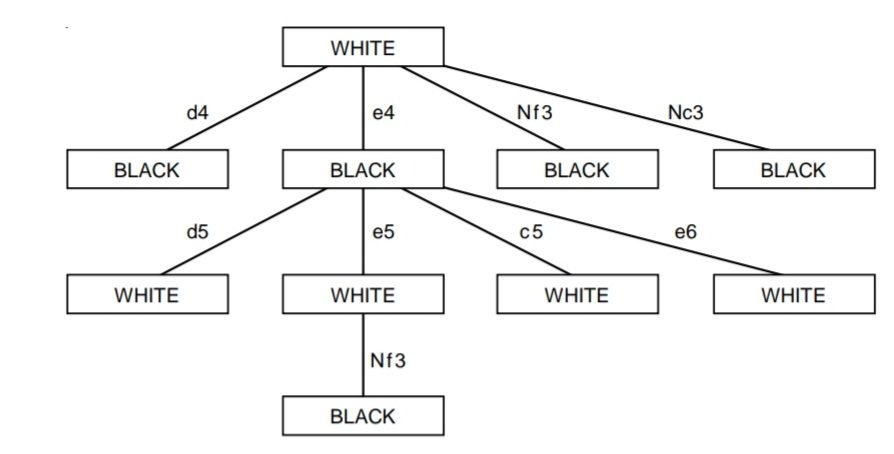
Decision Tree
Each vertex or node indicates a decision to be taken by one of the players, the number within the rectangle indicating whose turn it is to move. There need not actually be two players, one of the players can be regarded as nature or chance. The main advantage of using a decision tree is that it helps one to isolate each chain and follow it through to the very end.
b. Regression Analysis
Regression Analysis is a statistical technique by which demand is estimated with the help of certain independent variables (like income price of the commodity, price of related goods, advertisement etc.)
Regression analysis is a set of statistical methods used for the estimation of relationships between a dependent variable and one or more independent variables. It can be utilized to assess the strength of the relationship between variables and for modeling the future relationship between them.
Regression analysis includes several variations, such as linear, multiple linear, and nonlinear. The most common models are simple linear and multiple linear. Nonlinear regression analysis is commonly used for more complicated data sets in which the dependent and independent variables show a nonlinear relationship.
Regression analysis offers numerous applications in various disciplines, including finance.
Simple regression analysis is used when the quantity demanded is taken as a function of single independent variable multiple regression analysis is used to estimate demand as a function of two or more independent variables that vary simultaneously.
The regression method involves five steps:
1. Identifying demand function for the commodity i.e. selecting the variables which are expected to influence the demand for the product.
2. Collecting historical data on all the selected variables.
3. To select an appropriate functional form for estimation
4. Estimation of the selected demand function.
5. Analysing the estimated demand function and suggesting the marketing policy.
Q.4. When can we say that a firm is
a. technically efficient
b. economically efficient?
Is it necessary that technically efficient firm is also economically efficient? Give suitable examples from hospitality industry. (20)
Firm is technically efficient
We can say that a firm is technically efficient when it obtains maximum level of output from any given combination of inputs. The production function incorporates the technically efficient method of production. A producer cannot decrease one input and at the same time maintain the output at the same level without increasing one or more inputs. When economists use production functions, they assume that the maximum output is obtained from any given combination of inputs. That is, they assume that production is technically efficient.
Firm is economically efficient
On the other hand, we can say a firm is economically efficient, when it produces a given amount of output at the lowest possible cost for a combination of inputs provided that the prices of inputs are given. Therefore, when only input combinations are given, we deal with the problem of technical efficiency; that is, how to produce maximum output. On the other hand, when input prices are also given in addition to the combination of inputs, we deal with the problem of economic efficiency; that is, how to produce a given amount of output at the lowest possible cost.
Relation between Technically efficient and economically efficient
• Technical efficiency happens when there is no possibility to increase the output without increasing the input.
• Economic efficiency happens when the production cost of an output is as low as possible.
• Technical efficiency is really a prerequisite for economic efficiency. In order to achieve economic efficiency, one should have achieved technical efficiency.
• An economic efficiency is a state in which every resource is made use of to serve each person in the very best way while minimizing inefficiency and waste.
• Once there is economic efficiency, any change that is made to assist any person is likely to harm others.
• Economic efficiency mainly depends on the prices related to the factors of production. Technical efficiency is considered an engineering matter.
Q.5. Discuss different cost concepts that are frequently used in the managerial decision making process. What is the difference between economic costs and accounting costs ? (20)
Cost concepts
Some of the cost concepts that are frequently used in the Managerial decision making process, may be classified as follows :
1. Actual Cost and Opportunity Cost
Actual costs are those cost which a firm incurs while producing or acquiring a good or service like payment for labor, rent etc. It is otherwise known as Accounting Cost or Acquisition Cost or Outlays Cost.
Opportunity cost is the value of a resource in its next best use. It‘s the cost for the next best alternative use. The opportunity cost is really meaningful in the decision making process. Sometimes this opportunity cost, are called as alternative cost.
2. Explicit Cost and Implicit Cost
Explicit costs are those cost that involve an actual payment to other Parties. Therefore, an explicit cost is the monetary payment made by a firm for use of an input owned and controlled by others .Explicit costs are also referred to by accounting costs.
Implicit cost represents the values of foregone opportunities but do not involve an actual cost payment. Implicit cost are just as important as explicit costs but are sometimes neglected because they are not as obvious.
3. Accounting Cost and Economic Cost
Accounting costs are the actual or outlay costs. These costs point out how much expenditure has already been incurred on a particular process or on production as such.
Economic cost are concerned with what cost is expected to be in the future and how the firm might be able to rearrange its resources to lower its cost and improve its profitability. They must therefore be concerned with opportunity cost along with explicit cost. Since the only cost that matter for business decision are future costs. It is the economic costs that are used for decision making.
4. Controllable and Non- Controllable Costs
Controllable costs are those costs which are capable of being controlled or regulated by executive vigilance and therefore can be used for assessing executive efficiency.
Non-controllable costs are those which cannot be subjected to administrative control and supervision. Most of the costs are controllable, except, of course, those due to obsolescence and depreciation.
6. Out-of-Pocket Costs and Book Costs
Out-of-Pocket Costs are those costs that improve current cash payments to outsiders.
Book Costs are those business costs which do not involve any cash payments but for them a provision is made in the book of account to include them in profit and loss accounts and take tax advantages.
7. Private Costs & Social Cost
Private Costs are those that accrue directly to the individuals or firm engaged in relevant activity.
Social Costs, on the other hand are passed on to persons not involved in the activity in any direct way (i.e. they are passed on to society at large).
8. Relevant costs and Irrelevant costs :-
The relevant costs for decision making purposes are those costs which are incurred as a result of decision under consideration. The relevant costs are also referred to as the incremental costs. They are there main categories of relevant or incremental costs.
Difference between Accounting Cost & Economic Cost
Accounting cost means the expenses incurred by the firm on production and sale of goods or service. These are paid by the firm to the outsiders. For example, payment made for wages, raw materials, fuel, power, building etc. are the accounting costs. Accounting cost is the money paid for contractual payments. It includes payments and charges made by the enterprise to the suppliers of resources. It is the explicit cost.
But economic cost includes not only explicit cost but also implicit or imputed cost. Implicit cost includes rent charged on owned premises, interest charged on owned capital, wages paid to entrepreneur etc. Implicit cost is not included in accounting cost.
• Accounting cost includes only explicit costs which are recorded in the books of account. Implicit cost will not be recorded in the books of account. Thus the economist’s concept of cost is more comprehensive as compared to accountant’s concept of cost.
• Accounting cost are generally used for financial reporting and control. Economic costs are used for decision-making.
• In short, accounting costs involve only cash payments made by the entrepreneur. On the other hand, economic costs include all these accounting costs plus the implicit cost.
Q.6. What are different types of statistical analysis used for estimation of a production function ? Also discuss limitations of different types of statistical analysis. (20)
Types of Statistical Analyses
Once a functional form of a production function is chosen the next step is to select the type of statistical analysis to be used in its estimation. Generally, there are three types of statistical analyses used for estimation of a production function.
These are:
1. Time series analysis
The amount of various inputs used in various periods in the past and the amount of output produced in each period is called time series data. For example, we may obtain data concerning the amount of labour, the amount of capital, and the amount of various raw materials used in the steel industry during each year from 1970 to 2000.
On the basis of such data and information concerning the annual output of steel during 1970 to 2000, we may estimate the relationship between the amounts of the inputs and the resulting output, using regression techniques.
Analysis of time series data is appropriate for a single firm that has not undergone significant changes in technology during the time span analysed. That is, we cannot use time series data for estimating the production function of a firm that has gone through significant technological changes.
There are even more problems associated with the estimation a production function for an industry using time series data. For example, even if all firms have operated over the same time span, changes in capacity, inputs and outputs may have proceeded at a different pace for each firm. Thus, cross section data may be more appropriate.
2. Cross-section analysis
The amount of inputs used and output produced in various firms or sectors of the industry at a given time is called cross-section data. For example, we may obtain data concerning the amount of labour, the amount of capital, and the amount of various raw materials used in various firms in the steel industry in the year 2000. On the basis of such data and information concerning the year 2000, output of each firm, we may use regression techniques to estimate the relationship between the amounts of the inputs and the resulting output.
3. Engineering analysis
In this analysis we use technical information supplied by the engineer or the agricultural scientist. This analysis is undertaken when the above two types do not suffice. The data in this analysis is collected by experiment or from experience with day-to-day working of the technical process. There are advantages to be gained from approaching the measurement of the production function from this angle because the range of applicability of the data is known, and, unlike time series and cross-section studies, we are not restricted to the narrow range of actual observations.
Limitations of Different Types of Statistical Analysis
1. Both time-series and cross-section analysis are restricted to a relatively narrow range of observed values. Extrapolation of the production function outside that range may be seriously misleading. For example, in a given case, marginal productivity might decrease rapidly above 85% capacity utilization; the production function derived for values in the 70%-85% capacity utilization range would not show this.
2. Another limitation of time series analysis is the assumption that all observed values of the variables pertains to one and the same production function. In other words, a constant technology is assumed. In reality, most firms or industries, however, find better, faster, and/or cheaper ways of producing their output. As their technology changes, they are actually creating new production functions. One way of coping with such technological changes is to make it one of the independent variables.
3. Theoretically, the production function includes only efficient (least-cost) combinations of inputs. If measurements were to conform to this concept, any year in which the production was less than nominal would have to be excluded from the data. It is very difficult to find a time-series data, which satisfy technical efficiency criteria as a normal case.
4. Engineering data may overcome the limitations of time series data but mostly they concentrate on manufacturing activities. Engineering data do not tell us anything about the firm’s marketing or financial activities, even though these activities may directly affect production.
5. In addition, there are both conceptual and statistical problems in measuring data on inputs and outputs.
Q.7. Analyse the factors that influence the pricing decisions of a firm. What are the barriers to entry of firms in the market ? Give suitable examples from hospitality industry. (20)
Factors that influence the pricing decisions of a firm
1. Objectives of the Business
There may be various objectives of the firm such as getting a reasonable rate of return, to capture the market, maintenance of control over sales and profits etc. A pricing policy thus, should be established only after proper consideration of the objectives of the firm.
2. Cost of the Product
Cost and price of a product are closely related. Normally, the price cannot or shall not fixed below its cost (including the product, administrative and selling costs). Price also determines the cost.
3. Market Position
The prices of the products of different producers are different either because of difference in quality because of the goodwill of the firm. A reputed concern may fix may fix higher prices for its products on the other hand, a new producer may fix lower prices for its products. Competition may also affect the pricing decisions.
4. Competitors Prices
Competitive conditions affect the pricing decisions. The company considers the prices fixed and quality maintained by the competitors for their products.
5. Distribution Channels Policy
The nature of distribution channels used, and trade discounts which have to be allowed to distributors and the distribution expenses also affect the pricing decisions.
6. Price Elasticity and Demand Elasticity
Price elasticity affects the decisions of price fixation. Price elasticity means the consequential change of demand for the change for the change in the prices of the commodity. If demand is elastic, the firm should not fix high prices rather it should fix lower prices than that of the competitors.
7. Product’s Stage in the Life Cycle of the Product
Pricing decision is affected by the stage of product in its life-cycle. In the introductory stage of the product, it the price strategy which determines the price of the product.
8. Product Differentiation
The price of the product also depends upon the characteristics of the product. In order to attract the customers different characteristics are added to the product such as quantity, size, color, alternative uses, etc.
9. Buying Patterns of the Consumers
If the purchase frequency of the product is higher, lower prices should be fixed to have a low profit margin. It will facilitate increasing the sale volume and the total profits of the firm.
10. Economic Environment
In recession period, the prices are reduced to a sizable extent to maintain the level of turnover. On the other hand, the price and increased in boom period to cover the increasing cost of production and distribution.
11. Government Policy
Price discretion is also affected by the price control by the government through enactment of legislation when it is thought proper to arrest the inflationary trend in prices of certain commodities.
Barriers to Entry
A barrier to entry exists when new firms cannot enter a market. There are many types of barriers, which become sources of market power for firms. Entry barriers can be broadly classified as: Natural barriers, Legal Barriers and Strategic Barriers.
1. Natural barriers
Economies of scale create a natural barrier to the entry of new firms and it occurs when the long run average cost curve of a firm decreases over a large range of output, in relation to the demand for the product. Due to the existence of substantial economies of scale, the average cost at smaller rates is so high that the entry is not profitable for small-scale firms. This results in existence of natural monopoly. Power generation, Aircraft manufacturers, Railways, etc. are examples of natural monopolies. You should keep in mind that technological progress often undermines the natural monopoly character of certain industries.
This has happened in telecommunications, which not very long ago used to be considered a natural monopoly.
2. Legal barriers
Patents, as discussed above, are an example of a legal entry barrier. Industrial licensing that used to be common in India in the 1970s and 80s is another example of such a barrier. By giving a license to a firm the government provided exclusive rights to that firm or a few firms to produce. This restricted the number of players in the market through industrial licensing, thus creating a legal entry barrier.
3. Strategic barriers
Such barriers exist exclusively due to the strategic behaviour of existing firms. Managers undertake investments to deter entry by raising the rivals entry costs. To bar or restrict the entry of a new entrant, an established firm may change price lower than the short-run profit-maximizing price. This strategy is known as entry limit pricing. The entry limit pricing depends on established firm taking a cost advantage over potential entrants. The established firm must have a long run average cost curve below that of the other firm in order to lower its price and continue to make an economic profit.
Q.8. Write short notes on: (10×2=20)
a. Dominant Price Leadership
In dominant price leadership, the largest firm in the industry sets the price. If the small firms do not conform to the large firm, then the price war may take place due to which the small firms may not be able to survive in the market. It is more or less like a monopoly market structure. This can be seen in the airlines industry in India where the dominant firm Indian Airlines (IA) sets prices and the others Jet and Sahara follow the price changes of IA.
b. Barometric Price Leadership
Barometric price leadership is said to be the simpler of the two. This normally occurs in the market where there is no dominant firm. The firm having a good reputation in the market usually sets the price. This firm acts as a barometer and sets the price to maximize the profits. Here it is important to note that the firm in question does not have any power to force the other firms to follow its lead. The other firms will follow only as long as they feel that the firm in action is acting fairly. Though this method is quite ambiguous regarding price leadership, it is legally accepted. These two forms are an integral part of different types of cooperative oligopoly. Barometric price leadership has been seen in the automobile sector.
Q.9. Discuss the characteristics of Perfect competition and monopoly. Explain the pricing strategies of a monopoly firm. (20)
Characteristics of Pure/Perfect Competition
Perfect competition is a form of market in which there are a large number of buyers and sellers competing with each other in the purchase and sale of goods, respectively and no individual buyer or seller has any influence over the price. Thus perfect competition is an ideal form of market structure in which there is the greatest degree of competition.
A perfectly competitive market has the following characteristics:
1. There are a large number of independent, relatively small sellers and buyers as compared to the market as a whole. That is why none of them is capable of influencing the market price. Further, buyers/sellers should not have any kind of association or union to arrive at an understanding with regard to market demand/price or sales.
2. The products sold by different sellers are homogenous and identical. There should not be any differentiation of products by sellers by way of quality, variety, colour, design, packaging or other selling conditions of the product. That is, from the point of view of buyers, the products of competing sellers are completely substitutable.
3. There is absolutely no restriction on entry of new firms into the industry and the existing firms are free to leave the industry. This ensures that even in the long run the number of firms would continue to remain large and the relative share of each firm would continue to remain insignificant.
4. Both buyers and sellers in the market have perfect knowledge about the conditions in which they are operating. Buyers know the prices being charged by different competing sellers and sellers know the prices that different buyers are offering.
5. The distance between the location of competing sellers is not significant and therefore the price of the product is not affected by the cost of transportation of goods. Buyers do not have to incur noticeable transport costs if they want to switch over from one seller to another.
Characteristics of Pure Monopoly
Monopoly can be described as a market situation where a single firm controls the entire supply of a product which has no close substitutes.
The market structure characteristics of monopoly are listed below:
• Number and size of distribution of sellers – Single seller
• Number and size of distribution of buyers – Unspecified
• Product differentiation – No close substitutes
• Conditions of entry and exit – Prohibited or difficult entry
Though perfect competition and monopoly are the two extreme cases of market structure, they both have one thing in common – they do not have to compete with other individual participants in the market. Sellers in perfect competition are so small that they can ignore each other. At the other extreme, the monopolist is the only seller in the market and has no competitors. The market or industry demand curve and that of the individual firm are the same under monopoly since the industry consists of only one firm.
Pricing Strategy of a Monopoly Firm
Monopoly pricing is a pricing strategy followed by a seller whereby the seller prices a product to maximize his or her profits under the assumption that he or she does not need to worry about competition. In other words, monopoly pricing assumes the absence of competitors being able to garner a larger market share by charging lower prices.
Monopoly pricing requires not only that the seller have significant market power, possibly a monopoly or near-monopoly or a cartel of oligopolists, but also that the barriers to entry for selling that good are high enough to dissuade potential competition from being attracted by the high pricing. In particular, monopoly pricing is infeasible in contestable markets.
Q.10. What do you mean by price discrimination? Discuss with examples first degree, second degree and third degree price discrimination. (20)
Price Discrimination
In economic jargon, price discrimination is usually termed monopoly price discrimination. This label is appropriate because price discrimination cannot happen in a perfectly competitive industry in equilibrium. Monopoly power must be present in a market for price discrimination to exist. This seems a trivial point, when you understand,the definition of price discrimination; the practice of charging different prices to various consumers for a given product. In a competitive market, consumers would simply buy from the cheapest seller, and producers would sell to the highest bidders, and that would be that.
With monopoly power, however, the opportunity may exist for the firm to offer different terms (of which price is only one component) to different purchasers, thus dividing the market–a practice known as market segmentation. Price discrimination refers to the situation where a monopoly firm charges different prices for exactly the same product. The monopoly firm (a single seller in the market) can discriminate between different buyers by charging them different prices because it has the power to control price by changing its output. The buyers of its product have no choice but to buy from it as the product has no close substitutes.
There are three types of price discrimination – First Degree price discrimination, Second Degree price discrimination, and Third Degree price discrimination.
1. First Degree price discrimination
First degree price discrimination refers to a situation where the monopolist charges a different price for different units of output according to the willingness to pay of the consumer.
For example, a doctor who is the only super specialist in the town may charge different fee for conducting surgery from different patients based on their ability to pay.
2. Second degree price discrimination
Second degree price discrimination refers to a situation where the monopolist charges different prices for different set of units of the same product.
For example, the electricity charges per unit of the first 100 Kwh of power consumption may be different from the rate charged for the additional 100 Kwhs.
Another example is railway passenger fares; the per kilometre fare is higher for the first few kilometers, which declines as the distance increases. Thus the discrimination is based on volume of purchases.
3. Third Degree price discrimination.
When the monopolist firm divides the market (for its product) into two or more markets (groups of buyers or segments) and charges different price in each market, it is known as third degree price discrimination. Airline tickets are a common example of this form of price discrimination.
For example, lower rates are applicable to senior citizens than business travellers, electricity rates applicable to residential users are lower than those applied to commercial establishments and so on.