
Table of Contents
Q.1. With the help of a neat diagram, explain the functioning of F&B Cycle.
The F&B Cycle is a continuous process that begins with the purchase of raw materials and ends with the sale of finished food and beverage products. The cycle can be broken down into four main stages: procurement, production, service, and control.
- Procurement: The procurement stage involves the purchase of raw materials, such as food ingredients and beverages, from suppliers. The procurement process includes identifying the required items, selecting the suppliers, negotiating prices and terms, and placing orders.
- Production: The production stage involves the transformation of raw materials into finished food and beverage products. The production process includes preparation, cooking, and plating of dishes and drinks. The production process must adhere to established recipes and standards to ensure consistent quality.
- Service: The service stage involves the presentation and delivery of finished food and beverage products to customers. The service process includes taking orders, serving food and drinks, and handling payments. The service process must adhere to established standards for customer service and quality.
- Control: The control stage involves monitoring and managing the various aspects of the F&B Cycle to ensure efficiency, quality, and profitability. The control process includes inventory management, cost control, quality control, and revenue management. The control process must ensure that the establishment is operating within established budgets and achieving its financial and operational goals.
Overall, the F&B Cycle is a complex and dynamic process that requires careful management and coordination at each stage to ensure the delivery of high-quality products and services to customers while maintaining profitability.
Q.2. Define cost. Write the objectives and advantages of cost control.
Cost refers to the expenditure incurred by an establishment in the production of goods or services. In the context of food and beverage control, cost refers to the expenditure incurred in the production and service of food and beverage products.
Objectives of cost control in food and beverage control:
- To maximize profitability: Cost control aims to minimize the cost of producing and serving food and beverage products, thereby increasing profitability.
- To maintain quality: Cost control aims to maintain the quality of food and beverage products while minimizing costs. This involves identifying cost-effective ingredients and production methods that do not compromise quality.
- To optimize resources: Cost control aims to optimize the use of resources, such as ingredients, labor, and equipment, to minimize waste and maximize efficiency.
- To ensure competitive pricing: Cost control aims to ensure that the establishment can offer competitive pricing while maintaining profitability.
Advantages of cost control in food and beverage control:
- Improved profitability: Effective cost control can lead to increased profitability for the establishment.
- Improved efficiency: Cost control can help to optimize the use of resources, leading to improved efficiency in the production and service of food and beverage products.
- Improved quality: Cost control can help to maintain the quality of food and beverage products, leading to increased customer satisfaction.
- Competitive pricing: Effective cost control can help the establishment to offer competitive pricing, making it more attractive to customers.
In summary, cost control in food and beverage control aims to optimize the use of resources while maintaining quality and profitability. Effective cost control can lead to increased efficiency, improved quality, and competitive pricing, ultimately leading to increased profitability for the establishment.
OR What is cost control? Classify and graphically explain different types of cost.
Cost control is the process of managing and reducing costs associated with the production and service of goods or services. The aim of cost control is to ensure that the establishment is operating within its budget and achieving its financial goals. Cost control involves identifying and analyzing costs, setting targets, and implementing strategies to minimize costs.
Types of Cost:
- Fixed Cost: Fixed costs are costs that do not vary with the level of production or sales. Examples of fixed costs in food and beverage control include rent, salaries, and insurance.
- Variable Cost: Variable costs are costs that vary with the level of production or sales. Examples of variable costs in food and beverage control include food ingredients, beverages, and packaging materials.
- Semi-variable Cost: Semi-variable costs are costs that have both fixed and variable components. Examples of semi-variable costs in food and beverage control include labor costs, which may include a fixed salary component and a variable component based on the level of production or sales.
Graphical representation of different types of cost:
[Image to add]
The different types of costs can be graphically represented as follows:
The horizontal axis represents the level of production or sales, while the vertical axis represents the level of costs. The fixed cost line is represented by a horizontal line, indicating that fixed costs do not vary with the level of production or sales. The variable cost line is represented by a line that slopes upward, indicating that variable costs increase with the level of production or sales. The semi-variable cost line is represented by a line that slopes upward but is less steep than the variable cost line, indicating that semi-variable costs have both fixed and variable components.
Q.3. Elucidate the reasons for high food cost.
High food cost is a common problem faced by many establishments in the food and beverage industry. There are several reasons why food cost can be high, including:
- Poor inventory management: Poor inventory management can result in excess stock or stockouts, both of which can increase food cost. Excess stock can lead to spoilage and waste, while stockouts can result in emergency purchases at higher prices.
- Inefficient production processes: Inefficient production processes can lead to overproduction or underproduction, both of which can increase food cost. Overproduction can lead to excess stock and waste, while underproduction can result in stockouts and emergency purchases.
- Poor portion control: Poor portion control can lead to over-portioning or under-portioning, both of which can increase food cost. Over-portioning can result in excess stock and waste, while under-portioning can lead to customer complaints and lost revenue.
- Theft and shrinkage: Theft and shrinkage can occur in the form of employee theft, supplier fraud, or waste due to poor handling or storage practices. All of these can contribute to high food cost.
- Fluctuations in ingredient prices: Fluctuations in ingredient prices can lead to increased food cost if the establishment is not able to pass on the increased cost to customers or adjust their pricing accordingly.
- Poor supplier management: Poor supplier management can result in higher ingredient costs, missed deliveries, or poor quality ingredients, all of which can contribute to high food cost.
- Overhead costs: Overhead costs, such as rent, utilities, and equipment, can also contribute to high food cost if they are not managed efficiently.
Overall, high food cost can have a significant impact on the profitability of an establishment. Effective management of inventory, production processes, portion control, supplier management, and overhead costs can help to reduce food cost and improve profitability.
Q.4. Write short notes on any five:
(a) Blind receiving
Blind receiving is a method of receiving goods where the receiving staff is not informed about the quantity and quality of the items being received. This method is used to prevent fraud and ensure that the receiving staff performs their duties correctly.
(b) Frauds in receiving department
Fraud in the receiving department can occur in several ways, such as overbilling, accepting substandard products, and theft. To prevent fraud, it is essential to have effective procedures in place, such as blind receiving, thorough inspection of goods, and careful monitoring of inventory.
(c) Transfer note
A transfer note is a document used to transfer goods from one department or location to another within an establishment. This document includes details such as the quantity and description of the goods being transferred, the date of transfer, and the names of the sending and receiving departments.
(d) Standard yield
Standard yield refers to the expected yield or amount of finished product that can be obtained from a specific quantity of raw material. This information is essential for cost control and recipe development.
(e) Meat tag
A meat tag is a label attached to a piece of meat that provides information such as the name of the cut, the date of slaughter, and the weight. This information is important for inventory control, quality control, and traceability.
(f) Issuing control
Issuing control is the process of managing the issuance of goods from a storage area or inventory to various departments or locations within an establishment. This process involves maintaining accurate records of the goods issued, ensuring that the correct quantities are issued, and monitoring inventory levels to prevent stockouts or excess stock. Effective issuing control is essential for cost control, inventory management, and quality control.
Q.5. Describe the methods of controlling food cost.
Controlling food cost is essential for the profitability of any establishment in the food and beverage industry. Here are some methods of controlling food cost:
- Inventory management: Effective inventory management involves keeping track of stock levels, setting reorder points, and monitoring the usage of ingredients. This helps to prevent overstocking and waste, as well as ensure that the establishment has enough stock to meet demand.
- Menu engineering: Menu engineering involves analyzing the profitability of each menu item and adjusting prices or ingredients to maximize profitability. This helps to ensure that the establishment is making the most profit from each item on the menu.
- Portion control: Portion control involves measuring and controlling the amount of ingredients used in each dish to minimize waste and ensure consistency in portion sizes. This can be done through the use of portion scoops, scales, or measuring cups.
- Standard recipes: Standard recipes provide detailed instructions on the quantity and type of ingredients to be used in each dish. This helps to ensure consistency in portion sizes, reduce waste, and control food cost.
- Supplier management: Effective supplier management involves negotiating favorable prices, ensuring quality control, and managing delivery schedules to minimize waste and ensure that the establishment is receiving the best possible value for its ingredients.
- Revenue management: Revenue management involves analyzing sales data and adjusting pricing strategies to maximize revenue and profitability. This can involve implementing dynamic pricing strategies based on demand or adjusting menu items to increase profitability.
- Employee training: Employee training is essential for ensuring that staff members understand the importance of cost control and are trained in proper portioning, inventory management, and recipe adherence.
Overall, effective cost control requires a comprehensive approach that includes inventory management, menu engineering, portion control, standard recipes, supplier management, revenue management, and employee training. By implementing these methods, establishments can ensure that they are operating within budget and achieving their financial goals.
OR (a) What are the advantages of SPS?
The advantages of a Standard Purchase Specification (SPS) include:
- Quality control: SPS ensures that all purchases meet the same quality standards, regardless of the supplier. This helps to ensure that the establishment is consistently providing high-quality products to its customers.
- Consistency: SPS ensures that all purchases meet the same specifications, which helps to maintain consistency in the products being served. This consistency is essential for maintaining customer satisfaction and loyalty.
- Cost control: SPS can help to control costs by specifying the exact quantity and quality of products needed. This helps to prevent over-purchasing or waste, which can lead to unnecessary expenses.
- Efficient purchasing: SPS can streamline the purchasing process by providing clear specifications to suppliers, which can help to reduce the time and effort required to make purchases.
- Supplier relationships: SPS can help to establish and maintain positive relationships with suppliers by providing clear expectations and requirements. This can lead to better communication, faster response times, and improved overall service from suppliers.
- Legal protection: SPS can help to protect the establishment from legal issues by ensuring that all purchases meet safety, health, and regulatory requirements. This can help to prevent issues such as foodborne illness or legal liability.
Overall, an SPS can provide several benefits to an establishment in terms of quality control, consistency, cost control, efficient purchasing, supplier relationships, and legal protection. By implementing an SPS, establishments can ensure that they are providing high-quality products to their customers while maintaining efficient and cost-effective operations.
(b) Give a standard format of SPS for a particular food ingredient.
Here is a standard format for a Standard Purchase Specification (SPS) for a particular food ingredient, using flour as an example:
Product Name: Flour
Grade/Quality: All-purpose flour, bleached
Packaging: 25 kg bags
Appearance: Fine powder, white in color
Moisture Content: 12% maximum
Protein Content: 10-11%
Ash Content: 0.5% maximum
Gluten Content: 9-10%
Particle Size: 80% passing through a 200 mesh sieve
Shelf Life: Minimum of 6 months from date of manufacture
Allergens: May contain wheat or other gluten-containing ingredients
Country of Origin: USA
Certifications: Kosher, Halal
Notes: Product should be free from any foreign matter or adulteration. Delivery should be made in clean, dry, and odor-free containers.
By following this format, the establishment can clearly communicate its expectations to suppliers, ensuring that the flour received meets the required specifications. This can help to ensure consistency in the products being served, maintain quality control, and prevent unnecessary costs due to over-purchasing or waste.
Q.6. (a) State the steps involved in purchase procedure.
(b) Briefly explain different purchasing methods
The purchase procedure involves several steps, including:
- Identifying the need: This step involves identifying the need for a particular product or ingredient and determining the required quantity.
- Selecting suppliers: This step involves identifying potential suppliers and evaluating them based on factors such as price, quality, and delivery times.
- Request for Quotation (RFQ): This step involves sending a Request for Quotation (RFQ) to the selected suppliers, which specifies the required quantity and other relevant details.
- Comparison of quotations: This step involves comparing the quotations received from the suppliers to determine the most suitable supplier based on factors such as price, quality, and delivery times.
- Purchase order: This step involves issuing a purchase order to the selected supplier, which specifies the quantity, price, delivery date, and other relevant details.
- Receipt of goods: This step involves receiving the goods from the supplier and verifying that they meet the required specifications.
- Inspection and acceptance: This step involves inspecting the received goods to ensure that they meet the required specifications and accepting the goods if they meet the standards.
- Payment: This step involves making payment to the supplier based on the agreed-upon terms and conditions.
- Record-keeping: This step involves maintaining accurate records of all purchases, including purchase orders, invoices, and receipts, which helps to ensure proper inventory management and cost control.
By following these steps, establishments can ensure that they are purchasing the right products at the right time and at the right price, while maintaining quality and efficiency in the purchasing process.
Q.7. (a) With the help of flow charts, explain storing procedure.

This flowchart represents the storing procedure and includes the following steps:
- Receiving: This step involves receiving the goods from the supplier and verifying that they meet the required specifications.
- Inspection: This step involves inspecting the received goods to ensure that they meet the required specifications.
- Acceptance: If the goods meet the required specifications, they are accepted and sent to storage.
- Storage: This step involves storing the accepted goods in the appropriate storage area.
- Issue: When the goods are needed for use, they are issued from storage.
- Request: This step involves requesting the required quantity of the goods from storage.
- Requisition: When the request is received, the required quantity of the goods is requisitioned from storage and issued for use.
By following this flowchart, establishments can ensure that the storing procedure is carried out efficiently and accurately, which helps to maintain quality control and cost-effectiveness in the operations.
(b) What are the standard facilities of a storeroom in a five star hotel?
The standard facilities of a storeroom in a five-star hotel may include:
- Proper ventilation and lighting: The storeroom should have adequate ventilation and lighting to ensure that the products stored remain in good condition.
- Climate control: The storeroom should have appropriate temperature and humidity controls to ensure that the products stored are not damaged by extreme temperature or humidity.
- Shelves and racks: The storeroom should have shelves and racks to store products in an organized manner and prevent damage to the products.
- Security: The storeroom should be secured with proper locks and access controls to prevent theft or unauthorized access.
- Fire safety equipment: The storeroom should be equipped with fire safety equipment such as fire extinguishers and smoke detectors to prevent and manage fire hazards.
- Pest control: The storeroom should be regularly inspected for pests and equipped with pest control measures to prevent infestation and damage to the products.
- Cleaning supplies: The storeroom should have cleaning supplies to maintain proper hygiene and prevent contamination of the stored products.
- First-aid kit: The storeroom should have a first-aid kit to handle any accidents or injuries that may occur in the storeroom.
By providing these standard facilities, a five-star hotel can ensure that its storeroom is properly equipped to store products in a safe and organized manner, which helps to maintain quality control and cost-effectiveness in the operations.
Q.8. Briefly describe the documents used in receiving department of a hotel with standard format of any three of the same.
The documents used in the receiving department of a hotel may include:
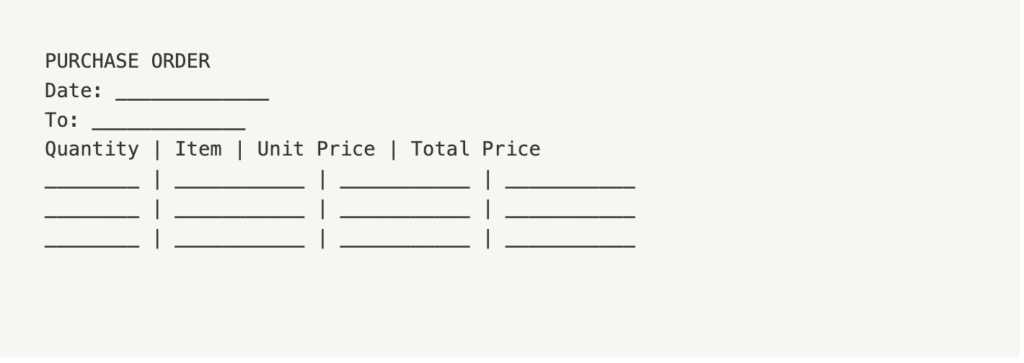
1. Purchase Order (PO): A PO is a document that specifies the quantity, price, and delivery date of the ordered items. It is issued by the purchasing department and sent to the supplier.
Standard format of Purchase Order:
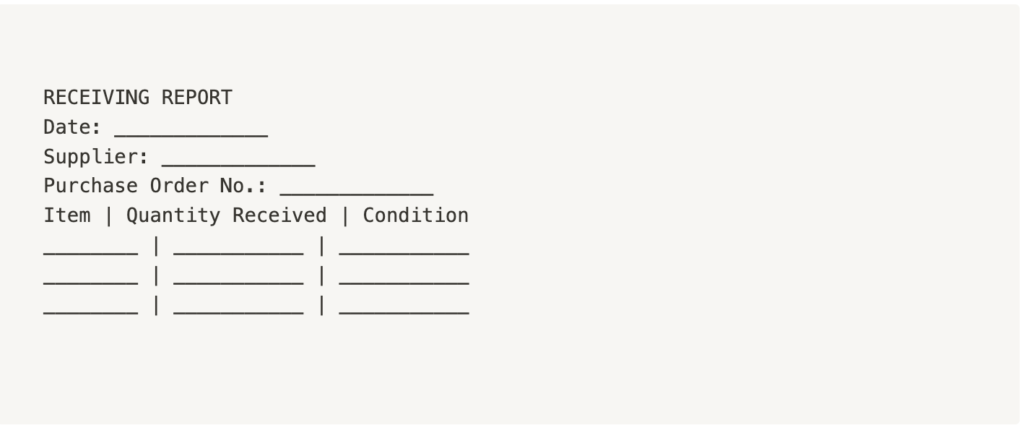
2. Receiving Report (RR): A RR is a document that confirms the receipt of goods and indicates any discrepancies or damages. It is prepared by the receiving department.
Standard format of Receiving Report:
3. Invoice: An invoice is a document that specifies the amount owed for the goods received. It is issued by the supplier and sent to the purchasing department.
Standard format of Invoice:

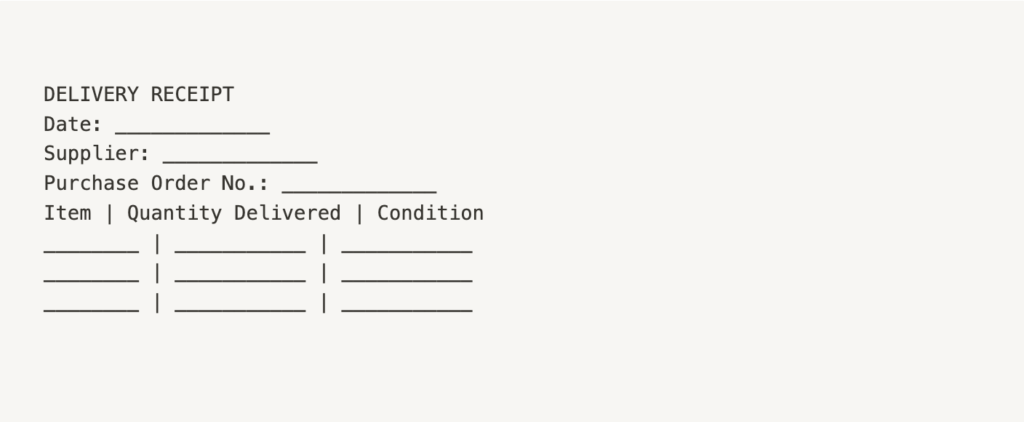
4. Delivery Receipt: A Delivery Receipt is a document that verifies the delivery of the items from the supplier. It is prepared by the receiving department.
Standard format of Delivery Receipt:
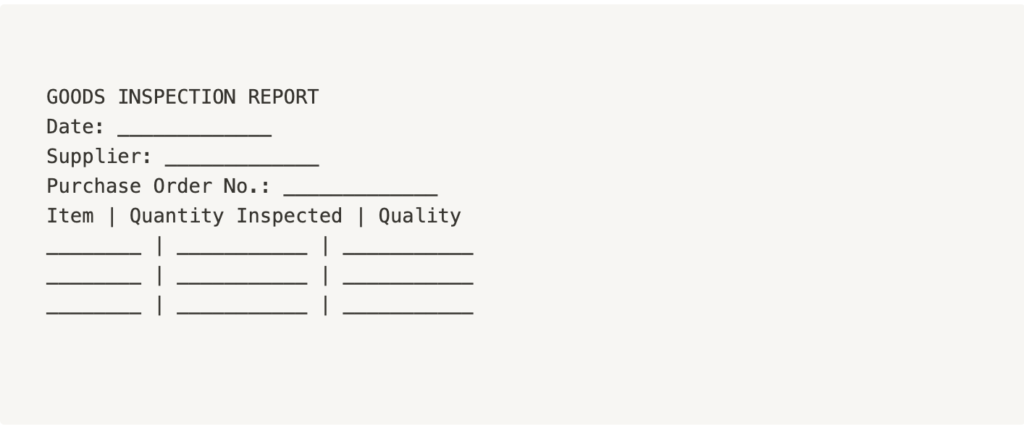
5. Goods Inspection Report: A Goods Inspection Report is a document that confirms the quality and quantity of the items received. It is prepared by the receiving department.
Standard format of Goods Inspection Report:
By using these documents, the receiving department of a hotel can ensure accurate tracking and verification of goods received, which helps to maintain quality control and cost-effectiveness in the operations.
OR (a) Differentiate between perpetual and physical stock taking.
Perpetual stock taking and physical stock taking are two methods of stock taking that are used to maintain inventory control in a business. The main differences between these two methods are:
- Definition: Perpetual stock taking is a continuous process of tracking inventory levels in real-time using an inventory management system, while physical stock taking is a periodic process of physically counting and verifying the inventory levels at a specific point in time.
- Frequency: Perpetual stock taking is conducted on a regular basis, often daily or weekly, while physical stock taking is conducted periodically, such as monthly or annually.
- Method: Perpetual stock taking relies on an inventory management system to track inventory levels, while physical stock taking involves physically counting and verifying the inventory levels.
- Accuracy: Perpetual stock taking provides real-time accuracy of inventory levels, while physical stock taking provides a more accurate inventory count as it involves physically counting and verifying each item in stock.
- Disruption: Perpetual stock taking does not disrupt the daily operations of the business as it is conducted on an ongoing basis, while physical stock taking may disrupt the daily operations of the business as it involves shutting down the operations temporarily to conduct the count.
In summary, perpetual stock taking is a continuous process of tracking inventory levels in real-time, while physical stock taking is a periodic process of physically counting and verifying the inventory levels. Both methods have their advantages and disadvantages, and businesses may use a combination of both methods to maintain inventory control.
(b) Explain different stock levels.
Stock levels are an important aspect of inventory management in businesses. There are various types of stock levels that are used to maintain inventory control. These include:
- Minimum Stock Level: This is the minimum quantity of stock that a business needs to maintain to avoid stockouts. It is determined based on the lead time required for the supplier to deliver the goods and the average daily usage of the goods.
- Maximum Stock Level: This is the maximum quantity of stock that a business can hold at any given time. It is determined based on the storage capacity of the business and the rate of consumption of the goods.
- Reorder Level: This is the level at which a business needs to place an order for new stock. It is determined based on the lead time required for the supplier to deliver the goods, the average daily usage of the goods, and the minimum stock level.
- Danger Level: This is the level below which a business should not allow the stock to fall. It is determined based on the lead time required for the supplier to deliver the goods and the average daily usage of the goods.
- Safety Stock Level: This is the additional stock that a business holds to guard against unexpected demand or delays in the delivery of goods. It is determined based on the variability in demand and the lead time required for the supplier to deliver the goods.
By maintaining these different stock levels, businesses can ensure that they have sufficient inventory to meet the demand while avoiding stockouts and excessive inventory holding costs. The specific stock levels used will depend on the nature of the business and the products being sold.
Q.9. (a) What are the salient factors for effective forecasting?
Effective forecasting is an essential aspect of inventory management for businesses. The salient factors for effective forecasting include:
- Historical Data: Historical data is an important factor for effective forecasting as it provides insights into past demand patterns, seasonality, and trends. Businesses can use this data to identify patterns and trends and make more accurate forecasts.
- Market Trends: Market trends such as changes in consumer preferences, competitor activity, and economic factors can have a significant impact on demand for goods. Effective forecasting should take into account these trends and their potential impact on demand.
- Sales and Marketing Strategies: Sales and marketing strategies such as promotions, advertising campaigns, and product launches can influence demand for goods. Effective forecasting should take into account the impact of these strategies on demand.
- Product Life Cycle: The stage of the product life cycle can have a significant impact on demand for goods. Effective forecasting should take into account the stage of the product life cycle and the potential impact on demand.
- External Factors: External factors such as natural disasters, pandemics, and geopolitical events can have a significant impact on demand for goods. Effective forecasting should take into account the potential impact of these factors on demand.
By considering these salient factors for effective forecasting, businesses can make more accurate predictions of future demand for goods and maintain optimal inventory levels to meet the demand.
(b) What are the objectives of final volume forecasting?
The objective of final volume forecasting is to predict the final volume of sales or production for a given time period. The primary objectives of final volume forecasting are:
- Planning: Final volume forecasting helps businesses to plan their production and inventory levels based on expected demand. By forecasting the final volume of sales or production, businesses can determine the resources needed to meet the demand, such as labor, raw materials, and equipment.
- Cost Control: Final volume forecasting can help businesses to control costs by avoiding overproduction or underproduction. By forecasting the final volume of sales or production, businesses can ensure that they have the right amount of inventory to meet the demand, without incurring excess inventory holding costs or stockouts.
- Profit Maximization: Final volume forecasting can help businesses to maximize profits by ensuring that they have the right amount of inventory to meet the demand. By accurately forecasting the final volume of sales or production, businesses can avoid excess inventory holding costs and stockouts, which can reduce profits.
- Customer Satisfaction: Final volume forecasting can help businesses to meet customer demand and ensure customer satisfaction. By accurately forecasting the final volume of sales or production, businesses can ensure that they have the right amount of inventory to meet customer demand, without causing delays or stockouts.
Overall, the objective of final volume forecasting is to ensure that businesses have the right amount of inventory to meet customer demand, while minimizing costs and maximizing profits.
OR (a) Explain different approaches for calculation of selling price.
There are different approaches that businesses can use to calculate the selling price of their products or services. These include:
- Cost-Plus Pricing: This approach involves adding a markup to the cost of producing or purchasing the product to arrive at the selling price. The markup is typically expressed as a percentage of the cost and can vary depending on factors such as the level of competition and the desired profit margin.
- Value-Based Pricing: This approach involves setting the selling price based on the perceived value of the product or service to the customer. The selling price is based on the benefits that the product or service provides to the customer, rather than the cost of production.
- Competition-Based Pricing: This approach involves setting the selling price based on the prices charged by competitors for similar products or services. The selling price is typically set at or near the level of the competition, with adjustments made for factors such as quality and features.
- Dynamic Pricing: This approach involves setting the selling price based on real-time market conditions, such as supply and demand. The selling price can vary based on factors such as time of day, day of the week, and seasonality.
- Psychological Pricing: This approach involves setting the selling price based on the psychological impact on the customer. For example, setting the price just below a round number ($9.99 instead of $10.00) can create the impression of a lower price.
Each of these approaches has its own advantages and disadvantages, and the appropriate approach will depend on factors such as the nature of the product or service, the level of competition, and the target market.
(b) Elucidate different pricing policies.
Pricing policy is a critical aspect of marketing strategy that involves determining the appropriate price for a product or service. There are different pricing policies that businesses can adopt, including:
- Penetration Pricing: This pricing policy involves setting a low initial price for a new product or service to attract customers and gain market share. The aim is to generate high sales volume and establish the product or service in the market quickly.
- Skimming Pricing: This pricing policy involves setting a high initial price for a new product or service to generate high profits from early adopters. The aim is to take advantage of the product’s novelty and perceived value before competitors enter the market.
- Premium Pricing: This pricing policy involves setting a higher price than competitors for a product or service that is perceived as having superior quality, features, or benefits. The aim is to position the product or service as a high-end or luxury option for customers who are willing to pay a premium.
- Discount Pricing: This pricing policy involves offering price discounts to customers to encourage purchases or increase sales volume. The aim is to attract price-sensitive customers and generate more sales.
- Value-Based Pricing: This pricing policy involves setting the price based on the value that the product or service provides to the customer. The aim is to capture a portion of the value that the customer receives from the product or service.
- Dynamic Pricing: This pricing policy involves setting the price based on real-time market conditions, such as supply and demand. The aim is to adjust the price in response to market conditions to maximize revenue.
Each of these pricing policies has its own advantages and disadvantages, and the appropriate policy will depend on factors such as the nature of the product or service, the target market, and the level of competition.
Q.10. Match the following:
(a) Forecasting (i) Supplier
(b) Yield (ii) Store room
(c) Receiving (iii) Useable meat
(d) Cash and carry (iv) Net weight
(e) Bin card (v) Fixed cost
(f) Dairy products (vi) DRR
(g) Delivery note (vii) Variable cost
(h) Butchery test (viii) Cash payment
(i) Insurance (ix) Holidays
(j) Food cost (x) Perishables
Answers
(a) Forecasting (i) Holidays
(b) Yield (ii) Useable meat
(c) Receiving (iii) Supplier
(d) Cash and carry (iv) Cash payment
(e) Bin card (v) Store room
(f) Dairy products (vi) Perishables
(g) Delivery note (vii) Net weight
(h) Butchery test (viii) DRR
(i) Insurance (ix) Fixed cost
(j) Food cost (x) Variable cost