
Table of Contents
Q.1. Define cooking. Explain the aims and objectives of cooking.
Cooking is an art form that has been practiced since the dawn of civilization. It is the process of preparing food by combining different ingredients through various techniques such as baking, grilling, frying, boiling, and chopping. The ultimate goal of cooking is to make food more palatable and nutritious. In this article, we will explore the aims and objectives of cooking in greater detail.
Aims of Cooking:
- Enhancing Nutritional Value: One of the primary aims of cooking is to enhance the nutritional value of food. Cooking can break down complex carbohydrates and proteins, making them easier to digest and absorb. It also preserves or increases the availability of essential nutrients such as vitamins and minerals.
- Facilitating Meal Planning: Cooking allows for greater variety in meal planning, enabling individuals to consume a wider range of foods and nutrients. It provides the opportunity to experiment with new recipes and cuisines, thereby adding diversity to one’s diet.
- Developing Flavor and Texture: Cooking can develop a range of flavors, aromas, and textures that enhance the overall sensory experience of eating. Through the use of spices, herbs, and seasonings, cooks can create unique and delicious dishes that stimulate the senses.
- Improving Food Safety: Proper cooking can kill harmful bacteria, viruses, and parasites that can cause foodborne illnesses. Cooking at high temperatures can also destroy toxins and chemicals that may be present in certain foods.
- Preserving Food: Cooking can be used as a method of preserving food, such as canning, pickling, and drying. This allows food to be stored for longer periods without spoilage, thereby reducing food waste.
Objectives of Cooking:
- Creating Nutritious Meals: Cooking aims to create nutritious meals that are rich in essential nutrients such as protein, carbohydrates, fats, vitamins, and minerals. Nutritious meals can promote good health and reduce the risk of chronic diseases.
- Saving Time and Money: Cooking at home can be more cost-effective than dining out. It also saves time since meals can be prepared in advance and stored for later consumption.
- Celebrating Culture and Tradition: Cooking can be used as a way to celebrate culture and tradition. Many traditional dishes have been passed down through generations and are an important part of a community’s cultural identity.
- Promoting Sustainability: Cooking can promote sustainability by encouraging the use of local and seasonal ingredients. This reduces the carbon footprint associated with transportation and storage of food.
- Sharing Food and Building Relationships: Cooking can be a social activity that brings people together. Sharing food with others can help to build relationships and foster a sense of community.
In conclusion, cooking is an essential skill that allows individuals to create nutritious, delicious, and sustainable meals. Its aims and objectives are diverse, ranging from enhancing nutritional value to celebrating culture and tradition. By understanding the aims and objectives of cooking, individuals can better appreciate the value of this ancient art form and its role in promoting good health and well-being.
Q.2. Write in brief on any two of the following:
(a) Kitchen mise-en-place
Mise-en-place is a French culinary term that means “putting in place.” It refers to the process of preparing and organizing all the ingredients, equipment, and tools needed for a recipe before starting to cook. This includes chopping vegetables, measuring out spices, preheating the oven, and laying out cooking utensils. The practice of mise-en-place helps to ensure that cooking proceeds smoothly and efficiently, reducing the risk of mistakes and ensuring that all ingredients are used in the correct amounts. It also allows cooks to focus on the task at hand, without having to stop and search for ingredients or tools.
(b) Personal hygiene
Personal hygiene refers to the practices that individuals use to keep their bodies clean and healthy. In the context of cooking, personal hygiene is especially important to prevent the spread of foodborne illnesses. Cooking requires frequent hand washing to prevent cross-contamination between raw and cooked foods. Cooks should also avoid touching their face, hair, or other body parts while cooking, as this can transfer harmful bacteria to food. In addition to hand hygiene, cooks should wear clean clothing and aprons while cooking. Hair should be tied back or covered with a hat or hairnet to prevent stray hairs from falling into food. If a cook is feeling ill, they should avoid handling food to prevent the spread of germs.
(c) Fond de cuisine
Fond de cuisine is a French term that means “foundation of cooking.” It refers to a base stock or sauce that is used as the foundation for many different dishes. The most common fond de cuisine is a basic chicken or beef stock, which is made by simmering bones, vegetables, and seasonings in water for several hours. This stock can be used as a base for soups, stews, and sauces, adding depth of flavor and richness to the final dish. Other types of fond de cuisine include vegetable stock, fish stock, and mushroom stock. These stocks can be made by using different combinations of ingredients and can be used as a base for a variety of dishes. The key to a good fond de cuisine is to use high-quality ingredients and to simmer the stock slowly over low heat to extract as much flavor as possible.
Q.3. Enlist the parts of a salad. Explain in brief the role of each part.
A salad is a dish that typically consists of a mixture of vegetables, fruits, and other ingredients. The parts of a salad can vary depending on the type of salad being made, but typically include the following:
- Base: The base of a salad is the foundation on which all other ingredients are placed. The most common types of salad bases are lettuce, spinach, and other leafy greens. The role of the base is to provide bulk, texture, and nutrients to the salad.
- Protein: Protein is an important part of a salad as it helps to keep you feeling full and satisfied. Common sources of protein in salads include chicken, beef, fish, tofu, and beans. The role of protein is to provide a source of energy and to help build and repair muscles.
- Vegetables: Vegetables are the most common ingredient in a salad and can include a variety of options such as tomatoes, cucumbers, carrots, and peppers. The role of vegetables is to provide additional vitamins, minerals, and fiber to the salad.
- Fruits: Fruits are a great addition to salads as they provide natural sweetness and a variety of vitamins and antioxidants. Common fruit options for salads include berries, apples, oranges, and grapes. The role of fruits is to provide additional flavor and nutrition to the salad.
- Nuts and Seeds: Nuts and seeds are a great way to add crunch and texture to a salad. They also provide healthy fats, protein, and fiber. Common nuts and seeds used in salads include almonds, walnuts, sunflower seeds, and pumpkin seeds. The role of nuts and seeds is to provide additional texture and nutrition to the salad.
- Dressing: Dressing is used to add flavor and moisture to a salad. Common types of dressings include vinaigrettes, creamy dressings, and oil-based dressings. The role of dressing is to enhance the flavor of the salad and to make it more enjoyable to eat.
- Herbs and Spices: Herbs and spices are used to add flavor and aroma to a salad. Common herbs used in salads include parsley, basil, and cilantro. Spices such as cumin and paprika can also be used to add depth of flavor. The role of herbs and spices is to enhance the overall taste and aroma of the salad.
In conclusion, a salad is a dish that consists of a variety of ingredients, each playing a unique role in providing flavor, texture, and nutrition. By understanding the parts of a salad and the role of each ingredient, individuals can create healthy and delicious salads that are both satisfying and nutritious.
OR What are pigments? Enlist different types of pigments and the effect of heat on pigments.
Pigments are natural or synthetic substances that give color to various materials, including plants, animals, and man-made objects. Pigments are used in many industries, including art, textile, cosmetics, food, and more. Here are some different types of pigments:
- Chlorophyll: Chlorophyll is a green pigment found in plants, and it is essential for photosynthesis. It absorbs light in the red and blue parts of the spectrum and reflects green light, giving plants their characteristic color.
- Carotenoids: Carotenoids are pigments found in many fruits and vegetables, including carrots, tomatoes, and sweet potatoes. They are responsible for the orange, red, and yellow colors in these foods.
- Anthocyanins: Anthocyanins are pigments found in many fruits and vegetables, including blueberries, grapes, and red cabbage. They are responsible for the blue, purple, and red colors in these foods.
- Melanin: Melanin is a pigment found in human skin, hair, and eyes. It is responsible for the color of these tissues and helps protect the skin from UV radiation.
- Iron Oxides: Iron oxides are pigments found in many natural materials, including rocks, soil, and clay. They are often used in the production of pigments for paints, cosmetics, and other applications.
When pigments are exposed to heat, their properties can change. Here are some effects of heat on pigments:
- Denaturation: Heat can cause some pigments to denature, meaning they lose their structure and become less effective at absorbing or reflecting light.
- Color change: Some pigments can change color when exposed to heat. For example, chlorophyll can break down when heated, causing plants to turn brown or yellow.
- Degradation: Heat can cause some pigments to degrade, meaning they break down into smaller molecules. This can affect their stability and durability.
- Enhancement: Heat can also enhance the color of some pigments. For example, cooking tomatoes can enhance the red color of their lycopene pigments.
In conclusion, pigments are essential for giving color to various materials, and there are many different types of pigments found in nature and used in industry. The effects of heat on pigments can vary depending on the type of pigment, and can include denaturation, color change, degradation, or enhancement.
Q.4. What is the role of fruits and vegetables in food? Classify vegetables with examples.
Fruits and vegetables are essential components of a healthy and balanced diet. They provide a wide range of vitamins, minerals, fiber, and other nutrients that are important for maintaining good health. Here are some of the key roles that fruits and vegetables play in food:
- Nutrient density: Fruits and vegetables are rich in essential nutrients such as vitamins, minerals, and antioxidants that are important for maintaining good health.
- Flavor and texture: Fruits and vegetables add a variety of flavors and textures to meals, making them more enjoyable and satisfying.
- Color and visual appeal: Fruits and vegetables add vibrant colors and visual appeal to meals, making them more appealing and appetizing.
- Versatility: Fruits and vegetables can be used in a wide range of dishes, from salads and soups to smoothies and desserts, making them a versatile ingredient in any kitchen.
Vegetables can be classified into several categories based on their characteristics. Here are some examples:
- Root vegetables: Root vegetables grow underground and have a high starch content. Examples include carrots, potatoes, beets, and sweet potatoes.
- Leafy greens: Leafy greens are vegetables that have edible leaves and are rich in nutrients. Examples include spinach, kale, lettuce, and collard greens.
- Cruciferous vegetables: Cruciferous vegetables are part of the cabbage family and are known for their high levels of vitamins and minerals. Examples include broccoli, cauliflower, Brussels sprouts, and cabbage.
- Allium vegetables: Allium vegetables are characterized by their strong flavors and distinctive aroma. Examples include onions, garlic, leeks, and shallots.
- Gourd vegetables: Gourd vegetables are characterized by their tough outer skin and soft inner flesh. Examples include zucchini, pumpkin, cucumber, and squash.
- Podded vegetables: Podded vegetables are vegetables that are enclosed in a pod or shell. Examples include peas, green beans, and okra.
In conclusion, fruits and vegetables play a vital role in food by providing essential nutrients, adding flavor and texture, and enhancing visual appeal. Vegetables can be classified into several categories based on their characteristics, with examples including root vegetables, leafy greens, cruciferous vegetables, allium vegetables, gourd vegetables, and podded vegetables.
Q.5. Write short notes on any two of the following:
(a) Mother sauces
Mother sauces are a set of five basic sauces that form the foundation of French cuisine. These sauces are called “mother” because they are the base sauces from which many other sauces can be made by adding additional ingredients. The six mother sauces are:
- Béchamel sauce: A creamy white sauce made from a roux (a mixture of flour and butter) and milk.
- Velouté sauce: A light-colored sauce made from a roux and chicken, veal, or fish stock.
- Espagnole sauce: A brown sauce made from a roux and beef stock, flavored with tomato paste, vegetables, and herbs.
- Hollandaise sauce: A rich, buttery sauce made from egg yolks, butter, and lemon juice.
- Tomato sauce: A red sauce made from tomatoes, onions, and herbs.
- Mayonnaise: It is a cold emulsion sauce made from egg yolks, oil, vinegar or lemon juice, and seasonings.
(b) Elements and types of stocks
Stocks are flavorful liquids that are used as a base for soups, sauces, and other dishes. The four basic elements of a stock are bones, aromatics, water, and time. The bones provide flavor and body to the stock, while the aromatics (such as onions, carrots, and celery) add flavor and aroma. Water is used to extract the flavors from the bones and aromatics, and time is needed to allow the flavors to develop. There are several types of stocks, including:
- White stock: A clear, light-colored stock made from poultry or beef bones that have not been roasted.
- Brown stock: A rich, dark stock made from roasted beef or veal bones.
- Fish stock: A light, flavorful stock made from fish bones, heads, and trimmings.
- Vegetable stock: A vegetarian stock made from a variety of vegetables, herbs, and spices.
(c) Classify soups
Soups can be classified into several categories based on their characteristics. Here are some examples:
- Clear soups: Clear soups are light, flavorful soups that are transparent and free of any particles. Examples include consommé and chicken noodle soup.
- Thick soups: Thick soups are heartier and more filling than clear soups, and often contain ingredients such as cream or pureed vegetables. Examples include bisques and chowders.
- Broths: Broths are light, flavorful soups that are made by simmering meat and/or vegetables in water. Examples include chicken broth and beef broth.
- Cream soups: Cream soups are thick and creamy, and often contain pureed vegetables or meat. Examples include cream of mushroom soup and cream of tomato soup.
- Cold soups: Cold soups are served chilled and are often refreshing in hot weather. Examples include gazpacho and vichyssoise.
Q.6. Draw a detailed structure of an egg.
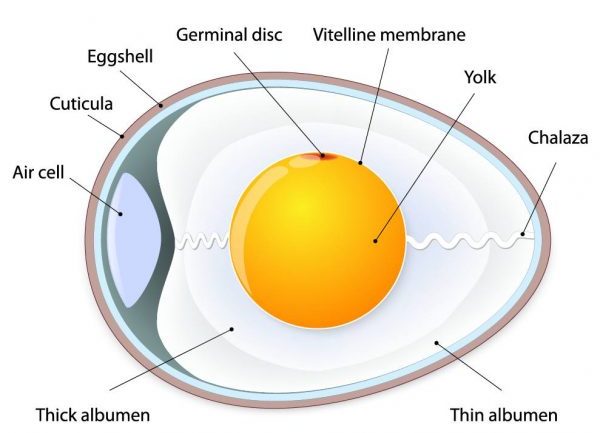
OR
With the help of a diagram, classify wet and dry methods of cooking.
Wet cooking methods involve the use of liquid, either water or broth, to cook food. Wet methods are often used to cook foods that are tough, or require a long cooking time to become tender. Examples of wet cooking methods include:
- Boiling: Cooking food in a pot of boiling water or broth, such as cooking pasta or making soup.
- Simmering: Cooking food in liquid that is just below the boiling point, such as making a stew.
- Poaching: Cooking food in a liquid that is heated just below the boiling point, such as poaching eggs or fish.
- Steaming: Cooking food by exposing it to steam, either by using a steamer basket or in a covered pot with a small amount of liquid.
On the other hand, dry cooking methods do not involve the use of liquid to cook food. Instead, they rely on the heat of an oven or a dry pan to cook the food. Dry methods are often used to cook foods that are tender, or that can be cooked quickly. Examples of dry cooking methods include:
- Roasting: Cooking food in an oven with dry heat, such as roasting a chicken or vegetables.
- Baking: Cooking food in an oven with dry heat, such as baking bread or pastries.
- Grilling: Cooking food over an open flame or hot coals, such as grilling meat or vegetables.
- Sautéing: Cooking food quickly in a hot, dry pan with a small amount of oil, such as sautéing vegetables or meat.
Here is a brief summary of the classification of wet and dry cooking methods:
Wet Cooking Methods:
- Boiling
- Simmering
- Poaching
- Steaming
Dry Cooking Methods:
- Roasting
- Baking
- Grilling
- Sautéing
Q.7. Write in detail about:
Various thickening agents used in making sauces
Thickening agents are used to give sauces a thicker consistency and to bind the ingredients together. There are several types of thickening agents used in making sauces, each with its own unique properties and uses.
- Roux: A roux is a mixture of flour and fat, traditionally butter, that is used to thicken sauces. The mixture is cooked until it turns a light brown color, which gives the sauce a nutty flavor. Roux is commonly used in classic French sauces like béchamel and velouté.
- Cornstarch: Cornstarch is a fine powder made from corn and is commonly used to thicken sauces. When mixed with cold water, cornstarch forms a slurry that can be added to hot liquid to thicken it. Cornstarch is ideal for use in sauces that are acidic, as it does not break down under acidic conditions.
- Arrowroot: Arrowroot is a starch that is extracted from the roots of the arrowroot plant. It is similar to cornstarch in its thickening properties but has a milder flavor. Arrowroot is often used in Asian cuisine and in gluten-free recipes.
- Potato starch: Potato starch is derived from potatoes and is often used as a thickening agent in sauces. It has a neutral flavor and is ideal for use in recipes that require a clear, glossy sauce.
- Egg yolks: Egg yolks are a common thickening agent used in sauces like hollandaise and mayonnaise. They work by emulsifying the ingredients together to create a creamy sauce.
- Beurre manié: Beurre manié is a mixture of equal parts flour and butter that is used to thicken sauces. It is added to the sauce in small amounts and whisked in until fully incorporated.
- Reduction: Reduction is a technique that involves cooking a liquid, such as wine or broth, until it has reduced in volume and thickened. This method works well for sauces that have a strong flavor, such as a red wine reduction sauce.
It is important to note that each thickening agent has its own unique properties and should be used in the appropriate recipe. Additionally, it is important to properly incorporate the thickening agent into the sauce to avoid clumps or a lumpy texture.
OR Types of raising agents
Raising agents are substances that are added to baked goods to help them rise by creating air pockets in the dough or batter. There are three main types of raising agents: biological, chemical, and mechanical.
- Biological raising agents: These raising agents rely on yeast or other microorganisms to produce carbon dioxide gas, which causes the dough or batter to rise. Yeast is a common biological raising agent used in bread-making, as it feeds on sugar and produces carbon dioxide gas as a byproduct. Other biological raising agents include sourdough starter, which is a mixture of flour and water that is allowed to ferment, and buttermilk, which contains lactic acid bacteria.
- Chemical raising agents: These raising agents rely on chemical reactions to produce carbon dioxide gas. Baking powder and baking soda are two common chemical raising agents used in baking. Baking powder is a mixture of baking soda, an acid (such as cream of tartar), and a starch. When the baking powder is added to a batter or dough and mixed with liquid, the acid and baking soda react to produce carbon dioxide gas. Baking soda, on the other hand, is a pure alkaline compound that requires an acid to activate it. It is often used in recipes that contain acidic ingredients, such as buttermilk or vinegar.
- Mechanical raising agents: These raising agents rely on physical processes, such as beating or folding, to incorporate air into the batter or dough. Whipping egg whites is a common mechanical raising agent used in recipes such as soufflés and meringues. The egg whites are beaten until stiff peaks form, which incorporates air into the mixture and causes it to rise when baked.
It is important to use the appropriate type of raising agent for each recipe and to follow the instructions carefully, as using too much or too little can affect the texture and rise of the baked goods. Additionally, some people may have allergies or sensitivities to certain types of raising agents, so it is important to be aware of any dietary restrictions before using them in recipes.
Q.8. Explain the following (Illustrate with example):
(a) Blind baking
Blind baking is a technique used in baking where a pie or tart crust is partially or fully baked before the filling is added. This helps to prevent the crust from becoming soggy due to the moisture from the filling. To blind bake a crust, it is first lined with parchment paper or aluminum foil and then filled with baking weights or dried beans to weigh it down. The crust is then baked in the oven until it is partially or fully cooked. Once it has cooled, the filling is added and the pie or tart is finished baking. An example of a dish that uses blind baking is quiche.
(b) Mirepoix
Mirepoix is a mixture of diced vegetables used as a base for soups, stews, and sauces in French cuisine. The traditional combination includes onions, carrots, and celery, with a ratio of two parts onion to one part carrot and one part celery. The vegetables are typically sautéed in butter or oil to release their flavors and create a flavorful base for the dish. Other variations of mirepoix may include additional ingredients such as garlic, leeks, or tomatoes. An example of a dish that uses mirepoix is beef stew.
(c) En casserole
En casserole refers to a dish that is cooked and served in a casserole dish. Casserole dishes are typically deep, oven-safe dishes made of glass, ceramic, or metal. Foods cooked en casserole are often layered, with ingredients such as meat, vegetables, and cheese, and are topped with a sauce or breadcrumbs. The dish is then baked in the oven until the ingredients are cooked and the top is golden brown. An example of a dish cooked en casserole is lasagna.
(d) Duxelles
Duxelles is a mixture of finely chopped mushrooms, shallots, and herbs that is used as a filling or flavoring in French cuisine. The mixture is typically sautéed in butter until the mushrooms have released their moisture and the mixture has reduced in volume. It can be used as a filling for dishes such as beef Wellington or as a flavoring in sauces and soups. An example of a dish that uses duxelles is mushroom soup.
(e) Liaison
Liaison is a mixture of egg yolks and heavy cream that is used to thicken and enrich sauces and soups. The mixture is typically added to the hot liquid just before serving and is gently whisked in until it is fully incorporated. The liaison helps to create a smooth, creamy texture in the dish and adds richness and depth of flavor. An example of a dish that uses liaison is lobster bisque.
Q.9. Match the following:
(a) Julienne (i) Slicing vegetables thin
(b) Macedoine (ii) Peeling skin of vegetables
(c) Brunniose (iii) 2mm x 2mm x 4cm
(d) Payasanne (iv) Cross-wise or length-wise
(e) Baton (v) 12mm x 12mm x 6cm
(f) Wedge (vi) Different shapes 1mm thickness
(g) Chiffonade (vii) 2mm x 2mm x 2mm
(h) Slice (viii) Round vegetables cut length-wise
(i) Paring (ix) 5mm x 5mm x 5mm
(j) Chateau (x) Turning of vegetables in barrel shape
(a) Julienne – (i) Slicing vegetables thin
(b) Macedoine – (ix) 5mm x 5mm x 5mm
(c) Brunniose – (iii) 2mm x 2mm x 4cm
(d) Paysanne – (vi) Different shapes 1mm thickness
(e) Baton – (v) 12mm x 12mm x 6cm
(f) Wedge – (viii) Round vegetables cut length-wise
(g) Chiffonade – (iv) Cross-wise or length-wise
(h) Slice – (ii) Peeling skin of vegetables
(i) Paring – (vii) 2mm x 2mm x 2mm
(j) Chateau – (x) Turning of vegetables in barrel shape
Q.10. Fill in the blanks:
(a) __________ and __________ are examples of salad dressings.
(b) __________ and __________ are examples of consommé garnishes.
(c) __________ and __________ are examples of international soups.
(d) __________ and __________ are examples of shortening used in baked
products.
(e) __________ and __________ are examples of chemical raising agents
used in food.
(a) Ranch and Caesar are examples of salad dressings. Salad dressings are sauces that are used to enhance the flavor and texture of salads. They can be made with a variety of ingredients such as oil, vinegar, herbs, and spices.
(b) Quenelles and Royale are examples of consommé garnishes. Consommé garnishes are ingredients that are added to consommé to enhance its flavor, texture, and visual appeal. They can be made with a variety of ingredients such as vegetables, herbs, meats, and fish.
(c) Tom yum and Gazpacho are examples of international soups. International soups are soups that are commonly consumed in different parts of the world. They are made with a variety of ingredients and have different flavor profiles.
(d) Butter and margarine are examples of shortening used in baked products. Shortening is a type of fat that is used in baked goods to give them a tender, crumbly texture. It is used in a variety of baked products such as cakes, cookies, and pastries.
(e) Baking powder and baking soda are examples of chemical raising agents used in food. Chemical raising agents are used in baking to help baked goods rise and become light and fluffy. They work by releasing carbon dioxide gas when they come into contact with liquid and heat.