
Table of Contents
Q.1. Explain the responsibility of housekeeping in the upkeep of the hotel.
Housekeeping plays a vital role in the upkeep of a hotel. Its responsibilities are crucial for maintaining cleanliness, orderliness, and guest satisfaction. In this article, we will outline the key responsibilities of housekeeping in a hotel.
- Cleaning and Sanitizing: One of the primary responsibilities of housekeeping is to ensure that all areas of the hotel, including guest rooms, public areas, and back-of-house spaces, are thoroughly cleaned and sanitized. This involves dusting, vacuuming, mopping floors, wiping surfaces, and disinfecting high-touch areas to maintain a hygienic environment.
- Guest Room Preparation: Housekeeping is responsible for preparing guest rooms before the arrival of guests and ensuring they are comfortable and welcoming. This includes making beds, replenishing linens and amenities, arranging furniture, and ensuring all equipment, such as TVs and air conditioning, are in proper working condition.
- Laundry and Linen Management: Housekeeping manages the hotel’s laundry operations, including washing, ironing, folding, and storing linens, towels, and other guest room fabrics. They ensure an adequate supply of clean and fresh linens is available for guest use.
- Lost and Found: Housekeeping handles the lost and found items in the hotel. If a guest leaves behind personal belongings in their room or public areas, it is the responsibility of the housekeeping department to collect, store, and return these items to the rightful owners.
- Maintenance and Reporting: Housekeeping staff often serves as the eyes and ears of the hotel, as they frequently encounter maintenance issues during their daily tasks. They are responsible for promptly reporting any maintenance or repair needs to the appropriate department to ensure a safe and well-functioning facility.
- Public Area Maintenance: Housekeeping is responsible for maintaining the cleanliness and orderliness of all public areas within the hotel, such as lobbies, corridors, restaurants, and recreational facilities. This includes regular cleaning, organizing furniture and decor, and ensuring a pleasant atmosphere for guests.
- Pest Control: Housekeeping plays a crucial role in preventing and addressing pest infestations. They need to be vigilant in identifying signs of pests and reporting them to the appropriate personnel for timely action. They may also collaborate with pest control professionals to address any infestation issues.
- Teamwork and Communication: Housekeeping works closely with other departments, such as front office and maintenance, to ensure smooth operations. Effective communication and coordination with these departments are essential for providing seamless services to guests and resolving any issues promptly.
- Energy and Resource Conservation: Housekeeping staff should be trained to conserve energy and resources, such as water and electricity, in their daily operations. This includes ensuring proper usage of cleaning chemicals, controlling the usage of water and electricity, and implementing sustainable practices.
- Guest Satisfaction: Ultimately, the responsibility of housekeeping is to contribute to guest satisfaction and provide a comfortable and pleasant stay experience. Cleanliness and orderliness are critical factors in guest satisfaction, and the housekeeping department plays a significant role in achieving this.
In conclusion, housekeeping in a hotel is responsible for a range of essential tasks, including cleaning and sanitizing, guest room preparation, laundry and linen management, lost and found, maintenance reporting, public area maintenance, pest control, teamwork and communication, energy and resource conservation, and guest satisfaction. By fulfilling these responsibilities, the housekeeping department plays a crucial role in upholding the hotel’s reputation, ensuring guest comfort, and maintaining a high standard of cleanliness and service.
OR Explain the inter-departmental co-ordination between housekeeping and front office in a hotel.
Inter-departmental coordination between housekeeping and the front office in a hotel can be summarized through the following key points:
- Communication: Regular and effective communication channels, such as meetings, phone calls, and electronic communication, are essential for exchanging information regarding room availability, guest preferences, and specific requirements.
- Room turnover: The front office notifies housekeeping about room vacancies and updates on guest arrivals and departures. This ensures that rooms are cleaned and prepared promptly, minimizing waiting times for guests.
- Guest satisfaction: Coordination between housekeeping and the front office ensures that guest requests and concerns are addressed promptly and efficiently, contributing to a positive and memorable experience.
- Inventory management: By coordinating with the front office, housekeeping can anticipate the number of guests expected and adjust their inventory of cleaning supplies, toiletries, and linens accordingly. This helps prevent shortages or excess supplies.
- Security and safety: Housekeeping staff report any suspicious activities or safety hazards to the front office, enabling timely implementation of security measures. The front office can also inform housekeeping about specific security requirements or guest concerns, ensuring a safe environment for guests.
- Maintenance and repairs: The front office communicates guest-reported issues with rooms to housekeeping, allowing for timely action to rectify any problems and maintain the quality of the accommodations.
- Guest preferences: The front office shares guest preferences, such as room amenities or specific cleaning instructions, with housekeeping. This enables the housekeeping staff to personalize the guest experience and meet their specific needs.
- Special requests: The front office communicates any special requests made by guests, such as extra towels or specific room arrangements, to housekeeping. This ensures that these requests are fulfilled promptly and accurately.
- Efficiency and productivity: Effective coordination between housekeeping and the front office streamlines operations, reduces delays, and enhances overall efficiency and productivity within the hotel.
- Training and development: The front office and housekeeping departments collaborate in providing training and development opportunities for staff. This ensures that employees have the necessary skills and knowledge to perform their duties effectively and deliver exceptional service.
- Feedback and improvement: The front office gathers guest feedback and shares it with the housekeeping department, allowing them to identify areas for improvement and implement necessary changes to enhance guest satisfaction.
- Emergency situations: During emergencies, such as fire alarms or evacuations, coordination between housekeeping and the front office is crucial to ensure a swift and organized response, prioritizing guest safety.
In summary, inter-departmental coordination between housekeeping and the front office in a hotel involves effective communication, collaboration, and understanding. This coordination ensures efficient room turnover, guest satisfaction, inventory management, security, and maintenance. By working together seamlessly, these departments contribute to a positive guest experience and the overall success of the hotel.
Q.2. Draw the organizational chart of a large five-star hotel with 700 guestrooms having a laundry in its premises.
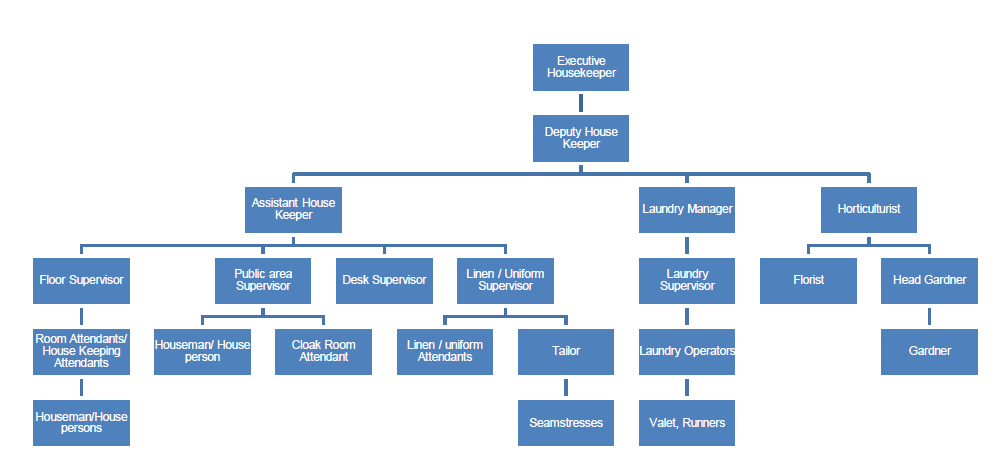
OR
Draw the organizational chart of a small hotel with 60 guestrooms without a laundry. Also describe the duties and responsibilities of a guest room attendant and control desk supervisor.
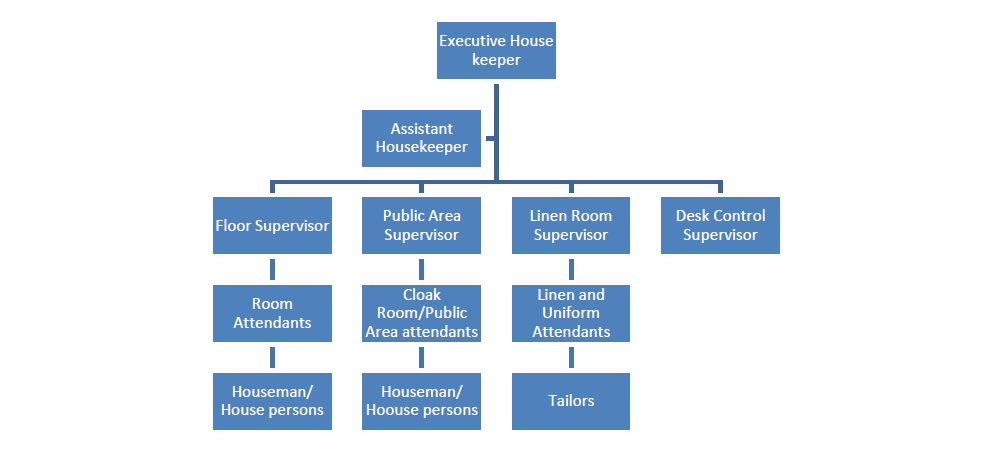
Duties and Responsibilities of a Guest Room Attendant:
- Cleaning and maintenance: The primary responsibility of a guest room attendant, also known as a housekeeper, is to clean and maintain guest rooms and associated areas. This includes making beds, changing linens, vacuuming carpets, dusting furniture, and replenishing amenities.
- Bathroom and toilet cleaning: Guest room attendants are responsible for cleaning and sanitizing bathrooms and toilets, including scrubbing toilets, sinks, and showers, and replenishing towels and toiletries.
- Room setup: Guest room attendants ensure that guest rooms are properly set up and organized before a guest’s arrival. This involves arranging furniture, adjusting curtains, and ensuring that all amenities and supplies are in place.
- Laundry management: They collect and sort dirty linens and towels for laundry and replace them with fresh ones. They may also assist with folding and organizing clean linens.
- Reporting damages and maintenance issues: Guest room attendants identify and report any damages, maintenance issues, or malfunctioning equipment in guest rooms to the appropriate department for prompt resolution.
- Lost and found items: They are responsible for identifying and reporting any lost or found items in guest rooms and following the hotel’s procedures for handling such items.
- Adhering to safety and security protocols: Guest room attendants must comply with safety and security procedures, such as using appropriate cleaning chemicals, handling hazardous materials safely, and reporting any suspicious activities or safety hazards they encounter.
- Inventory management: They monitor and report the inventory of cleaning supplies, amenities, and linens, ensuring an adequate supply is available and requesting replenishment as necessary.
- Attention to guest requests: Guest room attendants pay attention to any specific guest requests, such as extra pillows or towels, and fulfill them promptly to ensure guest satisfaction.
- Providing assistance: In some cases, guest room attendants may assist guests with luggage, provide information about hotel facilities, or address basic guest inquiries.
Duties and Responsibilities of a Control Desk Supervisor:
- Guest check-in and check-out: The control desk supervisor oversees the smooth check-in and check-out processes for guests. They ensure that guest reservations are accurate, collect necessary information, issue room keys, and handle any financial transactions.
- Reservation management: They manage and update guest reservations, including making modifications, cancellations, and ensuring accurate information is recorded in the hotel’s reservation system.
- Handling guest inquiries and complaints: Control desk supervisors address guest inquiries, concerns, and complaints in a courteous and efficient manner. They strive to resolve issues promptly and escalate unresolved matters to the appropriate department or management.
- Coordination with other departments: They collaborate with various departments, including housekeeping, maintenance, and food and beverage, to ensure smooth communication and coordination in delivering guest services.
- Cash handling and financial management: Control desk supervisors handle cash transactions, including receiving payments, providing change, and balancing cash registers. They may also be responsible for preparing daily revenue reports and managing guest accounts.
- Managing room availability: They monitor and manage room availability, including making necessary room assignments, ensuring accurate room status updates, and coordinating with housekeeping for room turnovers.
- Training and supervision: Control desk supervisors may provide training and guidance to control desk agents or front desk staff, ensuring they are knowledgeable about hotel policies, procedures, and guest service standards.
- Safety and security: They maintain a secure environment by adhering to safety protocols, verifying guest identities, monitoring security cameras, and handling emergency situations according to established procedures.
- Guest service improvement: Control desk supervisors gather guest feedback and suggestions to identify areas for improvement in guest services. They may collaborate with other departments to implement necessary changes and enhance the overall guest experience.
- Administrative tasks: They may perform various administrative duties, such as preparing reports, maintaining guest records, managing correspondence, and assisting with inventory control.
In summary, the duties and responsibilities of a guest room attendant revolve around cleaning and maintaining guest rooms, while a control desk supervisor focuses on guest check-in and check-out, reservation management, guest service, and overall front desk operations. Both roles play critical parts in ensuring a pleasant and efficient experience for hotel guests.
Q.3. List the various mechanical cleaning equipment used in hotel. Explain briefly the use and the care of the different mechanical cleaning equipment used in the hotel.
Various Mechanical Cleaning Equipment Used in Hotels:
Vacuum Cleaner:
- Use: Vacuum cleaners are used to remove dust, dirt, and debris from carpets, upholstery, and floors.
- Care: Regular maintenance of the vacuum cleaner includes emptying the dust bag or canister, cleaning or replacing filters, and checking for any clogs or blockages. It is also important to store the vacuum cleaner in a clean and dry area.
Floor Scrubber:
- Use: Floor scrubbers are used to clean and scrub hard floors, such as tile, marble, or concrete. They typically have rotating brushes or pads that remove dirt and stains.
- Care: After each use, the floor scrubber should be cleaned thoroughly, including the removal of debris from the brushes or pads. The brushes or pads may need to be replaced periodically based on wear and tear.
Carpet Extractor:
- Use: Carpet extractors are used to deep clean carpets, removing dirt, stains, and allergens. They use water and cleaning solution to spray onto the carpet and then extract the dirty water.
- Care: After each use, the carpet extractor should be emptied, cleaned, and sanitized. The brushes or nozzles may need to be cleaned or replaced regularly to ensure optimal performance.
Pressure Washer:
- Use: Pressure washers use high-pressure water spray to clean various surfaces, including building exteriors, sidewalks, and outdoor furniture.
- Care: It is essential to follow the manufacturer’s instructions and safety guidelines when operating a pressure washer. Proper maintenance includes cleaning the nozzles, checking hoses for leaks, and ensuring that the machine is stored in a dry and safe place.
Steam Cleaner:
- Use: Steam cleaners use high-temperature steam to clean and sanitize a wide range of surfaces, including floors, upholstery, and curtains.
- Care: Regular maintenance includes descaling the steam cleaner to prevent mineral buildup, cleaning or replacing attachments, and ensuring that the machine is completely cooled down and dry before storage.
Floor Buffer/Polisher:
- Use: Floor buffers or polishers are used to restore the shine and luster of hard floors. They have rotating pads that buff or polish the floor surface.
- Care: After each use, the pads should be cleaned or replaced, and the machine should be wiped down to remove any dirt or residue. Regular inspection and maintenance of the motor and drive components are necessary to ensure proper functioning.
Window Cleaning Equipment:
- Use: Window cleaning equipment includes squeegees, window washing kits, and telescopic poles to clean and polish windows effectively.
- Care: It is important to clean and dry the window cleaning equipment after each use to prevent the buildup of dirt or residues. The tools should be stored in a clean and organized manner to avoid damage.
Scrubbing Machine:
- Use: Scrubbing machines are used to clean and scrub large areas, such as hallways, lobbies, and common areas. They have rotating brushes or pads that agitate and remove dirt and stains.
- Care: After each use, the scrubbing machine should be thoroughly cleaned, including the removal of debris from the brushes or pads. The machine should be stored in a clean and dry area.
Carpet Sweeper:
- Use: Carpet sweepers are manual cleaning tools used to quickly pick up loose debris, dust, and small particles from carpets.
- Care: Regular maintenance involves emptying the debris container, cleaning the brushes, and removing any tangled hair or threads. The carpet sweeper should be stored in a clean and dry area.
Air Blower:
- Use: Air blowers are used to dry surfaces quickly, such as carpets, floors, and upholstery, by blowing a stream of high-velocity air.
- Care: Regularly check and clean the air blower’s intake vents to prevent blockages. Store the blower in a clean and dry area, ensuring that it is protected from dust and debris.
In conclusion, mechanical cleaning equipment plays a crucial role in maintaining cleanliness and hygiene in hotels. Proper care and maintenance of these tools are essential to ensure their efficient operation and longevity. Regular cleaning, inspection, and adherence to manufacturer’s guidelines contribute to optimal performance and durability of the equipment.
OR
What are the various types of cleaning agents used in the hotel? Explain briefly.
In hotels, various types of cleaning agents are used to maintain cleanliness and hygiene. These cleaning agents are designed to effectively remove dirt, stains, and bacteria from different surfaces. Here are some common types of cleaning agents used in hotels along with their chemical names and the types of soil they target:
- All-Purpose Cleaners: Chemical Name: Sodium dodecylbenzenesulfonate (LAS), Sodium lauryl sulfate (SLS) Soil Type: General dirt, grease, and grime R-Type: Surfactant (R2)
- Glass Cleaners: Chemical Name: Ammonia (NH3), Isopropanol (Isopropyl alcohol) Soil Type: Fingerprints, smudges, and dirt on glass surfaces R-Type: Solvent (R1)
- Bathroom Cleaners: Chemical Name: Hydrochloric acid (HCl), Sodium hypochlorite (bleach) Soil Type: Soap scum, hard water stains, and mineral deposits in bathrooms R-Type: Acid (R3), Oxidizing agent (R6)
- Disinfectants: Chemical Name: Quaternary ammonium compounds (Quats), Sodium hypochlorite (bleach) Soil Type: Bacteria, viruses, and fungi R-Type: Disinfectant (R4)
- Carpet Cleaners: Chemical Name: Sodium bicarbonate (baking soda), Peroxide Soil Type: Stains, dirt, and odors on carpets and upholstery R-Type: Alkaline (R5), Bleaching agent (R8)
- Kitchen Cleaners: Chemical Name: Sodium hydroxide (caustic soda), Potassium hydroxide (caustic potash) Soil Type: Grease, oil, and food residues in kitchens R-Type: Alkaline (R5)
- Stainless Steel Cleaners: Chemical Name: Mineral oil, Isopropyl alcohol Soil Type: Fingerprints, smudges, and stains on stainless steel surfaces R-Type: Solvent (R1)
Please note that these are general examples, and specific cleaning agents may vary based on hotel policies, brands, and regulations. It is essential to follow the instructions and safety precautions provided by the manufacturer when using any cleaning agents.
Q.4. Explain briefly the following (any two):
(a) Use of information technology in hotel
The use of information technology (IT) in hotels has become increasingly important for efficient operations and enhanced guest experiences. Here are a few ways IT is utilized in hotels:
- Reservation Systems: Hotels utilize IT systems to manage reservations and bookings. These systems enable guests to make online reservations, check room availability, and manage their bookings conveniently.
- Property Management Systems (PMS): PMS software is used to manage various aspects of hotel operations, including guest check-in and check-out, room assignments, billing, inventory management, and reporting. PMS facilitates seamless communication and coordination between different hotel departments.
- Online Distribution Channels: Hotels leverage IT to distribute their inventory through online travel agencies (OTAs) and their own websites. This enables potential guests to find and book rooms, while hoteliers can manage rates and availability across multiple channels.
- Guest Service Applications: IT is used to develop guest service applications that allow guests to access hotel services and information digitally. These applications may include mobile check-in, in-room tablets, mobile key access, and personalized guest preferences.
(b) Frequency schedules for cleaning
Frequency schedules for cleaning outline the regularity with which different areas and items within a hotel should be cleaned. The schedules vary based on factors such as the level of foot traffic, the nature of the area, and hygiene standards. Here are a few examples of frequency schedules for cleaning in hotels:
- Guest Rooms: Guest rooms typically undergo daily cleaning, which includes making beds, changing linens, dusting surfaces, vacuuming, and cleaning bathrooms. Deep cleaning, such as carpet shampooing or mattress sanitization, may be scheduled less frequently.
- Public Areas: High-traffic public areas like lobbies, restaurants, and conference rooms require regular cleaning throughout the day. This includes tasks like mopping floors, wiping surfaces, emptying trash bins, and cleaning restrooms.
- Back-of-House Areas: Areas such as employee restrooms, break rooms, and offices also require regular cleaning, typically on a daily or weekly basis. These areas may have different schedules based on their usage and occupancy.
- Specialized Areas: Some areas in hotels, like swimming pools, fitness centers, and spa facilities, require specialized cleaning and maintenance. Cleaning frequencies for these areas may depend on usage patterns, safety regulations, and health guidelines.
It is important for hotels to establish comprehensive cleaning schedules to ensure a clean and hygienic environment for guests and staff while complying with industry standards and regulations.
(c) Principles of cleaning
The principles of cleaning serve as guidelines for effective and efficient cleaning practices. These principles encompass a range of factors to ensure cleanliness, hygiene, and safety. Here are some key principles of cleaning:
- Pre-cleaning Assessment: Before initiating the cleaning process, a thorough assessment of the area or item to be cleaned is essential. This includes identifying the type of soil or dirt, selecting appropriate cleaning agents, and assessing any potential risks or special requirements.
- Surface Preparation: Proper surface preparation is crucial for effective cleaning. This may involve removing loose debris, dusting, or pre-treating stains. It ensures that the cleaning agents can work optimally on the surface.
- Chemical Selection: Choosing the right cleaning agents and chemicals based on the surface and type of soil is vital. Different surfaces and soils may require specific cleaning agents to achieve the desired results without causing damage.
- Cleaning Techniques: Utilizing appropriate cleaning techniques enhances efficiency and effectiveness. Examples include wiping, scrubbing, mopping, and vacuuming. Adhering to correct techniques ensures thorough cleaning while minimizing the risk of cross-contamination.
- Time and Agitation: Sufficient contact time between the cleaning agent and the surface, along with proper agitation, aids in loosening and removingcontaminants. Allowing the cleaning agent to dwell on the surface for the recommended time and using appropriate agitation techniques (such as scrubbing or brushing) improves the cleaning process.
- Proper Rinsing: After cleaning, thorough rinsing is important to remove any residual cleaning agents or chemicals. Improper rinsing can leave behind residues that may attract dirt or cause surface damage.
- Drying and Restoration: Adequate drying of surfaces is essential to prevent moisture-related issues such as mold or bacterial growth. Additionally, restoration activities may be required to bring the surface back to its original condition, such as polishing or buffing.
- Safety Considerations: Safety should always be a priority during cleaning. This includes using personal protective equipment (PPE), following instructions provided by the manufacturer, ensuring proper ventilation, and using caution with potentially hazardous cleaning agents.
By following these principles of cleaning, hotels can maintain cleanliness, uphold hygiene standards, and create a safe and pleasant environment for guests and staff.
Q.5. Differentiate between the following (any five):
(a) Ottoman and Houseman
Ottoman:
- Meaning: In the context of housekeeping, an ottoman refers to a type of furniture, specifically a low upholstered seat or footstool. It is not a specific role or position within the housekeeping department.
- Purpose: Ottomans are primarily used as seating or footrests in guest rooms, lounges, or public areas of a hospitality establishment. They provide comfort and a place for guests to relax or put their feet up.
- Duties: Ottomans do not have specific duties within the housekeeping department. Instead, their purpose is to enhance the comfort and aesthetics of the space where they are placed.
- Location: Ottomans are typically found in guest rooms, common areas, or designated relaxation areas where guests can use them for seating or as footrests.
Houseman:
- Meaning: A houseman in housekeeping is a specific role or position within the housekeeping department of a hospitality establishment.
- Purpose: The primary purpose of a houseman is to assist with various tasks related to the maintenance and cleanliness of the hotel or resort.
- Duties: Housemen are responsible for a range of duties, which may include cleaning and maintaining public areas, restocking supplies, delivering linens or amenities to guest rooms, handling laundry, and assisting with the setup and breakdown of event spaces. They may also respond to guest requests or inquiries related to housekeeping services.
- Location: Housemen work in various areas of the hotel or resort, including public spaces, guest rooms, and event venues, depending on the specific tasks they are assigned.
(b) Buffing and Burnishing
Buffing:
- Meaning: Buffing refers to the process of smoothing and polishing a surface to achieve a smooth and shiny finish.
- Purpose: The purpose of buffing is to remove imperfections, scratches, and dullness from the surface and create a more lustrous appearance.
- Duties: When buffing, abrasive compounds or polishing agents are applied to the surface, and a rotating wheel or pad is used to rub the surface, gradually refining it to a smoother finish.
- Location: Buffing can be performed on various materials such as wood, metal, plastic, and painted surfaces. It is widely used in industries like automotive detailing, furniture restoration, metal polishing, and general surface maintenance.
Burnishing:
- Meaning: Burnishing is the process of creating a high-gloss or reflective finish on hard flooring surfaces.
- Purpose: The purpose of burnishing is to enhance the appearance of the floor by creating a polished, glossy look and improving its durability.
- Duties: Burnishing involves applying pressure and friction to the floor using a specialized burnishing machine equipped with burnishing pads or brushes. The high-speed rotation of the machine generates heat and compression, resulting in a glossy finish.
- Location: Burnishing is primarily used on hard flooring materials such as vinyl, linoleum, terrazzo, and concrete. It is commonly applied in commercial and institutional settings, particularly in high-traffic areas where a durable, glossy appearance is desired.
(c) EPNS and Sterling Silver
EPNS (Electroplated Nickel Silver):
- Meaning: EPNS stands for Electroplated Nickel Silver, which is a silver-like alloy made primarily of nickel, zinc, and copper. It is commonly used as a base metal for electroplating with a thin layer of silver.
- Purpose: The purpose of EPNS is to create an affordable alternative to solid silverware. By electroplating a thin layer of silver onto the nickel silver base, EPNS items achieve a similar appearance to sterling silver at a lower cost.
- Duties: EPNS items, such as cutlery, serving trays, or decorative pieces, serve similar purposes to their sterling silver counterparts. They are used for dining, entertaining, and as decorative objects in households or hospitality settings.
- Location: EPNS items can be found in various locations, including homes, restaurants, hotels, and other establishments where silverware and decorative pieces are used. They are more commonly used in settings where cost is a factor or where the risk of theft or damage to valuable silverware is higher.
Sterling Silver:
- Meaning: Sterling silver refers to a high-quality silver alloy made of 92.5% pure silver and 7.5% of other metals, usually copper. It is renowned for its lustrous appearance and durability.
- Purpose: Sterling silver is valued for its aesthetic appeal, durability, and precious metal status. It is used for various purposes, including jewelry, flatware, tableware, decorative objects, and personal accessories.
- Duties: Sterling silver items serve functional and ornamental roles. They are used for dining, serving, accessorizing, and as heirloom pieces. Sterling silver is known for its durability and ability to retain its value over time.
- Location: Sterling silver items are commonly found in homes, upscale dining establishments, fine jewelry stores, and galleries specializing in silverware and decorative arts. They are often considered valuable possessions and cherished as heirlooms or investment pieces.
(d) Lacquering and Enameling
Lacquering:
- Meaning: Lacquering is the process of applying a protective and decorative coating called lacquer onto a surface. Lacquer is a clear or colored resinous substance that dries to form a hard and glossy finish.
- Purpose: The purpose of lacquering is to protect the underlying material from damage, such as moisture, scratches, and UV radiation. It also enhances the aesthetic appeal of the surface by providing a smooth and glossy finish.
- Duties: Lacquering involves applying multiple layers of lacquer onto the surface using brushes, sprayers, or dipping techniques. Each layer is allowed to dry before applying the next, and sanding or polishing may be done between coats for a smooth finish.
- Location: Lacquering is commonly used in various industries, such as woodworking, furniture manufacturing, automotive, and art conservation. It can be applied to a wide range of surfaces, including wood, metal, plastic, and ceramics.
Enameling:
- Meaning: Enameling is the process of fusing powdered glass onto a surface, typically metal, by high heat to create a durable and decorative coating. The powdered glass, known as enamel, melts and fuses with the metal to form a smooth and colorful finish.
- Purpose: The purpose of enameling is to provide a protective coating on the surface while also adding color and decorative elements. Enameling can create intricate designs and patterns that are highly resistant to fading, corrosion, and wear.
- Duties: Enameling involves applying layers of powdered glass onto a metal surface and then firing it in a kiln at high temperatures. The heat melts the enamel, which adheres to the metal and forms a strong bond. Different techniques such as cloisonné, champlevé, or plique-à-jour can be used to create various effects.
- Location: Enameling has been practiced for centuries and is commonly used in jewelry making, decorative arts, and metalwork. It can be found in various cultural and historical contexts worldwide, often associated with specific regions known for their enameling traditions.
(e) Janitor’s Trolley and Mop Wringer Trolley
Janitor’s Trolley:
- Meaning: A Janitor’s Trolley, also known as a Cleaning Cart or Utility Cart, is a wheeled cart or platform used by janitors or cleaning personnel to transport cleaning supplies, tools, and equipment from one location to another.
- Purpose: The purpose of a Janitor’s Trolley is to provide a convenient and organized way for janitors to carry and access cleaning supplies while performing their duties. It allows for efficient cleaning and minimizes the need for multiple trips to restock supplies.
- Duties: A Janitor’s Trolley typically features shelves, compartments, and hooks to hold various cleaning products, such as cleaning solutions, brushes, mops, brooms, trash bags, and paper towels. It may also include a mop bucket, trash receptacles, and additional storage space for dirty or used items.
- Location: Janitor’s Trolleys are commonly used in commercial and institutional settings, such as office buildings, schools, hospitals, hotels, and shopping centers, where regular and efficient cleaning is required.
Mop Wringer:
- Meaning: A Mop Wringer is a device or attachment used to extract excess water from a mop head after it has been submerged in water or cleaning solution. It helps to control the moisture level of the mop and facilitate efficient cleaning.
- Purpose: The purpose of a Mop Wringer is to remove the excess liquid from the mop, allowing for better control and effectiveness during the cleaning process. It prevents the mop from being excessively wet, which can lead to streaks, dripping, or inefficient cleaning.
- Duties: A Mop Wringer is usually a mechanical or manual component attached to a mop bucket or a separate wringer bucket. It enables the user to press or squeeze the mop against the wringer mechanism to remove water, making the mop damp rather than soaking wet.
- Location: Mop Wringers are commonly used in various cleaning environments, including residential homes, commercial buildings, schools, restaurants, and other places where mopping is required. They are often integrated into mop buckets or included as a separate attachment for cleaning tools.
(f) Potpourri and Diffusers
Potpourri:
- Meaning: Potpourri refers to a mixture of dried flowers, herbs, spices, and other aromatic ingredients, often placed in a decorative container or sachet.
- Purpose: The purpose of potpourri is to release a pleasant fragrance into the surrounding environment. It can be used to freshen up a room, mask odors, or create a soothing ambiance.
- Duties: Potpourri is typically made by combining various dried plant materials and adding essential oils or fragrance oils to enhance the scent. It can be displayed in bowls, sachets, or decorative containers, and the fragrance is released naturally over time.
- Location: Potpourri can be placed in various locations, such as living rooms, bedrooms, bathrooms, or other areas where a pleasant fragrance is desired. It is commonly used in homes, hotels, spas, and other spaces to create an inviting atmosphere.
Diffusers:
- Meaning: Diffusers are devices designed to disperse fragrance into the air using various methods, such as evaporation, heat, or ultrasonic technology.
- Purpose: The purpose of diffusers is to distribute a continuous or intermittent scent into the surrounding environment, creating a pleasant and aromatic atmosphere.
- Duties: Diffusers utilize different mechanisms to release fragrances. For example, reed diffusers use porous reeds to absorb and release the scent, while electric or ultrasonic diffusers disperse fragrant mist or vapor into the air. Some diffusers can also provide additional features like light or sound therapy.
- Location: Diffusers can be placed in various locations, including homes, offices, spas, and other environments where aromatherapy or a pleasant scent is desired. They are often chosen for their ability to provide a consistent and customizable fragrance experience.
(g) Entomologically clean and cosmologically clean
Entomologically clean:
- Meaning: “Entomologically clean” refers to a state of being free from insects or insect-related contamination. It implies that a particular object, area, or environment has undergone measures to ensure the absence of insects or any insect-related debris.
- Purpose: The purpose of being entomologically clean is to maintain hygiene standards, prevent insect infestation, and ensure the safety and quality of a space or product, particularly in industries like food processing, storage, and packaging.
- Duties: Achieving entomological cleanliness involves employing various techniques such as regular inspection, cleaning, pest control measures, and maintaining proper storage and hygiene practices. It may also involve using insecticides or implementing physical barriers to deter insects.
- Location: Entomological cleanliness is relevant in various settings, including food processing plants, warehouses, restaurants, hospitals, hotels, and homes, where the presence of insects can pose health risks, compromise product quality, or disrupt operations.
Cosmologically:
- Meaning: The term “cosmologically” does not have a specific meaning in the context you provided. However, “cosmology” generally refers to the study of the origins, nature, and structure of the universe.
- Purpose: In the field of cosmology, the purpose is to understand and explore fundamental questions about the universe’s origin, evolution, composition, and its large-scale structures such as galaxies, stars, and cosmic phenomena.
- Duties: In the context of cosmology, scientists and researchers employ various theories, observations, and mathematical models to study the universe’s fundamental principles, including the Big Bang theory, dark matter, dark energy, and the formation of galaxies and celestial bodies.
- Location: Cosmological studies and research take place in various scientific institutions, universities, observatories, and space agencies worldwide. Scientists and researchers in the field of cosmology often collaborate internationally to deepen our understanding of the universe.
Q.6. Explain the following (any ten):
(a) OOO
In the context of hotels, OOO stands for “Out of Order.” It is used to indicate that a particular room or facility in the hotel is not available for use due to maintenance, repairs, or other issues. When a room or facility is marked as OOO, it means that it is temporarily unavailable and cannot be booked or occupied by guests until the necessary repairs or maintenance work is completed.
(b) OOS
In the context of hotels, OOS stands for “Out of Service.” It is used to indicate that a particular service or amenity in the hotel is not currently operational. This could include facilities such as the swimming pool, restaurant, spa, or gym. When a service or amenity is marked as OOS, it means that it is temporarily unavailable for guest use due to maintenance, renovations, or other reasons.
(c) HWC
HWC is understood as an abbreviation for “Handle With Care,” it is a phrase commonly used to indicate that a particular item or object is fragile or delicate and should be treated gently to avoid damage. In the context of hotels, this phrase may be used to remind staff members or guests to be cautious when handling fragile or valuable items, such as delicate decor, artwork, glassware, or other sensitive materials found within the hotel premises. It serves as a reminder to exercise caution and take necessary precautions to prevent accidents or breakages. Sometimes used for guest as well.
(d) Wi-Fi
Wi-Fi is a crucial amenity provided by hotels to their guests. It refers to wireless internet connectivity that allows guests to access the internet from their devices without the need for wired connections. Hotels offer Wi-Fi access in guest rooms, common areas, and sometimes even in outdoor spaces. It enables guests to connect their smartphones, tablets, laptops, and other devices to browse the web, check emails, stream content, or conduct business while staying at the hotel.
(e) GRA
GRA stands for “Guest Room Attendant.” In hotels, a GRA is a member of the housekeeping staff who is responsible for cleaning and maintaining guest rooms. The GRA’s duties typically include cleaning the rooms, making beds, replenishing amenities, restocking supplies, and ensuring the rooms are neat, tidy, and ready for the arrival of new guests.
(f) GPS
GPS stands for “Global Positioning System.” While not exclusive to hotels, GPS is relevant in the context of navigation and location services provided by hotels. Many hotels offer GPS-enabled devices or mobile apps to assist guests in finding directions, locating nearby attractions, restaurants, or providing guidance for exploring the city or region where the hotel is located.
(g) WHB
WHB stands for “Wash Hand Basin.” It refers to the small sink or basin typically found in hotel bathrooms or guest rooms where guests can wash their hands, face, or perform other personal hygiene tasks. The WHB is equipped with faucets and often accompanied by a mirror, soap dispenser, and other amenities to facilitate guest comfort and cleanliness.
(h) DND
DND stands for “Do Not Disturb.” In hotels, it is a sign or indicator that guests can place on their room door or handle to inform hotel staff that they do not want to be disturbed or have their room serviced at that time. When the DND sign is displayed, housekeeping staff will refrain from entering the room for cleaning or maintenance purposes, respecting the guests’ privacy and preferences.
(i) WC
WC stands for “Water Closet.” In hotels, WC is a term commonly used to refer to the toilet or bathroom facility. It is a standard term used in the hospitality industry to denote the presence of a toilet or bathroom in guest rooms or public areas.
(j) QUATs
QUATs stands for “Quaternary Ammonium Compounds.” In the hotel industry, QUATs are disinfectant chemicals commonly used for cleaning and sanitizing purposes. They are effective against a wide range of microorganisms and are used in various areas of the hotel, including guest rooms, bathrooms, common areas, and food service areas to ensure a hygienic environment.
(k) EDTA
EDTA stands for “EthyleneDiamineTetraacetic Acid.” In the hotel industry, EDTA is a chelating agent commonly used in cleaning products. It helps to remove mineral deposits, such as limescale, from surfaces and fixtures. EDTA is often used in bathroom cleaners, descalers, and other cleaning solutions to maintain cleanliness and remove stains caused by hard water or mineral buildup.
Q.7. Define the following (any ten):
(a) Drugget
Drugget refers to a coarse, heavy fabric made from wool or wool and cotton blend. It is typically used as a floor covering or carpeting in older or more traditional-style hotels. Drugget is known for its durability and ability to withstand heavy foot traffic.
(b) Guest expendables
Guest expendables refer to the disposable or consumable items provided to hotel guests during their stay. These items are meant for single-use or personal consumption and are typically included in the cost of the guest’s stay. Examples of guest expendables include toiletries (such as shampoo, soap, and toothpaste), slippers, bathrobes, coffee or tea sachets, and other similar items.
(c) Saponification
Saponification is a chemical reaction that occurs between fats or oils and an alkali (such as sodium hydroxide or potassium hydroxide) to produce soap. It is the process by which soap is made, where the triglycerides in the fats or oils are hydrolyzed, resulting in the formation of soap molecules and glycerol.
(d) Credenza
A credenza is a piece of furniture commonly found in hotel rooms or dining areas. It typically consists of a low cabinet with shelves, drawers, or compartments for storage. In hotels, credenzas are often used to store linens, tableware, or other items, or they may serve as a decorative piece that complements the overall aesthetic of the room or space.
(e) Parquet
Parquet refers to a type of flooring made from small wooden blocks or tiles arranged in a geometric pattern. It is commonly used in upscale hotels and adds a touch of elegance and sophistication to the interior design. Parquet flooring can be made from various types of wood and is known for its durability and aesthetic appeal.
(f) Kaolin
Kaolin is a type of fine white clay that is commonly used in the production of ceramics, paper, cosmetics, and other products. In hotels, kaolin may be used in the manufacturing of porcelain or ceramic dinnerware, bathroom fixtures, or decorative items.
(g) Dutch’s wife
Sewing Kit
(h) Bidet
A bidet is a bathroom fixture used for personal hygiene after using the toilet. It is typically located next to the toilet and is designed to wash the genital and anal areas with a stream of water. Bidets are commonly found in hotels, especially in certain regions where bidet usage is prevalent.
(i) Bath sheet
A bath sheet is a large towel typically used for drying the body after bathing or showering. It is larger and more absorbent than a regular bath towel, offering increased coverage and comfort. Bath sheets are often provided as part of the amenities in hotel bathrooms to enhance the guest’s bathing experience.
(j) Upholstery
Upholstery refers to the materials, such as fabric, padding, springs, and webbing, that are used to cover furniture such as chairs, sofas, or headboards. It provides comfort, enhances the aesthetic appeal of the furniture, and protects the underlying structure. In hotels, upholstery plays a crucial role in creating a comfortable and visually pleasing ambiance in guest rooms, lobbies, and common areas.
(k) Guest amenity
A guest amenity refers to any service, facility, or item provided by a hotel to enhance the comfort, convenience, and overall experience of its guests. Guest amenities can include services like concierge assistance, complimentary breakfast, fitness centers, swimming pools, spa facilities, and in-room amenities like toiletries, slippers, and minibars. These amenities are intended to make the guests’ stay more enjoyable and memorable.
Q.8. How would you clean and maintain the following surface:
(a) Brass room number plate of guest room.
To clean and maintain a brass room number plate, follow these steps:
- Use a soft cloth or microfiber cloth to remove any dust or loose debris from the surface.
- Prepare a solution of warm water and mild soap.
- Dip a soft cloth into the soapy solution and gently wipe the brass surface, ensuring even coverage.
- Rinse the cloth with clean water and wipe off any soap residue from the brass.
- Dry the brass plate thoroughly with a clean, soft cloth to prevent water spots or tarnish.
- If the brass has tarnished or lost its shine, you can use a brass cleaner or polish specifically designed for brass surfaces. Follow the instructions on the product carefully to restore the shine.
(b) Wooden door of guest room.
To clean and maintain a brass room number plate, follow these steps:
- Use a soft cloth or microfiber cloth to remove any dust or loose debris from the surface.
- Prepare a solution of warm water and mild soap.
- Dip a soft cloth into the soapy solution and gently wipe the brass surface, ensuring even coverage.
- Rinse the cloth with clean water and wipe off any soap residue from the brass.
- Dry the brass plate thoroughly with a clean, soft cloth to prevent water spots or tarnish.
- If the brass has tarnished or lost its shine, you can use a brass cleaner or polish specifically designed for brass surfaces. Follow the instructions on the product carefully to restore the shine.
(c) Marble floor in hotel’s lobby.
To clean and maintain a marblefloor, follow these steps:
- Start by removing loose dirt and debris from the floor using a broom or vacuum cleaner with a soft brush attachment.
- Prepare a solution of warm water and a mild pH-neutral stone cleaner.
- Dip a mop or soft cloth into the cleaning solution and wring out any excess moisture to prevent over-wetting the marble.
- Gently mop the floor, ensuring that the cleaning solution is evenly distributed.
- Pay attention to any stains or spills and use a soft brush or cloth to gently scrub the affected areas.
- Rinse the mop or cloth in clean water and wipe the floor again to remove any residual cleaner.
- Dry the marble floor with a soft, dry cloth or allow it to air dry naturally.
- Avoid using acidic or abrasive cleaners, as they can damage the marble surface. Also, be cautious of dragging heavy objects or using sharp objects that could scratch the marble.
(d) Mirror in guest room.
To clean and maintain a mirror, follow these steps:
- Start by removing any dust or fingerprints from the mirror’s surface using a soft, lint-free cloth.
- Prepare a solution of warm water and mild glass cleaner or a mixture of equal parts water and vinegar.
- Dampen a soft cloth or paper towel with the cleaning solution.
- Gently wipe the mirror in a circular motion or in straight lines, ensuring full coverage of the surface.
- Pay attention to any spots or streaks and continue wiping until the mirror is clean and free of smudges.
- For stubborn marks or dried-on substances, you can lightly dampen a corner of the cloth with rubbing alcohol and gently rub the affected area.
- Finally, use a dry, lint-free cloth or paper towel to remove any remaining moisture or streaks from the mirror.
(e) EPNS artifacts in guestrooms.
EPNS stands for “Electroplated Nickel Silver,” which is a silver-like alloy. To clean and maintain EPNS artifacts, follow these steps:
- Start by dusting the artifact with a soft, dry cloth to remove any loose dirt or debris.
- Prepare a solution of warm water and mild dish soap.
- Dampen a soft cloth or sponge in the soapy solution and gently wipe the EPNS artifact, ensuring even coverage.
- Pay attention to any tarnished areas, using a gentle circular motion to clean them.
- Rinse the cloth with clean water and wipe off any soap residue from the EPNS artifact.
- Dry the artifact thoroughly with a clean, soft cloth to prevent water spots or tarnish.
- If the EPNS artifact has severe tarnish or stubborn stains, you can use a silver polish or tarnish remover specifically designed for EPNS surfaces. Follow the instructions on the product carefully to restore its shine.
Q.9. Match the following:
(a) Forest essential |
(i) Toilet brush |
(b) Taski R1 |
(ii) Wooden surface |
(c) Johny’s Mop |
(iii) Toiletries |
(d) Veneer |
(iv) Air freshener |
(e) Kaolin |
(v) Bathroom cleaner |
(f) Taski R5 |
(vi) Abrasive |
(g) Sandpaper |
(vii) Chandelier |
(h) Promotional tent card |
(viii) Brass |
(i) Copper + zinc |
(ix) Abrasive |
(j) Cut glass |
(x) Publicity |
Q.10. Fill in the blanks:
(i) A scale that indicated the acidity and alkalinity of substance is known as __________.
A scale that indicates the acidity and alkalinity of a substance is known as pH scale. The pH scale measures the concentration of hydrogen ions in a solution, determining whether it is acidic (pH less than 7), neutral (pH 7), or alkaline (pH greater than 7).
(ii) Short fibres that may be loosened and shed from fabric is known as __________.
Short fibers that may be loosened and shed from fabric are known as lint. Lint consists of small, fluffy fibers that separate from the surface of textiles, especially after washing or friction. It can be easily removed using a lint roller or by using tape.
(iii) __________ is a pleated, decorative skirting that extends around the sides and foot of a bed.
A pleated, decorative skirting that extends around the sides and foot of a bed is known as a bed valance or bed skirt. Bed valances are often used in hotels to add a decorative touch to the bed ensemble while concealing the space beneath the bed.
(iv) __________ is a pink oxide of iron used as a fine abrasive for polishing silver.
A pink oxide of iron used as a fine abrasive for polishing silver is known as jeweler’s rouge. Jeweler’s rouge is a soft, reddish compound made of ferric oxide, often used in the jewelry industry to achieve a high polish on silver, gold, and other precious metals.
(v) Cots for babies are known as __________.
Cots for babies are known as cribs. Cribs provide a safe and comfortable sleeping space for infants and are designed with high sides or bars to prevent the baby from falling out.
(vi) Spirits of salt is also known as __________.
Spirits of salt is also known as hydrochloric acid. Hydrochloric acid is a strong, corrosive acid commonly used in various industries, including cleaning, chemical synthesis, and metal processing. In the context of housekeeping, it may be used as a cleaning agent for certain tasks.
(vii) The wheels fixed at the base or to the legs of furniture and equipment to make them mobile are called as __________.
The wheels fixed at the base or to the legs of furniture and equipment to make them mobile are called casters. Casters are small, wheel-like devices that are attached to the bottom of furniture or equipment, allowing for easy movement and mobility.
(viii) Murphy bed is also known as __________.
A Murphy bed is also known as a wall bed or fold-down bed. It is a bed that can be vertically folded into a wall or cabinet when not in use, saving space and providing a hidden sleeping area. Murphy beds are commonly used in hotels and small living spaces.
(ix) The lady tailors in housekeeping department are known as __________.
The lady tailors in the housekeeping department are known as seamstresses or dressmakers. Seamstresses are skilled individuals who specialize in sewing and altering garments, linens, and other textile items. In the housekeeping department, they may be responsible for repairing, hemming, or customizing uniforms, curtains, or other fabric-based items.
(x) __________ are textiles used for decorating furniture and making it more comfortable.
Textiles used for decorating furniture and making it more comfortable are known as upholstery. Upholstery fabrics come in various designs, colors, and textures and are used to cover sofas, chairs, and other furniture pieces to enhance their appearance and provide comfort.