
Table of Contents
Q.1. What do you mean by ‘Uniform System of Accounting’? State advantages of ‘Uniform System of Accounting’.
A Uniform System of Accounting refers to a standardized system of recording and reporting financial transactions within an organization. This system is designed to ensure consistency and accuracy in financial reporting, making it easier to compare financial data across different periods and companies.A Uniform System of Accounting can also help organizations to identify inefficiencies and areas for improvement in their financial operations. By analyzing financial data across different departments and time periods, organizations can identify trends and patterns that may indicate opportunities for cost savings or revenue growth.
Furthermore, a Uniform System of Accounting can facilitate financial planning and decision-making. By providing a clear and consistent picture of an organization’s financial position, this system can help managers to make informed decisions about resource allocation, investment opportunities, and other strategic initiatives.
In summary, a Uniform System of Accounting is a standardized approach to financial reporting that offers numerous advantages, including improved communication, compliance, efficiency, and decision-making. By adopting this system, organizations can enhance their financial performance and strengthen their position in the marketplace.
The following are the advantages of the uniform accounting system:
1. Transfer: The staff can be transferred from one hotel to other very easily as due to same accounting system it does not take long for the staff to adjust to the new hotel.
2. Comparison: Since hotels are following the same accounting system so they can be compared amongst each other. One can find out the causes of higher cost or lower sales and take corrective measure.
3. Buying Shares: General public or financial institutions can compare the hotels’ profitability and it helps them in deciding the price. They should pay to buy the equity take over or to pay a loan.
4. Lease or Rent: It is easy to decide on the rent or a lease for the hotels/restaurants. Both tenants and the owner can study and compare the expenditure and income of various hotels/ restaurants and this will help to decide on the rental value or lease money for the hotel/restaurant on yearly or season basic.
OR What is the income statement? Explain the reasons why income statement is prepared?
The summary of all accounts dealing with transactions relating the revenue and expenses is termed as profit account. The account is termed as statement wherein information is accumulated relating to the item giving information regarding expenses and revenue. The income statement is the details of revenue and expenses. The income statement provided to the suppliers, debtors, creditors, bankers, etc is different as compared to the income statement prepared for the management. The income statement provided to the management is much more detailed as compared to the income statement provided to the suppliers, etc. Usually, the income statement provided to management contains last three years revenue and expenses. The gross revenue information details along with per share revenue like EPS and CEPS (Earning Per Share, Cash Earnings Per Share), profit, etc. Is enclosed for the perusal of management and investors.
Reason For Making Income Statement :
1. Debt Servicing Cost: Income statement helps the company to know that whether they are in the position to recover the interest paid on borrowing from the bank, market (both secured and unsecured loans) or not.
2. Return on Investment: It is very important to know whether the reasonable return is being paid to the investors, shareholders both equity and preference or not. The company would also like to maintain different types of reserves like the general reserve, capital reserve, special reserve, etc.
3. Income: To know Income, Company is making from routine, normal day – to – day operations.
4. Success or Failure of Management: Whether Company is making reasonable returns from the capital deployed by them. If the returns are better than the competitors, then the policies of the management are considered as successful.
5. Popular: Whether the goods or/and services offered by the company are popular in the market or not. If the sale is improving or is better than the competitors, then it is considered that the services/goods offered are popular.
6. Price Sensitivity: The impact on the sale by increasing or reducing the price is known from the income statement and this helps management in deciding whether to increase or reduce the rate and by what percentage.
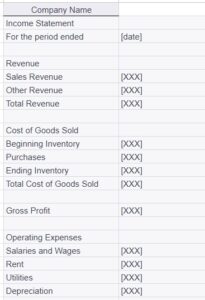
7. Profit Centered or Volume Centered: The price sensitivity helps management in deciding that the policy of the management should be price centered. The high volume of the sale will give a lower percentage of profit as compared to the low volume of the sale will increase if the price of the product is reduced. At times by reducing the price the volume of sale is increased considerably and the management makes more profit even if the percentage profit on the sale is lower.

Q.2. What do you mean by auditing? Write the duties of a Night Auditor in the hotel.
Auditing is a systematic examination of the books and records of a business or other organization in order to ascertain or verify and to report the facts regarding its financial operation and the results thereof. R.B. Bose has defined as ‘audit may be said to be verification of the accuracy and correctness of the books of accounts by an independent person qualified for the job and not in any way connected with the preparation of such accounts. Auditing is the verification of the correctness of accounts and reliability of accounting system, date, and information. An auditing, therefore, includes verification of correctness of the accounts, statements, reports, data, etc. and finally checking these data to see that they adhere to accounting principles, plans, procedures, and objectives.
Duties of Night Auditor in Hotel:
A Night Auditor in a hotel has several duties that they are responsible for. Some of the main duties of a Night Auditor include:
- Auditing financial transactions: The Night Auditor is responsible for auditing all financial transactions that have occurred during the day. This includes verifying guest accounts, posting room charges, and ensuring that all revenue and expenses are properly recorded.
- Preparing reports: The Night Auditor prepares reports detailing the financial transactions of the day, including occupancy rates, revenue, and expenses. These reports are used by hotel management to make decisions and plan for the future.
- Checking guests in and out: If guests arrive or depart during the night, the Night Auditor is responsible for checking them in or out. This includes verifying their identity, collecting payment, and providing them with any necessary information about their stay.
- Handling guest inquiries and complaints: The Night Auditor is often the only staff member available during the night, so they must be able to handle any guest inquiries or complaints that arise. This may involve addressing issues with room accommodations, resolving billing disputes, or providing directions and recommendations for local attractions.
- Performing security checks: The Night Auditor is responsible for ensuring the safety and security of the hotel during the night. This may involve performing security checks of the hotel’s public areas and guest rooms, monitoring surveillance cameras, and responding to any security incidents that occur.
- Performing other administrative duties: The Night Auditor may be responsible for performing other administrative duties, such as filing paperwork, answering phone calls, and responding to emails.
The motive of night auditors is to rectify the error before the guest checks out so that neither he is overcharged nor undercharged. This helps hotel in improving its revenue and the image.
Q.3. How will you control Food & Beverage sales of a restaurant? Explain in detail.
The instruments used for the Food and Beverage Service Control are as follows:
1. Kitchen Order Ticket (K.O.T)
2. Restaurant Check
3. Restaurant Sales Summary Sheet
4. Kitchen Summary Sheet
5. Guest Weekly Bill
6. Visitor’s Tabular Ledger (V.T.L)
1. Kitchen Order Ticket (K.O.T.) The four copies of K.O.T are made. The order is taken by the captain on K.O.T. The original copy of the K.O.T is given to Aboyer(Barker) to place the order. After the food has been picked up by the pick – up waiter, this copy of the K.O.T is kept in the locked K.O.T Box, which is taken by the control department at the end of the day or shift for control purposes. The first carbon copy is given to cashier so that he can make the check. The second carbon copy is given to pick up waiter so that he can pick up the food from the kitchen. The last copy is kept at the sideboard (dummy waiter) for the reference of captain or stewards and this helps in service.
2. Restaurant Check: Restaurant check is either prepared by cashier or waiter but is usually priced and totaled by the cashier. To pick – up the food, the check is shown by pick up the waiter and the check items are ticketed by barker before giving the food. On demand, all the four copies of the check are presented to the guest, either he pays in cash or he signs and puts his name and room number or he settled his bill through credit card or debit card. If he pays in cash than the original copy of the check is returned to him with the stamp of paid and cashier’s signature as a receipt, but in case he signs as a resident or as a credit card holder than original copy is sent to front office and the first carbon copy is given to the guest for his reference.
The second carbon copy is sent to accounts department and the third carbon copy is for control department. In case a restaurant check is lost by the waiter that he is liable to pay Rs.1, 000 as a fine along with the price of the check (The check’s price can be ascertained with the help of K.O.T.). In case a check is lost by the cashier then he is liable to pay the fine instead of the waiter. When a check is issued to the waiter, he is required to sign in the Restaurant’s sales summary sheet and when he returns the check to the cashier he takes the stub duly signed by the cashier as a proof that he has returned the check to the cashier.
The stub has the details like Check No., Table No., Waiter No., and No. Of Pax, K.O.T. No. Along with the price of the check. The waiter is required to keep the stub for three days; the period may differ from hotel to hotel. The lower portion of the check (below the remark ‘please do not sign if you pay cash’) is perforated and can easily be tore and handed over to the waiter as his receipt.
3 . Restaurant Sales Summary Sheet: On this summary, sheet cashier maintains the complete record of restaurant sales. When he issues a check to pick up waiter, he gets his signature and when he (waiter) returns the check to the cashier then the lower perforated portion of the check (stub), along with cashier’s signature and stamp, is returned to the waiter and this is his proof that he has returned the check to the cashier. In case this check is lost than the responsibility is fixed on cashier or waiter and who – so – ever is held responsible, is require d to pay the price of the check and a fine of ₹ 1,000. The restaurant sales summary sheet is prepared in duplicate and a copy each is sent to the accounts department and control department. In case guest settles his bill in cash than the amount received is shown in the cash column and discount allowed is shown in the discount column. In case the guest settles his bill by signing (either as a hotel resident or as a credit card/ debit card holder) than the total amount is shown in the ledger column and in the remarks column the Room Number, Name of the Guest, Credit Card Number / Debit Card Number, and other details are entered. Cashier signs in the Signature column.
4. Kitchen Summary Sheet: The Chef prepares a Kitchen Summary Sheet with the help of K.O.T’s. This is also known as Kitchen Cost Sheet. This summary sheet is prepared in duplicate and a copy each is sent to the Accounts Department and the Control Department.
5. Guest Weekly Bill: For each resident of the hotel a guest weekly bill/ guest bill is prepared. All debit and credit vouchers along with room tariff are posted in this bill and as soon as guest desires to check out this bill is presented to him for settlement. For control purposes, a copy each of this is sent to control department and accounts department. But the original copy, in case f cash payment, is given to the guest as his receipt. In case of guest signs, the bill than original bill copy is sent to the company for collection by accounts department and the bill is transferred to ledger accounts and transferred to Account Department for collection.
6. Visitor’s Tabular Ledger: For all the hotel residents of a day a Visitor’s Tabular Ledger is prepared. It is also known as Day Book. For every day , a new ledger is prepared. On this ledger, the room rent and all the vouchers for all the guests are recorded. The Visitor’s Tabular Ledger gives the total sale of the residents of the hotel (but the cash paid by residents in restaurants is not recorded here). A copy each of this ledger is sent to the control department and accounts department. In case the hotel has the computerized accounting system than the restaurant sales summary sheet, guest weekly bill, kitchen summary sheet, and visitor’s tabular ledger are automatically made and the control department can have their printouts on their computers. In some hotels , a separate K.O.T. is not prepared; the restaurant check is prepared by machine / computer. The monitor of the kitchen shows the order and a K.O.T. in leaf form is not given to Barker. For ordering the food there is no need to show the check because order is only placed through computer if check is prepared .
Q.4. What is cost of sales? How and why is it computed?
Cost of sales, also known as cost of goods sold (COGS), is the direct cost associated with producing or purchasing a product or service that is sold to customers. It includes the cost of raw materials, labor, and any other costs directly related to the production of goods or services.
The formula for calculating the cost of sales is:
Cost of Sales = Opening Inventory + Purchases – Closing Inventory
In this formula, the opening inventory refers to the value of inventory at the beginning of the accounting period, purchases refer to the value of inventory purchased during the accounting period, and the closing inventory refers to the value of inventory at the end of the accounting period.
The cost of sales is an important metric for businesses as it helps them determine the profitability of their products or services. By subtracting the cost of sales from the revenue generated by the sale of goods or services, a business can determine its gross profit. Gross profit is the revenue minus the cost of sales and is a key indicator of a company’s financial health.
Businesses may use different accounting methods to calculate the cost of sales, including first-in, first-out (FIFO), last-in, first-out (LIFO), and weighted average cost. The method chosen may depend on the nature of the business and the inventory it holds.
Calculating the cost of sales can help businesses make informed decisions about pricing, inventory management, and overall financial strategy. For example, if the cost of sales is high, a business may need to adjust its pricing strategy or look for ways to reduce its production costs. Additionally, monitoring changes in the cost of sales over time can help businesses identify trends and make adjustments to their operations.
In conclusion, the cost of sales is an important financial metric used to determine the direct cost associated with producing or purchasing goods or services that are sold to customers. By calculating the cost of sales, businesses can determine their gross profit and make informed decisions about pricing, inventory management, and overall financial strategy.
4. Add your new purchases and allowable overhead expenses to your initial inventory value. 5. Subtract the value of your inventory at year-end: This will provide you with your cost of sales.
Expressed as a formula: beginning inventory + inventory purchases and expenses – ending inventory = cost of sales, also known as the cost of goods sold.
OR What do you mean by Financial Reporting Centres? Explain the difference between Revenue centers and Support centers.
“ Financial Reporting involves the disclosure of financial information to the various stakeholders about the financial performance and financial position of the organization over a specified period of time.
These stakeholders include – investors, creditors, public, debt providers, governments & government agencies. In case of listed companies, the frequency of financial reporting is quarterly & annual.
Financial Reporting is usually considered as end product of Accounting. ” – For Sake of Knowledge The word Financial Reporting Centre have several meaning. (Software) Financial Reporting Center is a powerful tool for accessing, designing and presenting financial reports and analytic data. It delivers a unique multi-dimensional reporting and analysis platform that provides real-time access to financial information. Users can quickly report and analyze data from different perspectives from the same system that is used for operational accounting. Ex-Oracle Fusion.
Department or area of responsibility for which separate cost data must be collected for preparation of financial reports. These reporting centers are classified generally into three groups:
(1) Revenue center,
(2) Support center, and
(3) Other (such as those incurring fixed expenses). (U.S.A)
The Financial Reporting Centre helps CPAs meet the challenges of providing high-quality financial reporting. Whether you are a financial statement preparer or a member in public practice, this center provides a resource for the entire financial reporting process, providing you the information you need to know when you need it. In many countries like Kenya , etc ., The Financial Reporting Centre (FRC) is a Government institution, with the principal objective being to assist in the identification of the proceeds of crime and the combating of money laundering.
A revenue center sells goods or service to guests and thereby generates revenue for the hotel. The front office and food and beverage outlets are examples of typical hotel revenue center. Support centres do not generate revenue directly, but play a supporting role in the hotel’s revenue centres. The housekeeping department is a major support centre within the rooms division. Other hotel support centres include the areas of accounting, engineering and maintenance, and human resources.
Q.5. Define Internal control. Explain briefly the features of internal control.
Definition The whole system of control, financial and otherwise, established by the management in order to carry on the business of the enterprises in an orderly and efficient manner, ensure adherence to management policies, safeguard the assets and secure as far as possible the completeness and accuracy of the records.
Scope/objectives of the internal control:
1. To check frauds and thefts.
2. To safeguard the assets of the business from thefts and misuse (cutlery and small equipment).
3. To improve the efficiency.
4. To follow the policies of the management.
5. To improve the quality.
6. To complete the records up to moment.
Features of internal control:
1. Experienced, Qualified and Trustworthy Personnel: The personnel should be well qualified, experienced and trustworthy and this helps i n providing better services than competitors. This also ensures in having a better internal control on pilferages.
2. Division of Duty: The duties are segregated to improve the efficiency, quality and for controlling the pilferage.
3. Leadership: Board of Directors, General Manager and other managers and supervisors must lead the person by communicating the policies of the hotel to one and all and encourage the person to have the best output and control.
4. Organisational Structure: The chain of hotels or hotel as the case may be must have a clear organizational structure and the personnel must know from whom to take orders and whom to report.
5. Sound Practice: These are policy measures generally set up and implemented by the board of directors and other senior executives in order to create an environment which facilitates internal control.
6. Authorise Personnel: The management must authorize clearly the personnel for taking the certain decision. For example, a person should be authorized to extend the discount, cancel a bill, extend complimentary food/room, etc.
7. Records: The records must be maintained to ensure internal control. The records like guest registration cards, bills, K.O.T’s, control sheets, etc. Are not only maintained, checked, verified but are also stored for future references.
8. Manual Procedures: Each job should be reduced to writing. Log books must be maintained in each department. The manual procedures should list the details of each position including how and when to perform each task.
9. Control: Control includes security services and measures for protecting assets, stores, guest’s valuables, etc. The security services, as far as possible, must be hired from professionals.
10. Budget: The Budgets like short term, long-term, specific budgets, etc. Must be made for sale, cost, production etc. The budgets must be achievable but not achievable so easily. The goals of the hotel must be clearly mentioned and the goals must be made not only for sale, cost etc. but must also be made for controlling pilferages.
11. Reports: For each job reports, must be made and circulated among the executives of the hotel for information and control.
12. Independent Checks: The personnel responsible for performing the jobs should not be asked for the internal checks but internal checks must be performed by different personnel either from the permanent personnel employed in the hotel or sometimes maybe hired from outside.
OR Distinguish between (any two):
(a) Equity share and preference share
|
BASIS FOR COMPARISON |
EQUITY SHARES |
PREFERENCE SHARES |
|
Meaning |
Equity shares are the ordinary shares of the company representing the part ownership of the shareholder in the company. |
Preference shares are the shares that carry preferential rights on the matters of payment of dividend and repayment of capital. |
|
Payment of dividend |
The dividend is paid after the payment of all liabilities. |
Priority in payment of dividend over equity shareholders. |
|
Repayment of capital |
In the event of winding up of the company, equity shares are repaid at the end. |
In the event of winding up of the company, preference shares are repaid before equity shares. |
|
Rate of dividend |
Fluctating |
Fixed |
|
Voting rights |
Equity shares carry voting rights. |
Normally, preference shares do not carry voting rights. However, in special circumstances, they get voting rights. |
|
Convertibility |
Equity shares can never be converted. |
Preference shares can be converted into equity shares. |
|
Arrears of Dividend |
Equity shareholders have no rights to get arrears of the dividend for the previous years. |
Preference shareholders generally get the arrears of dividend along with the present year’s dividend, if not paid in the last previous year, except in the case of non – cumulative preference shares. |
(b) Income statement and balance sheet
|
Income Statement |
Balance Sheet |
|
|
Purpose |
The income statement is also known as a profit and loss statement. The primary purpose of an income statement is to determine how much money a company earned or lost over a period of time |
The balance sheet is also known as the statement of financial position, it gives managers and investors an overview of where the company stands financially. |
|
Content |
The income statement documents all of a business’s income and expenses over a period of time. Revenue is documented in the credit account on the income statement while expenses are recorded as debits |
The balance sheet provides a snapshot of the company’s finances. It reports three items: assets, liabilities and owners’ equity. |
|
Time Frame |
The income statement represents a period of time. The length of this period can vary. For example, annual statements will contain information for the entire year while quarterly statements cover three months. The time frame should be clearly indicated on an income statement. |
The balance sheet, on the other hand, reflects the finances at one specific point in time. The balance sheet must be dated and values expressed on it are only accurate as of that date. |
|
Calculatios |
The income statement requires just one simple set of calculations. Add up the company’s revenue and add up all of its expenses. Subtract expens es from revenue to reveal the company’s profit or loss. |
You must perform a few basic calculations on the balance sheet as well. To calculate owners’ equity, subtract the firm’s liabilities from its assets. The firm’s assets must always be equal to liabili ties and owners’ equity on the balance sheet. |
(c) Direct expenses and indirect expenses Direct Expenses
Direct, as the word suggests, are those expenses which are completely related or assigned to the core business operations. They are mainly related to purchases and production of goods/services. Direct expenses are a part of the prime cost or the cost of goods/services sold by a company.
Direct expenses can differ for different types of companies, such as manufacturing companies, construction companies, service companies, etc.
Direct expenses are shown on the de bit side of a trading account. Examples
Wages, Factory rent, Material Cost, Premises Renting, Fuel, Freight, Carriage Inwards etc.
Indirect Expenses
Unlike direct, indirect expenses are not directly related or assigned to the core business operations. Indirect expenses are necessary to keep the business up and running, but they can’t be directly related to the cost of the core revenue generating goods/services.
Indirect expenses can be diffe rent for different types of companies such as manufacturing, construction, service companies etc.
Indirect expenses are shown on the debit side of an income statement.
Example
Salaries, Telephone bills, Printing & Stationery, Legal & Accounting charges, Carriage Outwards etc
Q.6. From the following information, prepare an income statement for Abdullah restaurant for the month ending 31st December 2012:
Abdullah Restaurant Income Statement for the month ending 31 st Dec 2012
|
Particulars |
Schedule No. |
Amount |
|
Food Sale |
D1 |
3,00,000/ – |
|
Cost of Food Sale |
– 30% |
2,10,000/ – |
|
Beverage Sale |
D2 |
1,80,000/ – |
|
Cost of Beverage Sale |
– 20% |
1,44,000/ – |
|
Other Income |
D3 |
5,000/ – |
|
Total Income |
D1+D2+D3 |
3,59,000/ – |
|
Salaries and Wages |
D4 |
35,000/ – |
|
Employee’s Benefit |
D5 |
20,000/ – |
|
Music and Entertainment |
D7 |
8,000/ – |
|
Marketing Expenses |
D8 |
10,000/ – |
|
Energy and Utility Expenses |
D9 |
3,000/ – |
|
Administrative and General Expense |
D10 |
8,000/ – |
|
Rent |
D1 2 |
6,000/ – |
|
Total Expense |
D4+……+D11 |
90,000/ – |
|
Income before Depreciation |
2,69,000/ – |
|
|
Depreciation |
D1 4 |
6,000/ – |
|
Income Before Interest |
2,63,00/ – |
|
|
Interest |
D1 5 |
3,000/ – |
|
Income Before Tax |
2,60,000/ – |
|
|
Tax |
D1 6 |
4,500/ – |
|
Net Income |
2,55,000/ – |

Q.7. From the following information, prepare a balance sheet:
Particulars |
Amount ₹ |
Particulars |
Amount ₹ |
Bills payable |
20,000/ – |
Depreciation on furniture |
500/ – |
Rent outstanding |
1,200/ – |
Capital |
50,000/ – |
Cash |
2,000/ – |
Bills receivable |
16,000/ – |
Creditors |
42,750/ – |
Drawings |
7,500/ – |
Bad debts |
1,100/ – |
Furniture |
6,200/ – |
Closing stock |
51,700/ – |
Depreciation on car |
3,000/ – |
Debtors |
28,200/ – |
Net profit |
8,050/ – |
Car |
15,000/ |
Balance Sheet of M/s ABC Hotel for the year ending on…….

Q.8. Prepare a Profit & Loss Account under the Net Profit Method of Departmental Accounting from the information given below:
NOTE: Unallocated Expense s are to be apportioned on the following basis:
1. Gas & Electricity and Advertisement & Marketing on the basis of the ratio of sales.
2. Head Office Expenses and Fixed Charges equally among all departments.
3. Interest to be apportioned in the ratio of 2:2:1
Departmental Profit & Loss Account
Restaurant |
Coffee Shop |
Bar |
Total |
|
Sales |
500,000 |
400,000 |
300,000 |
1200,000 |
Less Cost of Sales |
( 150,000 ) |
( 80,000 ) |
( 50,000 ) |
280,000 |
Gross Profit |
350,000 |
320,000 |
250,000 |
920,000 |
Salaries & Wages |
( 80,000 ) |
( 60,000 ) |
( 40,000 ) |
( 180,000 ) |
Repair & Maintenance |
( 10,000 ) |
( 8,000 ) |
( 6,000 ) |
( 24,000 ) |
Gas & Electricity |
( 5,000 ) |
( 4,000 ) |
( 3,000 ) |
( 12,000 ) |
Head Office Expenses |
( 6,000 ) |
( 6,000 ) |
( 6,000 ) |
( 18,000 ) |
Fixed Charges |
( 4,000 ) |
( 4,000 ) |
( 4,000 ) |
( 12,000 ) |
Interest |
( 4,000 ) |
( 4,000 ) |
( 2,000 ) |
( 10,000 ) |
Advertisement & Marketing |
( 10,000 ) |
( 8,000 ) |
( 6,000 ) |
24,000 |
Net Profit |
231,000 |
226,000 |
183,000 |
640,000 |
Working Note: Apportionment of unallocated expenses
Restaurant |
Coffee Shop |
Bar |
Total |
|
Sales |
500,000 |
400,000 |
300,000 |
1200,000 |
Sales Ratio |
5 |
4 |
3 |
12 |
Gas & Electricity |
5 |
4 |
3 |
12 |
Advertisement & Marketing |
5 |
4 |
3 |
12 |
Head Office |
1 |
1 |
1 |
3 |
Fixed Charges |
1 |
1 |
1 |
3 |
Interest |
2 |
2 |
1 |
5 |
Gas & Electricity
Restaurant = (12,000/12)*5= 5,000
Coffee Shop= (12,000/12)*4= 4,000
Bar = (12,000/12)*3= 3,000
Advertisement & Marketing
Restaurant = (24,000/12)*5= 10,000
Coffee Shop= (24,000/12)*4= 8,000
Bar = (24,000/12)*3= 6,000
Head Office Ex penses = 18,000/3 = 6,000 to be debited from each department
Fixed Charges= 12,000/3= 4,000 to be debited from each department
Interest Restaurant = (10,000/5)*2= 4,000 Coffee Shop= (10,000/5)*2= 4,000 Bar = (10,000/5)*1= 2,000
Q.9. Write short notes (any five):
(a) Cost allocation
Cost allocation is the process of identifying, aggregating and assigning costs to cost objects. A cost object is any activity or item for which you want to separately measure costs. Examples of cost objects are a product, a research project, a customer, a sales region, and a department. Cost allocation is used for financial reporting purposes, to spread costs among departments or inventory items. Cost allocation is also used in the calculation of profitability at the department or subsidiary level, which in turn may be used as the basis for bonuses or the funding of additional activities. Cost allocations can also be used in the derivation of transfer prices between subsidiaries.
(b) Net profit method
In this method, all kind of expenses which are directly or indirectly related to the department are debited to it. e.g. Salary paid to kitchen staff is charged to the food sale and salary paid to bar staff is debited to bar account & in case expenses are incurred for more than one department then the expenses are apportioned in the most suitable and fair manner to the department so that almost the actual share of expenses are debited to each department. The expenses incurred by the head office or corporate office are also suitably apportioned to the debit respective departments to know their Net Profit.
(c) Non–tangible assets aka intangible assets
A non-tangible asset is an asset that is not physical in nature. Corporate intellectual property, including items such as patents, trademarks, copyrights, and business methodologies, are non-tangible assets, as are goodwill and brand recognition. An intangible asset can be classified as either indefinite or definite. A company brand name is an indefinite asset, as it stays with the company as long as the company continues operations. However, if a company enters a legal agreement to operate under another company’s patent, with no plans of extending the agreement, the agreement has a limited life and is classified as a definite asset.
(d) External audit
Periodic or specific purpose (ad hoc) audit conducted by external (independent) qualified accountant(s).
Its objective is to determine, among other things, whether
(1) the accounting records are accurate and complete,
(2) prepared in accordance with the provisions of GAAP, and
(3) the statements prepared from the accounts present fairly the organization’s financial position and the results of its financial operations.
(e) Bad debt
Bad debt is debt that is not collectible and therefore worthless to the creditor. Bad debt is usually a product of the debtor going into bankruptcy but may also occur when the creditor’s cost of pursuing the debt collection activities is more than the amount of the debt. Once a debt is considered bad, the business may be able to write it off as an expense on its income tax return.
(f) Discount
Discounts are reductions to a basic price of goods or services. There are many purposes for discounting, including to increase short-term sales, to move out – of – date stock, to reward valuable customers, to encourage distribution channel members to perform a function or to otherwise reward behaviors that benefit the discount issuer. Some discounts and allowances are forms of sales promotion.
Q.10. Prepare an Income Statement in accordance with the format prescribed in ‘Uniform System of Accounts’ for Taj Hotel from the information given below:
Particulars |
Amount in ₹ |
Particulars |
Amount in ₹ |
Sales: |
– |
Other expenses: |
– |
Cost of sales: |
– |
Fixed charges: |
– |
Pay roll & related expenses: |
– |
Taj Hotels Statement of Income For the Period ended_____
