
Table of Contents
Q.1. (a) Define Food Science.
Food Science is the systematic study of the nature of food materials and the scientific principles underlying their modification, preservation and spoilage.
It is the study of characteristics of foods including chemical, biochemical, physical, physio chemical and biological properties and effect of these on the quality of the product. It also covers application of this information in development of new products and efficient processing techniques.
(b) Enumerate its importance for catering establishments.
Food science is a way to bring a variety of foods that are affordable and healthy to a large audience.
The main purpose of food science is to keep our food supply safe and to offer options to our consumers that are healthy
Q.2. (a) Classify carbohydrates.
CLASSIFICATION ON THE BASIS OF SUGAR UNITS:
MONOSACCHARIDES are the simplest form of CHO found in nature. These simple sugars are made up of a six carbon chain or ring to which hydrogen and hydroxyl groups are attached. The general formula is C6H12O6. They differ from one another because of their arrangement of different atoms around the carbon chain and because of this they have different properties and vary in their degree of sweetness.
DISSACHARIDES are double sugars composed of two monosaccharides linked together with the removal of a water molecule. These sugars have a general formula C12H22O11.
POLYSACCHARIDES are complex carbohydrates made up of 100-2000 glucose units linked to each other in chain or branched form. The number of glucose units, their arrangement and linkage to one another influence the properties of the polysaccharides.
(b) Describe any five functions of carbohydrates in food preparation.
Carbohydrates perform the following functions:
Energy: The principle function of carbohydrates is to serve as a major source of energy for the body. Each gram of carbohydrate yields 4Kcal of energy regardless of its source. In Indian diets 60 – 80 % of energy is derived from carbohydrate.
Glucose: Glucose is indispensable for the maintenance of the functional integrity of the nervous tissue and is the sole source of energy for the proper functioning of the brain. Prolonged lack of glucose may cause irreversible damage to the brain.
Protein Sparing Action: Carbohydrates exert a protein sparing action. If sufficient amounts of carbohydrates are not available in the diet, the body will convert protein to glucose in order to supply energy. Hence to spare proteins for tissue building, carbohydrates must be supplied in optimum amounts in the diet. This is called the protein sparing action of carbohydrates.
Fat Metabolism: Carbohydrates are essential to maintain normal fat metabolism. Insufficient carbohydrates in the diet results in larger amounts of fat being used for energy than the body is equipped to handle. This leads to accumulation of acidic intermediate products called ketone bodies.
Synthesis of Body Substances: Carbohydrates aid in the synthesis of nonessential aminoacids, glycoproteins (which function as antibodies) and glycolipids (which form a part of cell membrane in body tissues especially brain and nervous system). Lactose remains in the intestine longer than other disaccharides and thus encourages growth of beneficial bacteria.
OR Explain the process of Gelatinization with the help of an illustration and state the factors affecting it.
Gelatinization occurs when starch granules are heated in a liquid. It is responsible for the thickening of food systems. The process is an important physic-chemical change associated with the cooking of starchy materials.
When the liquid is heated, the hydrogen bonds holding the starch together weaken, allowing water to penetrate the starch molecules, causing them to swell until their peak thickness is reached.
During the gelatinization, water will be absorbed into the individual starch granules and held there tightly, actually becoming bound water. Bound water is no longer able to flow; the water that is bound in the granules causes granule themselves to swell significantly.
The gelatinizes starch mixtures are opaque and fragile and the ordered crystalline structure of starch is lost.
Gelatinization takes place over a temperature range that varies according to the source of starch and its amylose/amylopectin ratio.
The important factors that affect the gelatinization temperature are:
- Type of Starch
- Amount of tenderizer: sweeteners and fats
- Amount of acid
Q.3. (a) Describe three types of dispersion.
Dispersion may be two types Simple and Complex:
In a Simple Dispersion a colloid may consist of a solid dispersed in a liquid e.g. When gelatine is dissolved in warm water, a simple dispersion called a sol is formed.
Complex Dispersion: Mayonnaise is an example of complex dispersion since it is an emulsion, a sol and foam combined in one.
Milk is another example of a complex dispersion i.e. more than one phase is dispersed in liquid. Milk is a solution of lactose in water, an emulsion of fat in water and a sol as milk protein is dispersed in water.
Colloidal particles have different characteristics. Some are attracted to water are called hydrophilic or they are water-loving. They get hydrated easily. Those which repel water are hydrophobic or water-hating. This difference is because of the difference in chemical composition of the compounds.
Those parts or functional groups that are attracted to water are Polar Groups..
Non-Polar Groups are hydrophobic.
Stability of colloidal system depends on two factors:
- Charge on the colloidal particle.
- A layer of water that is tightly bound to the molecule.
(b) Explain some colloids that can be formed during food preparation.
Colloids are mixtures in which one substance is dispersed throughout another substance in the form of small particles that are evenly distributed. In food preparation, several colloids can be formed. Some of them are as follows:
1. Emulsions:
Emulsions are colloids in which one liquid is dispersed throughout another liquid in the form of small droplets. Examples of emulsions in food include mayonnaise, milk, salad dressings, and vinaigrettes. Emulsions can be stabilized by using emulsifiers such as egg yolk or mustard.
2. Foams:
Foams are colloids in which a gas is dispersed throughout a liquid. Examples of foams in food include whipped cream, meringue, and bread. Foams can be stabilized by proteins or by using a whipping agent such as egg whites.
3. Suspensions:
Suspensions are colloids in which solid particles are dispersed throughout a liquid. Examples of suspensions in food include salad dressings with suspended spices or herbs, and chocolate milk with suspended cocoa particles.
4. Gels:
Gels are colloids in which a liquid is dispersed throughout a solid. Examples of gels in food include gelatin desserts, puddings, and jams. Gels can be formed by using gelling agents such as pectin, agar, or gelatin.
OR Define the role of emulsifying agents in food and explain the characteristics of emulsions.
Role of emulsifying agent:
In mayonnaise, the emulsifier is the phospholipids present in egg yolks – they are such successful emulsifiers that as much as 80% oil can be dispersed in the aqueous phase.
Ice cream is another food that would not exist were it not for emulsifiers. It is both a foam and an emulsion, and its texture results from the ice crystals and unfrozen water it contains. But it’s not just creamy products where emulsifiers are crucial – bread and other baked products, where solid particles are dispersed in an airy foam, are enhanced by emulsifiers.
The emulsifiers that are used commercially come from both natural and synthetic sources. They include:
Lecithins (E322) are mixtures of phospholipids such as phosphatidylcholine and phosphatidylethanolamine and are usually extracted from sources such as egg yolk and soybeans. The precise composition of the phospholipids depends on the source. Uses include salad dressings, baked goods and chocolate.
Esters of monoglycerides of fatty acids (E472a-f) are made from natural fatty acids, glycerol and an organic acid such as acetic, citric, lactic or tartaric. The fatty acids are usually from a vegetable source, though animal fats can be used. Products that use them include ice cream, cakes and crisps.
Mono- and diglycerides of fatty acids (E471) are semi-synthetic emulsifiers made from glycerol and natural fatty acids, which can be from either plant or animal sources. They are used in products like bread, cakes and margarine.
Characteristic of Emulsion –
- It should not damage the fiber.
- The emulsion should be colorless.
- It should be stable for a certain period of time.
- Its softening quality should be high.
- The emulsion droplets should be very small.
Q.4. Illustrate the basic structure of proteins. State the properties of proteins that are useful in various food preparations.
Structure of Proteins
The 20 amino acids commonly found in proteins are joined together by peptide bonds. The complexity of protein structure is best analyzed by considering the molecule in terms of four organizational levels, namely primary, secondary, tertiary and Quaternary.
Primary Structure
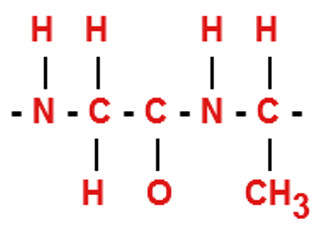
Primary structure is the order in which the amino acid are covalently linked together. The primary structure is the one-dimensional first step in specifying the three-dimensional structure of a protein. Understanding the primary structure of proteins is important because many genetic diseases result in proteins with abnormal amino acid sequences, which cause improper folding and loss or impairment of normal function.
Secondary Structure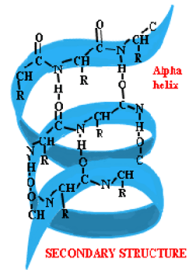
Secondary structure is the arrangement in space of the atoms in the peptide backbone. The α-helix and β-pleated sheet arrangements are two different types of secondary structure. In many proteins the folding of parts of the chain can occur independently of the folding of other parts. Such independently folded portions of proteins are referred to as domains or super-secondary structure.
Tertiary Structure
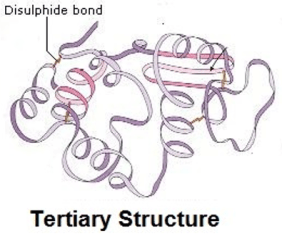
Tertiary structure includes the three-dimensional arrangement of all the atoms in the protein, including those in the side chains and in any prosthetic groups. A specific three-dimensional shape of a protein resulting from interactions between R groups of the amino acid residues in the protein.
Quaternary Structure
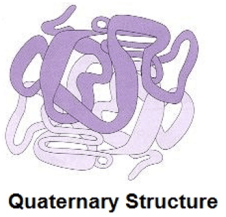
Many proteins consist of a single polypeptide chain, and are defined as monomeric proteins. However, others may consist of two or three polypeptide chain that may be structurally identical or totally unrelated. The arrangement of these polypeptide subunits is called the quaternary structure of the protein. All the subunits are held together by the non-covalent interaction like hydrogen bond, ionic bond and hydrophobic bond.
Properties of Protein –
-
Keeps Food Hydrated
Water plays a major role in conserving and imparting an appearance to the food. Protein molecules bind with water preventing the loss of water from the food.
-
Emulsification
Emulsification is the mixing of two liquids together that naturally do not mix. Protein has an important part in this process. Food like egg, milk, butter and mayonnaise do not mix easily with anything. They first form tiny droplets at the top of the liquid.
-
Foaming
Foaming is an interesting event that occurs while preparing many dishes. Foaming is caused due to the entrapment of gas bubbles in liquid or solid. Protein has a significant role in the formation of foams.
-
Denaturation
A protein is denatured when its specific three-dimensional conformation is changed by breaking some bonds without breaking its primary structure. It may be, for example, the disruption of helix areas. The denaturation may be reversible or irreversible. It causes a total or partial loss of biological activity. This is an important property of protein.
Q.5. What is the importance of antioxidants in food? Explain any two types of spoilage conditions seen in fats and list some preventive measures.
Antioxidants play a vital role in our health.
They are the natural components found in certain foods that help neutralize the damaging free radicals in our bodies.
Free radicals occur naturally in our bodies, but they accelerate the ageing process and cause diseases by attacking the fats, protein and the DNA in our cells.
They can be found in a variety of sources such as air pollutants, ozone, cigarette smoke and industrial chemicals. In modern life, it seems all but impossible to avoid them.
When free radicals overwhelm our body’s ability to neutralize them, they attack the body itself and cause significant damage to living cells and tissues. Damaged DNA cells stagnate, and this accelerates the ageing process, causes wrinkles and weakens the immune system. And that’s only the beginning.
Two types of Spoilage in Oils:
Winterization of Oil is a process of removing the higher melting point parts from oil like waxes or triglycerides by slowly cooling vegetable oils and felling saturated glycerides from the solvent. Used primarily for oils in salad dressings. It is a process in which the temp of the oil is lowered to a degree at which the high melting point triglycerides crystallize which are then removed by filtration.
Rancidity: The development of any disagreeable odor and flavor in fats and oils causing spoilage is known as rancidity. Under-processing, repeated exposures to high temp, air, water and improper packaging and storage can cause the spoilage.
PREVENTION:
- Store fat at low temp in cool dark place.
- Use air tight containers
- Use opaque containers to cut off the exposure o light and air.
- Do not keep strong smelling foods in the vicinity of fats and oils as they absorb foreign odor.
- Copper container and rusted iron accelerate rancidity. Only steel or aluminium containers should be used.
- Natural antioxidants like Vit E can be used.
- Artificial antioxidants like BHA, BHT can be used.
- If fats and oils have to be stored for some time, they should be hydrogenated and stored. Hydrogenation increases the shelf life of fats and prevents rancidity
Q.6. How is the proximate analysis of food constituents conducted in the food industry?
This system of analysis divides the food into six fractions: moisture, ash, crude protein, ether extract, crude fiber and nitrogen-free extractives. The moisture content is determined as the loss in weight that results from drying a known weight of food to constant weight at 100 degrees C. This method is satisfactory for most foods, but with a few, such as silage, significant losses of volatile material may take place.
The ash content is determined by ignition of a known weight of the food at 550°C until all carbon has been removed. The residue is the ash and is taken to represent the inorganic constituents of the food. The ash may, however, contain material of organic origin such as sulphur and phosphorus from proteins, and some loss of volatile material in the form of sodium, chloride, potassium, phosphorus and Sulphur will take place during ignition.
The crude protein (CP) content is calculated from the nitrogen content of the food, determined by a modification of a technique. In this method, the food is digested with sulphuric acid, which converts to ammonia all nitrogen present except that in the form of nitrate and nitrite. This ammonia is liberated by adding sodium hydroxide to the digest, distilled off and collected in standard acid, the quantity so collected being determined by titration or by an automated colourimetric method. It is assumed that the nitrogen is derived from protein containing 16 percent nitrogen, and by multiplying the nitrogen figure by 6.25 (i.e. 100/16) an approximate protein value is obtained.
The ether extract (EE) fraction is determined by subjecting the food to a continuous extraction with petroleum ether for a defined period. The residue, after evaporation of the solvent, is the ether extract.
The carbohydrate of the food is contained in two fractions, the crude fibre (CF) and the nitrogen-free extractives (NFE). The former is determined by subjecting the residual food from ether extraction to successive treatments with boiling acid and alkali of defined concentration; the organic residue is the crude fiber.
When the sum of the amounts of moisture, ash, crude protein, ether extract and crude fiber (expressed in g/kg) is subtracted from 1000, the difference is designated the nitrogen-free extractives. The crude fiber fraction contains cellulose, lignin and hemicelluloses, but not necessarily the whole amounts of these that are present in the food: a variable proportion, depending upon the species and stage of growth of the plant material, is contained in the nitrogen-free extractives. The nitrogen-free extractives fraction is a heterogeneous mixture of all those components not determined in the other fractions. It includes sugars, fructans, starch, pectins, organic acids and pigments, in addition to those components mentioned above.
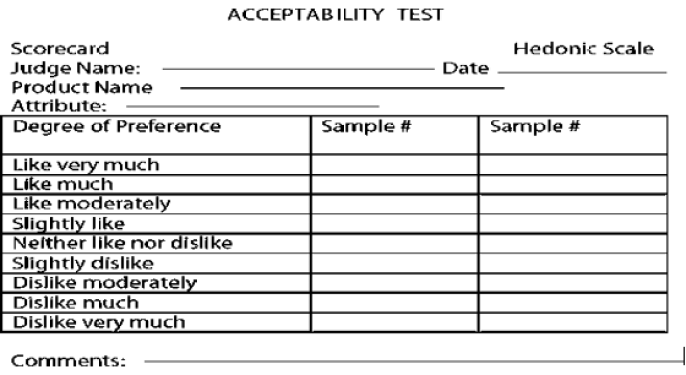
OR Define sensory assessment of food quality. Draw a standard format of a score card used for sensory evaluation of food.
Sensory evaluation is defined as a scientific method used to evoke, measure, analyze and interpret those responses to products perceived through senses of sight, smell, touch, taste and hearing.
Format of a Score Card:
Q.7. Why is the demand for food processing greatly increasing? Explain the types of processing methods by application of heat.
Processing is very broad and encompassing many techniques. These include primary processing like threshing, DE husking, polishing and grinding in case of food grains and preliminary operations such as cleaning, washing, sorting, grading, peeling, blanching and cutting to produce secondary processed products like bread, biscuits, pickles, frozen meals etc.
Food processing is also significantly impacted by multiple external factors, including economic trends, climate change, demographic shifts, emerging power markets, new trade partnerships and world population growth predictions.
Today’s food supply chain is more globalized, longer and far more complex than ever before. With growing imports and exports, processed foods are dependent on longer supply chains which poses a great challenge to assuring food safety
Types of Processing Methods:
Use of low Temperature:
Low temp preserves food by retarding chemical reactions enzymatic action and growth activity of microorganism. The lower the temp the better the food will be preserved. At low temperature, microorganism is not killed and their number can multiply once the temperature becomes favorable. Refrigeration, Freezing is the example of Low Temperature Process.
Use of High Temperature:
High temperature destroys micro-organism. At temp above 63ºC bacteria stop multiplying and as the temp increases, they are gradually destroyed. Blanching, Pasteurization is example of High Temp. process.
Dehydration:
It is the process of removal of moisture from the food. Drying is defined as the application of heat under controlled conditions to remove the majority of the water normally in the food by evaporation. The main purpose of dehydration is to extend the shelf life of foods by a reduction in water activity. E.g. Sun Drying, Freeze drying.
Use of Preservatives:
A preservative is any substance which retards deterioration of food.
- Class I: Natural, Sugar, Common Salt, Glucose, Fructose, Vinegar, Wood Smoke. There is no restriction by law on their addition to food.
- Class II: Chemicals, They are added in defined permitted limits. They are usually added at the end of the processing operation. E.g. Benzoic Acid, Nitrates, Nitrites etc.
Fermentation:
Selected microorganisms are used giving distinctive taste, higher nutritive value & longer shelf life Eg: alcoholic beverages such as beer & wine lactic acid fermentation in curd & yoghurt.
Radiation:
Radiation of various frequencies ranging from low-frequency microwaves to high-frequency gamma rays are used to preserve various foods.
- Ultraviolet Irradiation: Effective in killing bacteria and viruses can be used for surface sterilization of food.
- Microwave: Heat food by penetrating it.
OR Explain the science behind the detection of flavor by the five sensory organs of the body.
SIGHT
Sight, or vision, is the ability of the eyes to perceive images of visible light. The structure of the eye is key in how the eye works. Light enters the eye through the pupil and is focused through the lens onto the retina on the back of the eye. It is this feature of our senses the judges the food for its freshness, colour, appeal, dullness, glossy, juicy etc. If the eye appeal is not good, then the food goes in for a complete rejection.
SMELL
The sense of smell, or olfaction, is closely related to the sense of taste. Chemicals from food or floating in the air are sensed by olfactory receptors in the nose. These signals are sent directly to the olfactory bulb in the olfactory cortex of the brain. Volatile molecules from the food stimulate olfactory nerves and they guide our perceptions of food being sweet, bitter, spicy, sour or acidic.
TASTE
Taste, also known as gustation, is the ability to detect chemicals in food, minerals and dangerous substances such as poisons. This detection is performed by sensory organs on the tongue called taste buds. There are five basic tastes that these organs relay to the brain: sweet, bitter, salty, sour and umami. Receptors for each of our five basic tastes are located in distinct cells and these cells are found in all areas of the tongue.
TOUCH
This feature of the food can be defined in many ways such as texture, mouthfeel and even temperature of the food. We all expect tea coffee or soup to be very hot or chilled. Touch or somatosensory perception is perceived by activation in neural receptors in the skin. The main sensation comes from pressure applied to these receptors, called mechanoreceptors.
SOUND
Sound is comprised of vibrations that are perceived by organs inside the ear through mechanoreceptors. Sound first travels into the ear canal and vibrates the ear drum. The crispy bite of fresh sliced onions or the crackling sound of the crispies satisfies the sound element of the food
Q.8. List at least two differences:
(a) Winterization and Homogenization
Winterization of Oil is a process of removing the higher melting point parts from oil like waxes or triglycerides by slowly cooling vegetable oils and felling saturated glycerides from the solvent. Used primarily for oils in salad dressings. Removing the solid particles is called winterization.
Homogenization is any of several processes used to make a mixture of two mutually non-soluble liquids the same throughout. This is achieved by turning one of the liquids into a state consisting of extremely small particles distributed uniformly throughout the other liquid.
(b) Microwave and Irradiation
Microwaving is cooking food in a microwave oven. It is often quicker and more convenient than equivalent methods such as boiling or baking. Many vegetables, for example, can be microwaved instead of boiled or steamed. The basic microwave oven heats by the movement of water in the foods.
Food irradiation is the process of exposing food and food packaging to ionizing radiation. This treatment is used to improve food safety by extending product shelf-life (preservation), reducing the risk of foodborne illness, delaying or eliminating sprouting or ripening, by sterilization of foods.
(c) CAP and MAP
CONTROLLED ATMOSPHERE PACKAGING(CAP): It is a storage method in which the concentrations of oxygen,carbon dioxide and nitrogen is altered and temperature and humidity of product’s atmosphere is regulated. Some Carbon dioxide release agents, oxygen scavenger and ethylene absorbers are classified as CAP.
MODIFIED ATMOSPHERE PACKAGING(MAP): It is defined as enclosure of food in a package in which the atmosphere inside the package is modified or altered to provide an optimum atmosphere for increasing shelf life and maintaining food quality. Generally used along with other operations like chilling. Other benefits of MAP include maintenance of high RH, reduction in water loss, improved hygiene by reducing contamination during handling.
Modified of air can be done by 2 methods-active modification and passive modification. Active modification (also called gas flushing ) involves displacing the air with controlled ,desired mixture of gases while passive modification occurs as a consequence of food’s respiration and metabolism of microorganisms present inside it.
(d) Leavening and shortening agent
Leavening Agent: Substance causing expansion of doughs and batters by the release of gases within such mixtures, producing baked products with porous structure. Such agents include air, steam, yeast, baking powder, and baking soda.
Shortening is any fat that is a solid at room temperature and used to make crumbly pastry and other food products. Although butter is solid at room temperature and is frequently used in making pastry, the term “shortening” seldom refers to butter, but is more closely related to margarine.
(e) Natural and synthetic emulsifiers
Food emulsifiers act as an interface between the conflicting components of food like water and oil. While preparing the food, often conflicting natural components of food have to be combined into a consistent and pleasing blend. Each component of food (carbohydrate, protein, oil and fat, water, air, etc.) has its own properties which are sometimes conflicting to one another just like oil and water. To make the two components compatible, emulsifiers are used.
Proteins, polysaccharides, phospholipids, and saponins can be used as natural emulsifiers.
Synthetic emulsifiers comes from synthetic sources. Examples of synthetic emulsifiers are carboxymethylcellulose (CMC) or polysorbate 80 (P80).
Q.9. Answer in brief:
(a) Flavour of Tea
A mixture of strong astringent acids found in plants, particularly tea leaves.
(b) Fermentation
The chemical breakdown of a substance by bacteria, yeasts, or other microorganisms, typically involving effervescence and the giving off of heat. Fermentation is a metabolic process that consumes sugar in the absence of oxygen. The products are organic acids, gases, or alcohol. It occurs in yeast and bacteria, and also in oxygen-starved muscle cells, as in the case of lactic acid fermentation. The science of fermentation is known as zymology.
(c) Taste Panel
A taste panel may be described as a group of testers who have exceptional sensory faculties and can describe products on the basis of taste, smell or feel. The sensory panelists are trained to describe their sensory experiences using words they generate in previous training sessions.
(d) Refining of Fats
The Physical Refining process is used for oils and fats with high FFA and contains three basic steps: · Acid Conditioning or Enhanced Degumming · Bleaching · Stripping and Deodorizing The degumming process used depends on the oil or fat being refined.
(e) Syneresis
Syneresis is the expulsion (or weeping) of liquid from a gel. It is sometimes a desired result, as in gel filtration. Often it is undesired, such as when the liquid seeps out of pie filling or puddles form on the top of yogurt or margarine.